
Election Day
"Our Gang dodges election-day bullies"
Keys: Space play/pause · ←/→ 10s · F fullscreen · M mute · </> speed
About this film
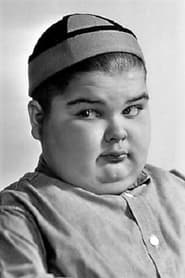
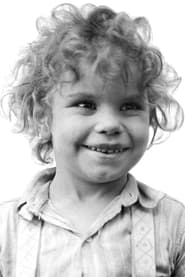
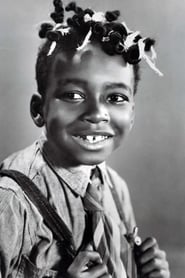
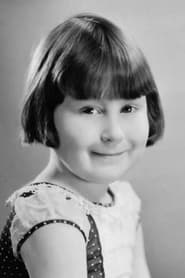
Revolves around Election Day, a day on which Jay R. and Joe are fighting to get votes. They warn the kids that they'll be socked in the jaw if they don't vote for them, but the kids are just trying to go about their business, namely Farina. His mother wants him to deliv.
Cast & crew
More films like this
More Comedy films
View all →







More from Robert A. McGowan
View all →
More about this film
About the production
Release dateMarch 2, 1929
BudgetApproximately $30,000 - $40,000 (Estimated based on typical Hal Roach short subject budgets of the era)
ProductionHal Roach Studios, Metro-Goldwyn-Mayer (MGM)
Filmed inHal Roach Studios - 8822 Washington Blvd, Culver City, California, USA, Culver City backlots
This film was produced during the critical transition period between silent films and 'talkies.' While primarily a silent short, it was released with a synchronized Vitaphone disc soundtrack featuring music and sound effects. It was the 82nd Our Gang short to be released. Robert A. McGowan, nephew of the primary series director Robert F. McGowan, took the helm for this entry, maintaining the signature pacing and child-centric perspective that made the series a staple of the 1920s.
Themes
Political SatireBullying and Peer PressureResourcefulnessDisguise and IdentityChildhood Independence
Themes & topics
electionlaundrydisguisescarecrowneighborhood gangbullyingcross-dressingslapstick1920schildhood
Historical background
Silent-era audiences encountered Election Day around 1929, as studios refined cross-cutting and star-driven storytelling.
Why this film matters
Election Day shows how silent filmmakers conveyed plot through gesture, title cards, and editing.
Making of
The production of 'Election Day' was overseen by Robert A. McGowan, who often filled in for his uncle, Robert F. McGowan, when the latter was ill or exhausted from the grueling production schedule of the Roach studio. The child actors were famously allowed to improvise much of their physical business, a hallmark of the 'Our Gang' style which prioritized natural reactions over rigid scripting. During the filming of the laundry delivery scenes, the crew had to use hidden wires to help Farina manage the oversized bundles in the wind. The transition to sound was a major concern behind the scenes; while was shot silent, the pressure to incorporate audio meant that the editing had to be tighter to sync with the pre-recorded musical score provided by the studio orchestra.
What critics said
Press notices for Election Day (1929) are sparse in digitized sources; interest today rests on preserved prints and comparison with related titles.
Did you know?
- This was one of the final Our Gang shorts to be released as a silent film (with synchronized sound effects), as the series transitioned fully to 'all-talking' later in 1929 with 'Small Talk.'
- Farina (Allen Hoskins) performs several 'quick-change' routines in, showcasing his versatility as the series' most prominent star of the late 1920s.
- The character of Jay R. Smith was often cast as the 'heavy' or the rival to Joe Cobb during this specific era of the gang.
- The 'sock in the jaw' threat became a recurring trope in Hal Roach comedies to represent juvenile bravado.
- The laundry bundles Farina carries were actually stuffed with lightweight paper and cotton to allow the child actor to move easily while appearing burdened.
- The film features a rare appearance of the 'Our Gang' kids interacting with a pseudo-political plot, mirroring the adult obsession with elections during the late 1920s.
- Jackie Condon, one of the original members of the gang, was nearing the end of his tenure with the group when this was filmed.
- The scarecrow disguise used by Farina was a recycled prop from a previous Hal Roach production.
- The goat used in the climax was a trained animal actor frequently used in Roach comedies for its ability to 'butt' actors on cue.
- Despite the title, the film avoids any actual partisan politics, focusing entirely on the slapstick nature of the 'campaigning' process.
Visual style
The film utilizes standard 1.33:1 aspect ratio cinematography typical of the era. Art Lloyd, a frequent collaborator at Roach Studios, used flat, bright lighting to ensure all the children's expressions were visible. The outdoor sequences utilize deep focus to capture the sprawling neighborhood chase scenes, and the camera work is largely static, relying on the actors to move within the frame to create a sense of action.
Innovations
The film is a notable example of the 'synchronized sound' era, where studios were experimenting with adding audio to silent footage to compete with the new 'talkies.' The seamless integration of the scarecrow costume gags required precise editing to maintain the illusion of Farina's quick changes.
Music
The film was released with a synchronized musical score and sound effects track on Vitaphone discs. The music consists of upbeat, orchestral ragtime and 'hurry' music typical of silent comedies. There is no spoken dialogue; instead, the story is told through intertitles and the synchronized sound effects (like the thud of a falling body or the bleat of a goat).
Famous quotes
Intertitle: 'If you don't vote for Joe, I'll sock you in the jaw!'
Intertitle: 'I'm voting for Jay R. — he's got the biggest fists!'
Intertitle: 'Farina, you get that laundry delivered or you'll have an election of your own right here!'
Memorable scenes
- The sequence where Farina hides in a field as a scarecrow, only to have the rival gangs congregate right in front of him, forcing him to remain perfectly still while being poked and prodded.
- The 'quick-change' montage where Farina transitions from a laundry boy to an old woman to evade the bullies.
- The final chaotic chase involving a goat that disrupts the makeshift polling station.
What audiences thought
The film was a hit with Saturday matinee audiences, who were the primary demographic for the Our Gang shorts. Children of the era reportedly found the 'scarecrow' sequence particularly hilarious. The series was so popular by 1929 that any new release was guaranteed a wide theatrical run in MGM-affiliated theaters.
Film connections
Influenced by
- The slapstick style of Charlie Chaplin
- The 'Boy's Life' magazine stories of the 1920s
- Earlier Hal Roach 'Our Gang' shorts like 'The Fourth Alarm'
This film influenced
- Later 'Our Gang' sound shorts
- The Little Rascals (1994) features similar neighborhood rivalry themes
- Home Alone (for its themes of a child using ingenuity to outsmart bullies)
Film restoration
The film is preserved and exists in the archives of the Library of Congress and the UCLA Film & Television Archive. It has been restored and released as part of various 'Little Rascals' DVD collections, though the original Vitaphone sound discs are sometimes replaced with modern scores in lower-quality public domain releases.
Where to watch
- The Little Rascals: The Complete Collection (DVD/Blu-ray)
- Classic cinema streaming services like Turner Classic Movies (TCM)
- Public domain archives on YouTube (often under the title 'The Little Rascals')