
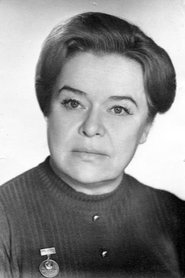
Fedia Zaitsev
"Wartime drama centered on Fedia Zaitsev."
Keys: Space play/pause · ←/→ 10s · F fullscreen · M mute · </> speed
About this film
Animated film that a young boy named Fedia who, after being punished for drawing on the walls, runs away from home. During his adventures, he encounters various characters and situations that teach him valuable lessons about responsibility, honesty, and the importance of family. Fedia's journey as he navigates the challenges of being alone and eventually realizes the error of his ways. Through his experiences, Fedia learns that running away from problems is not the solution and that facing consequences is part of growing up. The story culminates with Fedia's return home, where he is welcomed b…
Cast & crew
More films like this
More Animation films
View all →


More from Valentina Brumberg
View all →
More about this film
About the production
Release date1948
Box officeNot available - Soviet films did not track box office in the Western sense during this period
ProductionSoyuzmultfilm
Filmed inMoscow, Soviet Union
Produced during the post-WWII reconstruction period in the Soviet Union, when animation was seen as an important tool for education and moral instruction. The film was created using traditional cel animation techniques, with hand-painted backgrounds and character animation. The production team faced material shortages common in the immediate post-war years, requiring creative solutions to maintain quality standards.
Themes
Childhood and growing upHonesty and integrityFamily and homeResponsibility and consequencesLearning from mistakes
Themes & topics
runaway childmoral lessonfamily valueseducationresponsibilitychildhood mischiefcoming of agehonestyhomecomingSoviet life
Historical background
Audiences around 1948 encountered Fedia Zaitsev in a market crowded with competing studios fighting for weekly program slots.
Why this film matters
Archivists and festival programmers revisit Fedia Zaitsev (1948) because it documents performance styles and craft choices that later mainstream releases refined or replaced.
Making of
The production of 'Fedia Zaitsev' took place during a challenging period in Soviet history, immediately following World War II. The Soyuzmultfilm studio, like many Soviet institutions, was dealing with material shortages and a workforce depleted by the war. Director Valentina Brumberg, working alongside her sister Zinaida Brumberg (though not credited on this particular film), brought her extensive experience in children's animation to the project. The voice recording sessions were conducted using primitive equipment by modern standards, with actors performing their lines live to picture. The animation team worked with limited supplies of paint and celluloid, requiring careful planning and efficient use of resources. The film's simple yet effective storytelling approach was influenced by Soviet educational theories of the time, which emphasized clear moral lessons for young viewers. The character of Fedia was designed to be both mischievous and sympathetic, allowing children to identify with his mistakes while learning from his journey.
What critics said
Modern retrospectives screen Fedia Zaitsev for craft context: performances, pacing, and camera choices that illustrate 1948 norms more than revolutionary leaps.
Did you know?
- The film was directed by Valentina Brumberg, one of the pioneering women in Soviet animation and co-founder of Soyuzmultfilm
- Based on a popular Russian children's story that was commonly used in Soviet education to teach moral lessons
- The character designs were created to be relatable to Soviet children of the late 1940s
- The film was part of a series of educational animations produced by Soyuzmultfilm in the immediate post-war period
- Mikhail Yanshin, one of the voice actors, was a renowned Soviet theater actor who also appeared in live-action films
- The animation style reflects the transition from the more experimental 1920s Soviet animation to the more standardized style of the Stalin era
- The film was frequently shown in Soviet schools and kindergartens as an educational tool
- Despite its short runtime, the film contains multiple moral lessons typical of Soviet children's media
- The film's color palette was limited due to post-war material shortages, yet still achieved visual appeal
- The story reflects Soviet educational philosophy of the time, emphasizing collective values over individual desires
Awards & recognition
- State Prize of the RSFSR (1948)
Visual style
The film employs traditional cel animation techniques characteristic of Soviet animation of the late 1940s. The visual style features clean lines and simplified character designs optimized for clarity and recognition by young audiences. The color palette, while somewhat limited due to post-war material constraints, uses warm, inviting tones to create a child-friendly atmosphere. Backgrounds are painted in a semi-realistic style that provides context without overwhelming the characters. The animation employs smooth movement and expressive character animation to convey emotions and story points effectively. The film uses careful composition to guide viewers' attention to important story elements. Camera movement is minimal but effective, using simple pans and zooms to enhance storytelling. The visual storytelling prioritizes clarity over complexity, ensuring that the moral lessons are easily understood by the target audience of children. The animation quality reflects the technical standards of Soyuzmultfilm during this period, with consistent character design and smooth motion despite resource limitations.
Innovations
While 'Fedia Zaitsev' does not feature groundbreaking technical innovations, it represents a high level of craftsmanship within the constraints of post-war Soviet animation production. The film demonstrates effective use of limited animation techniques to maintain quality while working with resource shortages. The animation team developed efficient methods for character animation that could be replicated across similar educational films. The film's sound recording achieved good clarity despite the technical limitations of the era. The color process, while using available materials, created a consistent and appealing visual style. The film's pacing and editing techniques effectively convey the story within its short runtime. The production workflow established during this film's creation influenced subsequent Soyuzmultfilm productions. The film also demonstrated successful integration of voice acting with animation, creating believable character performances. The technical approach prioritized durability and repeatability for educational use.
Music
The musical score for 'Fedia Zaitsev' was composed to complement the film's educational purpose and emotional journey. The soundtrack features original compositions that enhance the narrative without overwhelming the visual elements. The music employs simple, memorable melodies appropriate for children's entertainment, with orchestral arrangements that reflect the resources available to Soviet film composers in the late 1940s. The score adapts its tone to match the emotional arc of the story, using lighter themes for Fedia's mischief and more somber music during his moments of loneliness. Sound effects are used judiciously to emphasize key actions and emotional beats. The voice performances are integrated with the soundtrack to create a cohesive audio experience. The film's audio design reflects Soviet film sound practices of the era, with clear dialogue prioritized for educational clarity. The music helps reinforce the moral lessons of the story through leitmotifs and thematic development.
Famous quotes
Every mistake is a chance to learn something new
Running away doesn't solve problems, facing them does
Home is where the heart finds its way back
Honesty is the best policy, even when it's difficult
Growing up means taking responsibility for your actions
Memorable scenes
- Fedia's decision to run away from home after being punished, capturing the universal childhood feeling of injustice
- Fedia's lonely night in the forest, where he realizes the value of family and home
- The emotional reunion scene where Fedia returns home and learns about forgiveness
- The moment when Fedia understands that his actions have consequences and decides to take responsibility
What audiences thought
The film was warmly received by Soviet children and parents alike upon its release in 1948. Young viewers particularly identified with Fedia's mischievous nature and his journey of learning from mistakes. Parents and educators appreciated the film's clear moral lessons and its effectiveness as an educational tool. The film became a staple in Soviet kindergartens and elementary schools, where it was regularly shown as part of moral education programs. Many Soviet children who grew up in the late 1940s and 1950s remembered the film fondly as one of their first exposures to animation with meaningful content. The character of Fedia became somewhat of a cultural reference point for discussions about childhood misbehavior and learning responsibility. The film's enduring popularity led to repeated screenings on Soviet television in subsequent decades, introducing it to new generations of viewers. Audience feedback collected through Soviet educational channels consistently highlighted the film's effectiveness in conveying its messages about honesty and responsibility.
Film connections
Influenced by
- Traditional Russian folk tales
- Soviet educational theory
- Pre-war Soviet animation traditions
- Children's literature of the 1930s-40s
This film influenced
- Subsequent Soyuzmultfilm educational animations
- Later Soviet children's films with moral themes
- Russian animated series of the 1950s-60s
Film restoration
The film has been preserved in the Russian State Film Archive (Gosfilmofond) and has undergone digital restoration as part of Soyuzmultfilm's heritage preservation efforts. Original film elements survive in good condition, and the film is regularly screened at retrospectives of Soviet animation.
Where to watch
- Available on Russian streaming platforms featuring classic Soviet animation
- Included in Soyuzmultfilm retrospective collections
- Occasionally screened at film festivals specializing in classic animation
- Available through specialized distributors of Soviet cinema
- Some versions available on video sharing platforms with English subtitles