
Hell Harbor
"Anita Page dreams of Havana from a Caribbean isle."
Keys: Space play/pause · ←/→ 10s · F fullscreen · M mute · </> speed
About this film
In a lawless Caribbean outpost, Anita Morgan, the spirited daughter of a descendant of the pirate Henry Morgan. Anita lives a wretched life under her abusive, drunken father and dreams of escaping to the sophisticated allure of Havana. Her situation becomes desperate when her father, deep in debt, strikes a deal to marry her off to Joseph Horngold, a greedy and repulsive local merchant. Anita's only hope arrives in the form of Bob, an American pearl buyer who falls in love with her and offers a path to freedom. As tensions boil over, Anita must navigate a dangerous web of blackmail, murder, an…
Cast & crew
More films like this

More Romance films
View all →




More from Henry King
View all →

More about this film
About the production
Release dateSeptember 20, 1930
BudgetApproximately $1,000,000 (promoted as a 'million-dollar production')
ProductionInspiration Pictures, United Artists
Filmed inRocky Point Peninsula, Tampa, Florida, Tampa Bay, Florida
The film was a massive undertaking for its time, requiring seven freight cars of sound and technical equipment to be shipped from Hollywood to Florida by train. Director Henry King chose Tampa because its then-undeveloped coastline perfectly mimicked the Caribbean. A complete island village set was constructed specifically for the film on the Rocky Point Peninsula. To record sound on the water, the production ran long cables from the shore to barges holding the heavy recording equipment, a significant technical challenge in the early days of 'talkies.'
Themes
Escape and FreedomGreed and AvaricePaternal AbuseThe Legacy of PiracyClass and Poverty
Themes & topics
CaribbeanPirate descendantArranged marriageIsland lifeHavanaPearl buyerBlackmailPre-CodeFlorida history
Historical background
Hell Harbor (1930) reached screens through Inspiration Pictures. Exhibitors of the time built early sound programs that mixed shorts, features, and live acts, so a clear premise helped Hell Harbor travel between cities and exchange markets.
Why this film matters
Archivists and revival programmers still cite Hell Harbor (1930) when tracing studio habits, casting pools, and the visual rhetoric audiences once took for granted. Even modest surviving prints help map how Hell Harbor fit beside competing releases of its day.
Making of
The production of 'Hell Harbor' was a landmark event for the city of Tampa, which hoped the film would help establish Florida as a rival film hub to Hollywood and New York. Director Henry King was known for his insistence on location authenticity, leading him to reject studio tanks in favor of the Florida gulf. The logistics were grueling; the crew had to contend with the humid Florida climate and the primitive nature of early sound recording equipment, which was not yet portable. Lupe Vélez, already known for her 'Mexican Spitfire' persona, reportedly charmed the local population, while the discovery of Rondo Hatton on set became.
What critics said
Trade coverage around 1930 discussed Hell Harbor for pacing, clarity, and program fit rather than blockbuster grosses. Later writers value it as evidence of period style and as a reference point beside other films from the same era.
Did you know?
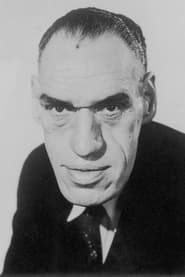
- the production marked the uncredited screen debut of Rondo Hatton, who was a local Tampa journalist covering the production before director Henry King cast him as a bouncer due to his unique physical appearance caused by acromegaly.
- It was the first full-length 'all-talking' motion picture filmed entirely on location in the state of Florida.
- The film is based on the 1925 novel 'Out of the Night' by Rida Johnson Young.
- Director Henry King was inspired to film in Tampa after a conversation with actor Tom Meighan at the New York Lambs Club.
- Local Tampa residents were used extensively as extras, including a local boxer named Herman Weiner who played the character Ulysses Williams.
- The production was so welcomed by the city of Tampa that a gala was held in honor of star Lupe Vélez.
- The film features music by the famous Cuban composer Ernesto Lecuona, known as the 'Gershwin of Cuba.'
- Despite being a 'talkie,' the film retains many visual storytelling techniques from the silent era, as it was made during the industry's major transitional period.
- The character of Henry Morgan in the film is explicitly stated to be a descendant of the real-life historical pirate of the same name.
- A murder sequence from the production was later used as stock footage in several 1930s 'Poverty Row' films, such as 'The Black Coin' (1936).
Visual style
The cinematography, handled by John Fulton and Max Stengler, was highly regarded for its use of natural light and outdoor settings. Unlike many early talkies that were static due to microphone placement, Henry King pushed for a more dynamic camera, utilizing the Florida landscape to create a sense of scale. The night scenes aboard the merchant vessels were specifically noted by contemporary critics for their 'artistic understanding' and atmospheric lighting.
Innovations
The film's primary technical achievement was its successful recording of dialogue on location, specifically on the water. This required innovative engineering, including the use of long-distance cabling and floating sound stations. It proved that 'talkies' did not have to be confined to soundproofed studio stages, paving the way for the future of location-based sound cinema.
Music
The soundtrack is notable for its early use of synchronized dialogue and music in a non-studio environment. It features a blend of traditional scores and Caribbean-influenced music, including contributions from Gene Berten, Harvey Allen, and the renowned Sextetto Habanero. The inclusion of Ernesto Lecuona's music added an authentic Latin flair that complemented the film's setting.
Famous quotes
Anita: 'I don't want your money, Horngold! I want to see the lights of Havana!' (Context: Anita rejecting the merchant's proposal)
Horngold: 'Your father owes me more than this island is worth.' (Context: Horngold pressuring Anita's father for her hand in marriage)
Memorable scenes
- The opening sequence in the seedy dance hall, which introduces the gritty atmosphere of the island and features the first screen appearance of Rondo Hatton.
- The dramatic confrontation between Anita and her father when she learns she has been 'sold' to Horngold.
- The atmospheric night scenes aboard the pearl buyer's ship, which showcased the film's advanced cinematography and sound recording.
What audiences thought
The film was well-received by audiences who were hungry for the novelty of 'all-talking' pictures. It was particularly successful in Florida, where locals flocked to see their own neighbors and landmarks on the silver screen. Lupe Vélez's star power was a significant draw, as she was at the height of her popularity as a vibrant, exotic lead.
Film connections
Influenced by
- Out of the Night (Novel by Rida Johnson Young)
- Early South Sea adventure silents
- The historical legend of Henry Morgan
This film influenced
- The Brute Man (1946) - due to the discovery of Rondo Hatton
- Safe in Hell (1931)
- Various 1930s Poverty Row tropical melodramas
Film restoration
The film is preserved and remains available to the public. It has been released on DVD by Turner Classic Movies (TCM) as part of their 'Forbidden Hollywood' or similar vault collections, and various prints exist in film archives, though many modern versions are the shortened 65-minute reissue print.
Where to watch
- Turner Classic Movies (TCM) broadcast
- YouTube (Public Domain/Archive uploads)
- Rare film specialized DVD retailers