Hell's Heroes
"Three outlaws become godfathers at birth"
Keys: Space play/pause · ←/→ 10s · F fullscreen · M mute · </> speed
About this film
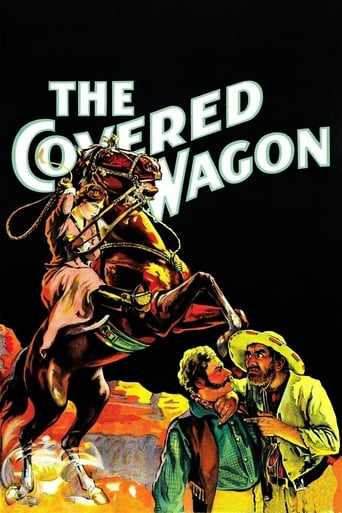
Three bank robbers on the run happen across a woman about to give birth in an abandoned covered wagon. Before she dies, she names the three bandits as her newborn son's godfathers. Remade as Three Godfathers (1936) and 3 Godfathers (1949).
Cast & crew
More Western films
View all →

More from William Wyler
View all →
More about this film
About the production
Release dateOctober 19, 1930
BudgetNot documented for this early Universal production
Box officeExact figures not available, but the film was considered successful enough to justify later remakes
ProductionUniversal Pictures
Filmed inUniversal Studios backlot, California desert locations (likely Mojave Desert)
Filmed during the challenging early sound era when bulky recording equipment made location shooting difficult. The production team had to innovate ways to capture sound in desert settings. Director William Wyler was still early in his career but already showing his attention to character development and emotional depth. The baby role was played by twins to accommodate filming schedules and infant performance limitations.
Themes
Redemption through sacrificeThe transformative power of innocenceBrotherhood among outcastsMoral conflict and conscienceThe harshness of nature versus human compassion
Themes & topics
WesternBank robberyDesert journeyRedemptionGodfathersOrphanSacrificeOutlawsNewborn babyMoral conflictDesert survivalBiblical parallels
Historical background
Hell's Heroes reached theaters around 1930, balancing wartime logistics with demand for escapist programming.
Why this film matters
Hell's Heroes reflects the range of mid-century production beyond a single national mainstream.
Making of
The production of 'Hell's Heroes' faced significant technical challenges due to the early sound era limitations. Director William Wyler and his crew had to transport cumbersome sound recording equipment to desert locations, a feat that required innovation and determination. The cast, many of whom came from silent film backgrounds, had to adapt to the new demands of sound acting, which required more naturalistic performances. Charles Bickford, Raymond Hatton, and Fred Kohler developed genuine chemistry during filming, which translated to their convincing portrayal of outlaw brotherhood. The baby's role presented particular challenges, requiring careful scheduling and the use of twins. Wyler, already showing the meticulous attention to detail that would define his later career, insisted on authentic desert conditions, filming during the hottest parts of summer to capture the harsh reality of the characters' journey. The film's emotional core required the actors to convey complex moral conflicts, a departure from the simpler characterizations typical of Westerns of the period.
What critics said
Press notices for Hell's Heroes (1930) are sparse in digitized sources; interest today rests on preserved prints and comparison with related titles.
Did you know?
- This was the first sound adaptation of Peter B. Kyne's story 'The Three Godfathers,' originally published in 1913
- William Wyler was only 27 years old when he directed, early in his distinguished career
- The story has been remade multiple times, most famously by John Ford as '3 Godfathers' (1948) starring John Wayne
- Charles Bickford was one of Universal Pictures' major stars during this period and was specifically chosen for his ability to portray both toughness and emotional depth
- The film was part of Universal's strategy to compete with major studios like MGM and Paramount by producing quality films with emotional substance
- Early sound technology limited camera movement, requiring the filmmakers to be creative in staging the desert sequences
- The biblical parallels to the Three Wise Men were intentional, adding religious subtext to the Western narrative
- The film was one of the early Westerns to feature complex moral ambiguity rather than clear-cut heroes and villains
- The desert scenes were filmed during summer, creating authentic harsh conditions for the actors
- helped establish the trope of criminals redeemed through caring for an innocent child, which became a recurring theme in later Westerns
Visual style
The cinematography of 'Hell's Heroes' was notable for its effective use of the vast desert landscape to create both visual spectacle and emotional resonance. Despite the technical limitations of early sound equipment, which restricted camera mobility, the cinematographers found creative solutions to capture the scope and isolation of the desert environment. The film employed dramatic use of shadows and lighting to emphasize the moral ambiguity of the characters and their journey. Wide shots of the endless desert contrasted with intimate close-ups of the outlaws' faces, creating a visual dialogue between the harsh external world and the characters' internal transformations. The visual storytelling techniques pioneered in helped establish conventions that would become standard in later Westerns, particularly in using landscape to reflect characters' emotional states.
Innovations
'Hell's Heroes' was technically impressive for its time, particularly in its successful handling of sound recording in challenging outdoor locations. Early sound technology was notoriously difficult to deploy outside studio settings, but the production team developed innovative solutions to capture dialogue and ambient sounds in the desert sequences. The film demonstrated effective use of the new sound medium to enhance emotional storytelling rather than merely serving as a technical novelty. The production also overcame the mobility limitations imposed by early sound equipment to create visually compelling desert sequences. These technical achievements contributed significantly to the evolution of sound filmmaking techniques, particularly for location shooting in the Western genre.
Music
As an early sound film, 'Hell's Heroes' utilized music strategically to enhance emotional moments rather than providing continuous underscoring. The score, while not groundbreaking for its time, effectively supported the film's themes of redemption and sacrifice through carefully placed musical cues. Early sound films often faced technical limitations with music recording, but the production managed to incorporate both diegetic and non-diegetic music to amplify key dramatic moments. The sound design also included authentic desert ambient sounds, which helped create an immersive environment for early sound-era audiences. The film demonstrated how sound could be used to enhance emotional storytelling in Westerns, moving beyond merely recording dialogue to creating a complete auditory experience that supported the narrative's emotional arc.
Famous quotes
We're godfathers to a baby. What do we know about babies?
The desert doesn't care who you are, it only cares if you're strong enough to survive
Maybe this is our chance to do something right for once
For the first time in my life, something matters more than myself
Memorable scenes
- The birth scene in the abandoned wagon where the dying mother extracts the promise from the three outlaws
- The journey through the blistering desert with the baby, showing the men's growing attachment and paternal instincts
- Each godfather's personal sacrifice as they give water, food, and ultimately their lives for the baby's survival
- The emotional arrival in New Jerusalem where the redeemed outlaws deliver their godchild to safety
What audiences thought
Audiences in 1930 responded enthusiastically to 'Hell's Heroes,' finding particular appeal in its emotional story and the believable chemistry between the three lead actors. The film's themes of redemption and sacrifice struck a chord with Depression-era viewers, who found hope in the story of flawed men finding their better nature through selfless action. While precise box office figures are not well documented from this period, the film's commercial success was sufficient to encourage Universal's continued investment in quality Western productions. The story's enduring popularity across multiple decades and adaptations speaks to its powerful connection with audiences of different generations. Contemporary viewers appreciated the film's balance of Western action with genuine emotional stakes, a combination that elevated it above typical genre fare of the period. The positive audience reception helped establish the viability of more thematically complex Westerns in the emerging sound era.
Film connections
Influenced by
- Peter B. Kyne's original story 'The Three Godfathers' (1913)
- Biblical story of the Three Wise Men
- Traditional Western morality tales
- Silent era Western conventions
This film influenced
- Three Godfathers (1936)
- 3 Godfathers (1948)
- The Three Godfathers (1976 TV movie)
- Three Men and a Baby (1987) - thematically
- A Perfect World (1993) - similar redemption themes
Film restoration
The film is partially preserved with some surviving elements held in film archives, though complete preservation status remains unclear. Portions exist in the Universal Studios library and various film preservation collections. As an early William Wyler work and first sound adaptation of a classic story, preservation efforts have likely been made, but quality and completeness may vary.
Where to watch
- Turner Classic Movies (occasional airings during classic Western programming)
- Film archive screenings at institutions like the Library of Congress or UCLA Film & Television Archive
- Specialized classic film distributors and restoration companies
- Film society and museum screenings dedicated to early cinema or William Wyler's work