
Helping Grandma
"Whom sell Gang short."
Keys: Space play/pause · ←/→ 10s · F fullscreen · M mute · </> speed
About this film
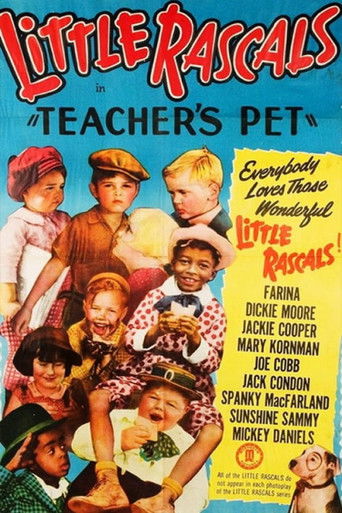
The kids' adopted grandma decides to sell her store, but can't decide whom to sell it to. It was the 103rd Our Gang short to be released.
Cast & crew
More films like this
More Comedy films
View all →







More from Robert F. McGowan
View all →

More about this film
About the production
Release dateJanuary 3, 1931
BudgetApproximately $30,000 (estimated based on average Hal Roach two-reeler costs of the era)
Box officeNot individually tracked; part of the highly profitable MGM distribution package
ProductionHal Roach Studios, Metro-Goldwyn-Mayer (MGM)
Filmed inHal Roach Studios - 8822 Washington Blvd, Culver City, California, USA, Hal Roach Ranch, Los Angeles, California, USA
The film was produced under the working production number G-37 and was the 103rd entry in the 'Our Gang' series. Principal photography took place over ten shooting days between July 28 and August 6, 1930. Director Robert F. McGowan was reportedly suffering from significant stress during this period due to the difficulties of directing child actors in the new sound medium, leading him to briefly consider resigning shortly after this production. The film is notable for being one of the last to feature the 'classic' early sound era cast before significant departures in 1931.
Themes
Community and SolidarityChildhood Innocence vs. Adult GreedEconomic Survival during the DepressionThe transition from small-town life to corporate modernization
Themes & topics
general storeswindleadoptionretirementchildhood mischief1930sOur GangLittle Rascals
Historical background
Viewers around 1931 encountered Helping Grandma in a market learning how screen stories could carry social themes as well as spectacle.
Why this film matters
Archivists revisit Helping Grandma (1931) for performance styles and craft choices that later releases refined or replaced.
Making of
The production was a tightly scheduled affair typical of the Hal Roach 'comedy factory.' Director Robert F. McGowan utilized a 'naturalist' approach, often hiding the microphone in props like flower pots or grocery boxes to capture the children's spontaneous dialogue. This was particularly challenging in 'Helping Grandma' due to the store setting, which required many small props that could create unwanted noise. The child actors were famously kept in a playful mood by the crew to ensure their performances didn't feel 'rehearsed,' a hallmark of the Roach studio style that distinguished it from the more rigid child acting seen at other studios.
What critics said
Trade papers near 1931 listed Helping Grandma among weekly program offerings rather than as a headline critical event.
Did you know?
- This short marks the first appearance of Shirley Jean Rickert in the series; she would go on to be a regular for a brief but memorable period.
- Pete the Pup, the gang's iconic dog, is notably absent from this particular episode.
- The film was originally released as an 'all-talking' two-reeler, a major selling point during the industry's transition from silent films.
- Matthew 'Stymie' Beard's character was referred to as 'Tumble-Weed' in the original script before his famous nickname was finalized.
- The character of Grandma was played by Margaret Mann, a prolific character actress who specialized in maternal and grandmotherly roles during the 1920s and 30s.
- The film's copyright was renewed in 1958 but has since expired, placing the work in the public domain as of 2026.
- In the 1950s television syndication as 'The Little Rascals,' several scenes were edited out by King World Productions due to racial humor that was deemed insensitive by modern standards.
- The film features a recurring gag involving Farina (Allen Hoskins) and a telephone, which was a popular high-tech prop for comedy at the time.
Visual style
Photographed by Art Lloyd, the film utilizes the bright, high-key lighting typical of Hal Roach comedies. The camera work is mostly functional, using medium shots to capture the children's physical comedy, but it features some creative 'point-of-view' shots from the perspective of the children looking up at the adult 'villains.' The store interior was a meticulously dressed set designed to look cluttered and authentic to a 1930s general store.
Innovations
The film is a proficient example of early sound-on-film technology. It successfully manages a large ensemble of child voices in a single room (the store), which was a technical hurdle in the early 1930s when microphones were bulky and had limited range.
Music
The film features the iconic 'Our Gang' theme song 'Good Old Days' by Leroy Shield. Shield's background score is jaunty and synchronized with the physical gags, a technique known as 'mickey-mousing.' The sound recording was handled by Elmer Raguse using the Western Electric System, which was state-of-the-art for 1930.
Famous quotes
Grandma: 'I don't know what I'd do without you children.'
Mr. Pennypacker: 'Now Grandma, you just sign right here and your worries are over.'
Stymie: (Upon tasting various items in the store) 'This sho' is a good way to make a livin'!'
Memorable scenes
- The scene where Stymie (Matthew Beard) 'samples' the various candies and goods in the store while supposed to be working.
- The chaotic sequence where the gang attempts to wait on actual customers, leading to a total breakdown of store organization.
- The climax where the kids accidentally intercept the phone call from the chain store, leading to the exposure of Pennypacker's low-ball offer.
What audiences thought
Audiences in 1931 responded enthusiastically to the film, as the 'Our Gang' shorts were among the most popular 'added attractions' in movie theaters. The relatable plot of protecting a neighborhood figure from a 'city slicker' made it a crowd-pleaser. In later decades, through television syndication, it became a staple of Saturday morning viewing for generations of children, cementing the 'Little Rascals' as cultural icons.
Film connections
Influenced by
- The 'Our Gang' silent shorts
- Vaudeville sketches involving 'store-keeping' comedy
- The 'Skippy' comic strips by Percy Crosby
This film influenced
- The Little Rascals (1994 feature film)
- The Little Rascals Save the Day (2014)
- Various 'kid-run business' tropes in later sitcoms
Film restoration
The film has been meticulously restored by ClassicFlix as part of 'The Little Rascals: The ClassicFlix Restorations, Volume 2.' The restoration involved scanning the original 35mm nitrate elements to produce a high-definition digital master, correcting years of wear and tear from television syndication prints.
Where to watch
- ClassicFlix Blu-ray/DVD (Restored Version)
- Public Domain archives (Original unrestored prints)
- Various classic cinema streaming platforms (e.g., The Film Detective)