
His People
"Pushcart family between old world and new"
Keys: Space play/pause · ←/→ 10s · F fullscreen · M mute · </> speed
About this film
The two sons of a poor Russian-Jewish pushcart peddler on New York's Lower East Side are causing their father grief. As Morris and Sammy stray from traditions cherished by their parents, each generation learns to accept change to preserve the family as a source of love and respec.
Cast & crew
More films like this
More about this film
About the production
Release dateOctober 19, 1925
Box officeBox office figures not recorded for this era
ProductionUniversal Pictures
Filmed inUniversal Studios, Universal City, California
The film was part of Universal's 'Jewish cycle' of films in the mid-1920s, which included several pictures focusing on Jewish-American life. Director Edward Sloman was known for his socially conscious films and had a particular interest in immigrant stories. The production used extensive research to accurately portray Lower East Side life, including authentic props and set designs. The boxing sequences were particularly elaborate for the time, requiring special choreography and camera work.
Themes
Themes & topics
Jewish immigrantsLower East SideBoxingFamily dramaAssimilationSilent film1920sNew York CityPushcart peddlerGenerational gap
Historical background
Programmers in 1925 slotted His People from Universal Pictures beside newsreels, cartoons, and serial chapters.
Why this film matters
Repertory houses screen His People to show how 1925 filmmakers staged the two sons of a poor russian-jewish pushcart peddler on new york's lower east side are c.
Making of
The production of His People involved extensive consultation with Jewish community leaders to ensure authentic representation. Director Edward Sloman spent weeks researching on New York's Lower East Side, observing daily life and taking photographs to recreate the environment accurately. Rudolph Schildkraut, though a famous stage actor in Europe, was making one of his first American film appearances and brought tremendous gravitas to the role of the father. The boxing sequences required specialized training for the actors and were filmed using innovative camera techniques to capture the action effectively. The film's emotional climax, featuring a reconciliation scene between father and sons, reportedly moved the entire cast and crew to tears during filming. Universal Pictures invested significantly in the production's set design, creating a detailed replica of a Lower East Side tenement that spanned multiple soundstages.
What critics said
Repertory notes on His People highlight survival of the print more than 1925 box-office records.
Did you know?
- Rudolph Schildkraut, who played the father, was a renowned Austrian-Jewish stage actor who had recently immigrated to America.
- The film was one of the first Hollywood productions to authentically portray Jewish-American life on screen.
- Director Edward Sloman was particularly proud of this film, considering it one of his most important works.
- The boxing scenes were considered unusually realistic for their time and were praised by contemporary sports writers.
- The film's original title was 'The Goldbergs' but was changed to 'His People' to appeal to a broader audience.
- George J. Lewis, who played Sammy, later became a prolific character actor in Hollywood, appearing in hundreds of films and TV shows.
- The film was preserved in the Library of Congress collection, ensuring its survival for future generations.
- Contemporary Jewish organizations praised the film for its sensitive and realistic portrayal of immigrant life.
- The pushcart used in the film was an authentic 19th-century peddler's cart, sourced from New York's Lower East Side.
- The film's success led to several similar productions focusing on different ethnic immigrant communities.
Visual style
The cinematography of His People, while typical of mid-1920s silent films, employed several notable techniques to enhance its storytelling. The film used extensive location-style photography within studio sets to create a realistic sense of place, particularly in the Lower East Street scenes. The boxing sequences featured innovative camera angles and movement that were ahead of their time, using close-ups and tracking shots to create a sense of action and immediacy. The lighting design emphasized the contrast between the dark, cramped tenement interiors and the hopeful brightness of the American dream scenes. The cinematographer made effective use of shadow and light to underscore the film's themes of tradition versus progress, particularly in scenes showing the father's old-world values clashing with his sons' modern aspirations.
Innovations
His People demonstrated several technical achievements typical of Universal Pictures' mid-1920s productions. The film's recreation of New York's Lower East Side was notably detailed for its time, featuring multi-level set constructions that allowed for complex camera movements and staging. The boxing sequences employed innovative editing techniques and camera placements that enhanced the sense of action and realism. The production made effective use of location-style photography within the studio system, creating a documentary-like feel in its street scenes. The film's makeup and costume design were particularly noteworthy for their authentic representation of period clothing and character aging, contributing to the story's emotional impact across different time periods.
Music
As a silent film, His People would have been accompanied by live musical performance during its original theatrical run. The score would have typically been provided by a theater organist or small orchestra, using compiled classical pieces and popular music of the era. The emotional nature of the story would have required a varied musical palette, ranging from traditional Jewish melodies for scenes of cultural heritage to upbeat American tunes for assimilation sequences. Modern screenings of restored versions often feature newly composed scores that attempt to capture the film's multicultural themes and emotional journey. The original cue sheets, if they exist, would provide insight into how the film was musically presented to contemporary audiences.
Famous quotes
In America, a man can be anything he wants to be - even a boxer!
Tradition is not a cage, my son, but the roots that give us strength to grow.
We came to this country for freedom, not to forget who we are.
A father's love is like the pushcart - it may be old, but it carries everything precious.
Memorable scenes
- The emotional climax where the father watches his son's boxing match and finally accepts his son's choice of career, realizing that love transcends cultural expectations.
- The opening sequence showing the bustling Lower East Side street with authentic pushcart vendors and tenement life.
- The reconciliation scene between father and sons where they bridge their generational and cultural differences.
- The boxing match sequence, noted for its realistic choreography and innovative camera work for the period.
What audiences thought
His People was well-received by audiences upon its release, particularly in urban areas with large immigrant populations. Jewish audiences reportedly found the film deeply moving and authentic, with many theaters in heavily Jewish neighborhoods reporting sold-out shows. The film's themes of generational conflict and cultural assimilation resonated with many immigrant communities beyond just Jewish Americans. Contemporary newspaper accounts indicate that audiences were particularly moved by the emotional reconciliation scenes and the film's portrayal of family bonds transcending cultural differences. The movie's success demonstrated to Hollywood studios that there was a market for films addressing specific ethnic experiences, influencing future production decisions. Despite its age, the film continues to find appreciative audiences in revival screenings and film festivals dedicated to classic cinema.
Film connections
Influenced by
- Contemporary Yiddish theater productions
- Social realist literature of the 1920s
- Earlier Universal Pictures ethnic films
- Stage plays about immigrant life
This film influenced
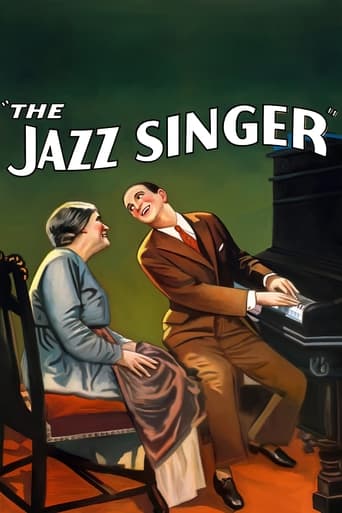
- The Jazz Singer (1927)
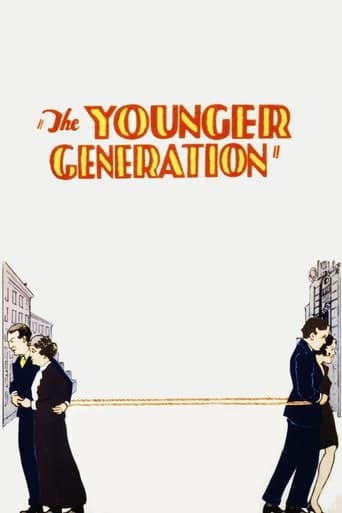
- The Younger Generation (1929)
- The House of Rothschild (1934)
- The Life of Emile Zola (1937)
Film restoration
His People has been preserved by the Library of Congress and is considered to be in good condition for a film of its era. A restored version exists and has been shown at film festivals and in cinema history retrospectives. The film survives in its complete form, which is remarkable for a silent film from the mid-1920s, as many films from this period have been lost. The preservation includes the original intertitles and maintains the film's original aspect ratio and visual quality.
Where to watch
- The film is available on DVD from specialty silent film distributors
- Can be viewed through the Library of Congress's catalog for research purposes
- Occasionally screened at film festivals specializing in classic cinema
- Available through some university film archives and libraries
- May be found on streaming services specializing in classic and silent films