Jeevan Naiya
"Ancestry exposed at the altar"
Keys: Space play/pause · ←/→ 10s · F fullscreen · M mute · </> speed
About this film
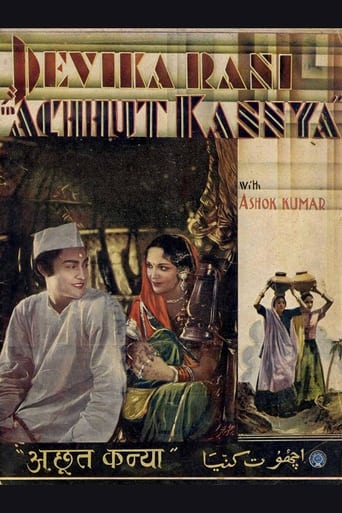
Dancer's daughter Lata faces blackmail over hidden parentage on wedding day to Ranjit. Jeevan Naiya (1936) is Bombay Talkies social drama with Ashok Kumar and Devika Rani.
Cast & crew
More films like this
More Drama films
View all →







More from Franz Osten
View all →


More about this film
About the production
Release date1936
BudgetNot available for films of this era
Box officeBox office records from 1936 are not documented
ProductionBombay Talkies
Filmed inBombay (now Mumbai), India
Jeevan Naiya was produced during the early sound era of Indian cinema, a time when studios were transitioning from silent films to talkies. The film was shot at Bombay Talkies' studio in Malad, which was equipped with modern sound recording equipment for the time. The production faced challenges typical of early sound films, including technical limitations in audio recording and the need for actors to adapt their performance styles for the new medium. The film's social themes were considered bold for 1936, addressing issues of social prejudice and the stigma attached to certain professions in Indian society.
Themes
Social prejudice and discriminationRedemption and forgivenessLove transcending social barriersThe stigma of birth and professionThe power of truth and courage
Themes & topics
social dramaromancefamily secretsblackmailweddingdisabilityreconciliationclass differencesmoral couragesocial justice
Historical background
Jeevan Naiya (1936) belongs to pre-Independence Hindi cinema tackling stigma and class shame.
Why this film matters
Bombay Talkies prestige lent reform themes mainstream respectability.
Making of
The making of Jeevan Naiya represented a significant moment in the transition from silent to sound cinema in India. Director Franz Osten, with his background in German cinema, brought a distinctive visual style that combined European cinematic techniques with Indian storytelling traditions. The casting of Devika Rani and Ashok Kumar was particularly noteworthy, as their on-screen chemistry would define romantic pairings in Indian cinema for years to come. The film's production at Bombay Talkies was marked by technical innovations, including the use of advanced sound recording equipment imported from Germany. The actors had to adapt their performance styles for the sound era, moving away from the exaggerated expressions of silent films to more naturalistic acting. The film's social themes required careful handling given the conservative sensibilities of 1930s Indian society, and the filmmakers worked to present the story in a way that was both progressive and acceptable to contemporary audiences.
What critics said
Contemporary Indian critics debated bold plot; music remains remembered.
Did you know?
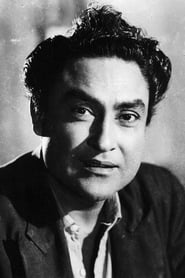
- Jeevan Naiya was one of the earliest films to star the pair of Devika Rani and Ashok Kumar, who would go on to become one of Indian cinema's most iconic on-screen couples.
- Director Franz Osten was a German filmmaker who made numerous films in India during the 1930s, bringing European cinematic techniques to Indian cinema.
- The film was produced by Bombay Talkies, a studio co-founded by Himanshu Rai and Devika Rani, which played a crucial role in developing the Indian film industry.
- This was among the first Indian films to tackle social issues like caste discrimination and the stigma associated with certain professions.
- Devika Rani, often called 'The First Lady of Indian Cinema,' was one of the highest-paid actresses of her time and known for her natural acting style.
- Ashok Kumar made his film debut just a year earlier in 1935's Jeevan Naya, and Jeevan Naiya helped establish him as a leading man in Indian cinema.
- The film's title 'Jeevan Naiya' translates to 'The Boat of Life' in English, metaphorically representing life's journey through turbulent waters.
- The movie featured music by Saraswati Devi, one of India's first female music composers, who worked extensively with Bombay Talkies.
- Early sound films like Jeevan Naiya had to be recorded live on set, as post-production dubbing technology was not yet available.
- The film's success helped establish the social drama genre in Indian cinema, which would become a staple in subsequent decades.
Visual style
The cinematography of Jeevan Naiya, while not credited to a specific individual in available records, displayed the influence of German expressionist cinema through its use of dramatic lighting and shadow play. The film employed techniques that were advanced for Indian cinema of the 1930s, including close-ups to convey emotional intensity and medium shots for narrative clarity. The visual style balanced the theatrical traditions of Indian performance with the more naturalistic approach emerging in international cinema. The film's black and white photography used contrast effectively to highlight the emotional states of characters, particularly in scenes of social confrontation and emotional revelation. The camera work was relatively static compared to modern standards but showed sophistication in its composition and framing, especially in the wedding sequence where multiple characters and their reactions needed to be captured within single shots.
Innovations
Jeevan Naiya represented several technical achievements for Indian cinema in 1936. The film was produced using state-of-the-art sound recording equipment imported from Germany, allowing for clearer audio capture than many contemporary productions. The production team at Bombay Talkies developed innovative techniques for synchronizing sound and image, which was particularly challenging given the technical limitations of the era. The film's editing showed sophistication in its handling of dialogue scenes and musical sequences, maintaining narrative flow despite the technical constraints of early sound editing. The makeup and costume design were notable for their realism and attention to period detail, helping create believable characters and settings. The film also demonstrated advances in set design and lighting, creating atmospheric environments that enhanced the storytelling.
Music
The music for Jeevan Naiya was composed by Saraswati Devi, who was one of the pioneering female music composers in Indian cinema and the regular composer at Bombay Talkies. The film's soundtrack featured several songs that became popular, though specific titles are not widely documented in available sources. The music incorporated elements of both classical Indian ragas and lighter, more accessible melodies designed to appeal to a broad audience. As was common in early Indian sound films, the songs were integrated into the narrative to advance the plot and express characters' emotions. The sound recording quality was considered advanced for its time, capturing both dialogue and musical elements with reasonable clarity. The film's music helped establish the template for the Hindi film song format that would become a defining feature of Indian cinema in subsequent decades.
Famous quotes
No specific quotes from Jeevan Naiya have been widely documented in available sources, as dialogue preservation was limited for films of this era
Memorable scenes
- The dramatic wedding confrontation where Lata reveals her true parentage to the shocked assembly, showcasing both her courage and the social prejudices of the era. The emotional nursing scene where the blinded Ranjit is cared for by an unknown woman, creating dramatic irony as the audience recognizes his wife. The final revelation and reconciliation between the reunited couple, providing an emotional resolution to the film's social themes.
What audiences thought
Jeevan Naiya was well-received by audiences upon its release in 1936, particularly in urban centers like Bombay where social reform movements had greater influence. The film's emotional story and the chemistry between Devika Rani and Ashok Kumar resonated strongly with viewers, helping establish them as the most popular romantic pair of their era. The film's themes of social justice and redemption struck a chord with audiences grappling with questions of social inequality in colonial India. The movie's success at the box office, while not documented in precise figures, was significant enough to establish the viability of social dramas as a commercial genre. The film's popularity extended beyond its initial run, with Devika Rani and Ashok Kumar's performances becoming reference points for romantic acting in Indian cinema. The emotional reunion scene at the film's conclusion was particularly memorable for audiences and became among the leading discussed moments in 1930s Indian cinema.
Film connections
Influenced by
- German expressionist cinema
- Indian theatrical traditions
- Social reform literature of the 1930s
- European narrative cinema techniques
This film influenced
- Subsequent Bombay Talkies productions
- Social dramas of the late 1930s and 1940s
- Films featuring Devika Rani and Ashok Kumar
- Indian cinema's treatment of social themes
Film restoration
Jeevan Naiya is considered a partially lost film, with only some fragments and portions surviving in the archives of the National Film Archive of India. Like many films of the 1930s, it suffered from the deterioration of nitrate film stock and inadequate preservation facilities in early independent India. Some sequences and key scenes may be lost, though efforts continue to locate and restore surviving material. The film exists in historical records and through contemporary reviews, but complete viewing is not currently possible for modern audiences.
Where to watch
- Due to its partial lost status, Jeevan Naiya is not currently available for viewing on any streaming platform or in home video formats. Film enthusiasts may be able to access surviving fragments or clips through the National Film Archive of India or specialized film archives and museums. Some scenes or excerpts might occasionally be featured in documentary programs about early Indian cinema.