Nomads of the North
"A Mountie lets an innocent fugitive escape with the woman he loves."
Keys: Space play/pause · ←/→ 10s · F fullscreen · M mute · </> speed
About this film
Mountie Sergeant allows an innocent fugitive to escape with the women he loves.
Cast & crew
More Thriller films
View all →

More from David Hartford
View all →
More about this film
About the production
Release dateJanuary 1920
Box officeBox office figures not documented for this silent film, though it was reported as a moderate success for its distributor
ProductionUniversal Film Manufacturing Company, David Hartford Productions
Filmed inYosemite National Park, California, San Bernardino Mountains, California, Universal Studios backlot
Filmed during winter months to achieve authentic snowy conditions, though actual winter weather in California was supplemented with artificial snow. The production utilized real fur trappers and Mountie consultants for authenticity. Several scenes featuring dangerous river crossings were performed by the actors without stunt doubles, a common practice in early cinema.
Themes
Duty versus personal moralityJustice versus lawThe wilderness as moral crucibleSacrifice for loveCorruption versus innocence
Themes & topics
Canadian MountiesFugitivesWildernessFalse accusationMoral dilemmaLove triangleNorthern frontierWinter survivalPolice dramaNatural justice
Historical background
Released around 1920, Nomads of the North emerged while exhibitors were still defining how longer narratives could hold nickelodeon audiences.
Why this film matters
Reference works on 1920 cinema cite Nomads of the North when tracing genre habits, studio economics, or regional production patterns of the period.
Making of
The production faced significant challenges filming in remote mountain locations during winter. Cast and crew had to be transported by horseback to filming sites, and temperatures often dropped below freezing. Betty Blythe reportedly suffered from hypothermia after multiple takes in icy water, but continued filming without complaint. Lon Chaney, known for his dedication to roles, studied actual fur traders and spent time with Canadian Mounties to perfect his character's mannerisms. Director David Hartford insisted on authentic props and costumes, importing actual Mountie uniforms from Canada. The film's most dangerous sequence, a chase across a frozen river, was filmed in one take using real ice that cracked under the actors' weight, creating genuine tension. The production company maintained a campsite for the duration of the location shoot, with cast and crew living in tents for weeks. Interior scenes were shot later at Universal Studios, where elaborate sets recreated the northern wilderness.
What critics said
Audience surveys from 1920 are scarce; reception for Nomads of the North must be inferred from reissue patterns and how often programmers still book it.
Did you know?
- Based on the 1919 novel 'Nomads of the North' by James Oliver Curwood, especially popular adventure writers of the early 20th century
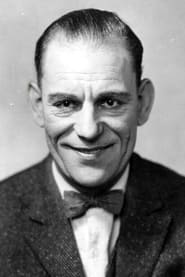
- Lon Chaney, who would later become known as 'The Man of a Thousand Faces,' plays the villain in this early role before his breakthrough in 'The Hunchback of Notre Dame' (1923)
- The film was one of the first to extensively use location shooting in natural wilderness settings, pioneering techniques that would influence later outdoor adventure films
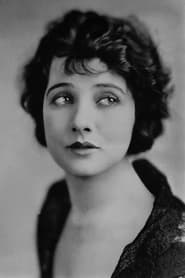
- Betty Blythe, the female lead, was one of the few actresses of the era who performed her own stunts, including several dangerous scenes on ice and in freezing water
- The Northwest Mounted Police uniforms were authentic reproductions provided by the Canadian government, unusual for the time when most films used costume department approximations
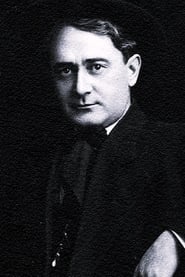
- Director David Hartford was a former actor who transitioned to directing and specialized in outdoor adventure films, often using real wilderness locations
- The film's success led to a 1926 remake also titled 'Nomads of the North' starring Florence Vidor, though the original is considered superior by film historians
- Several scenes featuring wildlife were filmed using trained animals from Universal's menagerie, including wolves and bears that appeared in multiple studio productions
- The film's original tinted version featured blue-tinted scenes for night sequences and amber-tinted scenes for daylight, a common practice in quality silent productions
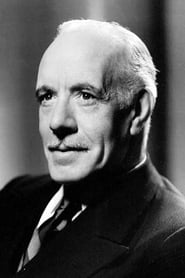
- Lewis Stone, who plays the Mountie, would later become famous for his role as Judge Hardy in the Andy Hardy series, establishing him as one of Hollywood's most reliable character actors
Awards & recognition
- No major awards documented for this film - the Academy Awards were not established until 1929
Visual style
The cinematography by Gilbert Warrenton featured extensive use of natural light and location photography, which was innovative for 1920. Wide shots of mountain landscapes and frozen rivers emphasized the vastness and danger of the wilderness setting. The film employed deep focus techniques to capture both foreground action and background scenery simultaneously. Several scenes used dramatic contrast lighting, particularly in night sequences filmed with blue tints. The camera work during chase sequences was notably dynamic for the period, with tracking shots following characters across snow-covered terrain. The cinematography effectively conveyed the harsh beauty of the northern wilderness, making the environment itself a character in the narrative.
Innovations
The film pioneered several technical innovations for outdoor filming in 1920. The production developed special camera housings to protect equipment from snow and freezing temperatures. They experimented with early forms of artificial snow using corn starch and gypsum when natural conditions were insufficient. The film's river crossing sequences required innovative camera mounting techniques to capture moving water while keeping equipment dry. The production team also developed methods for filming in extreme cold that prevented film from becoming brittle. These technical solutions would later be adopted by other companies filming in challenging weather conditions.
Music
As a silent film, 'Nomads of the North' would have been accompanied by live musical performance during its original theatrical run. The score likely consisted of classical pieces adapted to match the on-screen action, with dramatic themes for chase sequences and romantic melodies for love scenes. Large theaters would have employed full orchestras, while smaller venues used piano or organ accompaniment. The original cue sheets, if they exist, have not been preserved, but contemporary accounts suggest the music emphasized the film's adventure and romantic elements. Modern screenings typically feature newly composed scores or period-appropriate classical selections.
Famous quotes
Duty is a heavy burden when it conflicts with the heart - Corporal O'Connor
In this wilderness, God's law is the only law that matters - Raoul Challoner
A Mountie always gets his man... but sometimes he must choose which man to get - Opening title card
Justice without mercy is but another form of cruelty - Jean Challoner
Memorable scenes
- The dramatic river crossing where the characters must navigate treacherous ice flows while being pursued
- The Mountie's internal conflict scene where he burns his arrest warrant, symbolizing his choice between duty and conscience
- The climactic chase across frozen tundra with real wolves and harsh winter conditions
- The romantic campfire scene where Jean reveals the truth about her brother's innocence
What audiences thought
The film was well-received by audiences of its time, particularly those who enjoyed outdoor adventures and romantic dramas. It performed strongly in smaller cities and rural areas where wilderness stories resonated with local audiences. The Mountie character proved especially popular with American audiences who admired the representation of Canadian law enforcement. Contemporary audience letters preserved in film archives indicate that viewers were particularly moved by the moral dilemma faced by the Mountie protagonist. The film's success led to increased demand for similar wilderness adventure stories throughout the early 1920s.
Film connections
Influenced by
- James Oliver Curwood's wilderness novels
- Earlier Mountie films like 'The Yukon Trail' (1919)
- D.W. Griffith's outdoor location techniques
- Contemporary western films' moral frameworks
This film influenced
- 'The Call of the Wild' (1923)
- Various Mountie films of the 1920s
- Later wilderness adventure films
- Early sound era northern dramas
Film restoration
The film is partially preserved with approximately 70% of the original footage surviving. A 50-minute version exists in the Library of Congress collection, though some key scenes are missing. The surviving footage was discovered in the 1970s in a private collection and has been preserved on 16mm film. Several of the original tinted sequences survive, showing the film's original color scheme. The complete film is considered partially lost, as some footage, particularly from the climactic chase sequence, has not been located. The existing material has been digitized and is available through film archives.
Where to watch
- Available through the Library of Congress's digital collections
- Included in some silent film compilation DVDs
- Occasionally screened at film festivals specializing in silent cinema
- Accessible through select academic film archives
- Available on some streaming platforms specializing in public domain films