Oh, Uncle!
“A Comedy of Errors and Marital Deception”
About Oh, Uncle!
Harry is a young man who has been receiving a generous allowance from his wealthy, bachelor uncle under the false pretense that he is still a single man-about-town. When the uncle unexpectedly announces a visit to Harry's home, panic ensues because Harry has actually married a charming young woman. To prevent the uncle from cutting off his financial support, Harry and his wife concoct a desperate scheme where she must pose as the household's humble and efficient housekeeper. The plan leads to a series of comedic misunderstandings as the uncle becomes increasingly impressed by the 'servant' and begins to flirt with her, forcing Harry to suppress his jealousy while maintaining the charade. Ultimately, the deception is unraveled, leading to a frantic climax where the truth about their marriage must be revealed to the eccentric benefactor.
Cast & crew
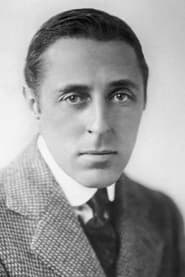
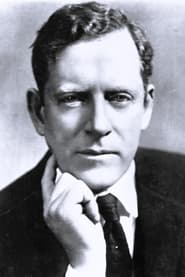
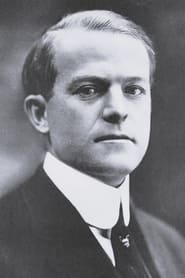
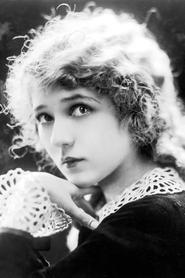
More films like this
More from D.W. Griffith
View all →
More about Oh, Uncle!
Production
- Release date
- August 26, 1909
- Country
- United States
- Production
- Biograph Company
- Filmed in
- Biograph Studio, 11 East 14th Street, New York City, New York
The film was produced during D.W. Griffith's incredibly prolific period at Biograph, where he was directing several short films per week. Like many Biograph shorts of the era, it was filmed on a very tight schedule with a small, recurring ensemble of actors. The production utilized the standard interior sets of the New York studio, which were often repurposed for various domestic comedies and dramas. This film is a prime example of the 'split-reel' or short-form comedy that Biograph used to balance their more serious dramatic output.
Themes & topics
Historical background
In 1909, the motion picture industry was transitioning from a novelty to a legitimate form of mass entertainment. The Biograph Company was at the forefront of this change, led by D.W. Griffith's innovative techniques. This was a time before the 'Star System' was fully established; actors were often not even credited by name on screen, though audiences were beginning to recognize 'The Biograph Girl' (Florence Lawrence) and 'Little Mary' (Mary Pickford). Socially, the film reflects the middle-class anxieties of the Edwardian era regarding inheritance, social standing, and the financial dependence of young couples on older generations.
Why this film matters
While 'Oh, Uncle!' is a light comedy, it represents the foundational building blocks of the American sitcom. The trope of hiding a marriage or a secret from a visiting relative became a cornerstone of 20th-century comedy, seen later in everything from 'I Love Lucy' to modern television. It also marks an important step in the career of Mary Pickford, whose performance here helped solidify her status as a versatile actress capable of both pathos and comedic timing. The film is a testament to the efficiency and creative output of the Biograph 'factory' system.
Making of
During the production of 'Oh, Uncle!', D.W. Griffith was experimenting with the pacing of comedy. He encouraged his actors to use subtle facial expressions rather than the broad, exaggerated gestures typical of the 1900s. Mary Pickford, in particular, was noted for her ability to convey complex emotions through small movements, a skill Griffith helped her hone during these early Biograph sessions. The set was a high-pressure environment where scenes were often captured in just one or two takes to save on expensive film stock. The chemistry between Pickford and Kirkwood was so effective that Griffith cast them together in several other films during this period.
What critics said
Contemporary reviews in trade publications like 'The Moving Picture World' generally praised Biograph comedies for their high production values and clever scripts. Critics noted that the film was 'well-acted and amusing,' providing a lighthearted contrast to the heavier dramas Griffith was producing simultaneously. Modern film historians view it as a charming example of early narrative development, though it is often overshadowed by Griffith's later, more controversial epic works.
What audiences thought
Audiences of 1909 reacted very favorably to the relatable domestic humor. The film was a popular 'filler' in nickelodeons across the United States. Mary Pickford's presence was a significant draw, as she was rapidly becoming a favorite among regular moviegoers, even before her name was widely publicized.
Visual style
The cinematography, handled by Griffith's frequent collaborator G.W. 'Billy' Bitzer, is characterized by a static camera and a 'proscenium' view typical of the era. However, Bitzer and Griffith were beginning to use slightly closer framing to capture the nuances of the actors' expressions. The lighting is flat and even, typical of the glass-roofed studios of the time which relied heavily on natural sunlight.
Innovations
The film demonstrates Griffith's early mastery of continuity editing, ensuring that the physical comedy and the 'hide-and-seek' nature of the plot remained clear to the audience without the need for excessive intertitles. The use of props and set dressing to define the 'housekeeper's' role was an effective use of visual storytelling.
Music
As a silent film, 'Oh, Uncle!' had no recorded soundtrack. It would have been accompanied by a live pianist or organist in the theater, who would play popular ragtime tunes or light classical music to match the comedic tempo of the scenes.
Film restoration
The film is preserved in the Paper Print Collection at the Library of Congress. It has been transferred to safety film and is available for scholarly study and public viewing.
Did you know?
- This film features Mary Pickford in one of her early roles before she became 'America's Sweetheart.'
- The film was released on a 'split reel,' sharing space with another Biograph short titled 'The Seventh Day.'
- Director D.W. Griffith was known for his 'Biograph style,' which emphasized naturalistic acting over the stagey melodrama common at the time.
- James Kirkwood, who plays Harry, would later become a major director himself, working with stars like Mary Pickford in her later features.
- Billy Quirk, playing the Uncle, was one of the first recognized comedy stars of the silent era, often appearing in 'Muggsy' shorts.
- The film's plot is a variation on the 'rich relative' trope, which was a staple of Vaudeville theater and early silent comedy.
- At the time of filming, Mary Pickford was only 17 years old but was already a seasoned professional on the stage and screen.
- The film was shot on 35mm black and white nitrate stock, the standard of the era.
Memorable scenes
- The scene where the Uncle arrives and Harry frantically hides his wife's personal belongings to make the house look like a bachelor pad.
- The comedic sequence where the Uncle attempts to flirt with the 'housekeeper' while Harry watches in suppressed rage from the background.
- The final reveal where the Uncle discovers the marriage certificate, leading to a moment of tension followed by a comedic resolution.
Influenced by
- French Farce
- Vaudeville Sketch Comedy
- The plays of Molière
This film influenced
- The Taming of the Shrew (1908)
- The Honeymooners
- Three's Company
Where else to watch
- Library of Congress Archives
- Selected silent film compilations on DVD
- Public domain streaming sites like YouTube or Internet Archive
Famous quotes
Intertitle: 'Harry's uncle, a wealthy bachelor, believes his nephew is still single.'
Intertitle: 'The wife agrees to play the part of the servant to save Harry's allowance.'