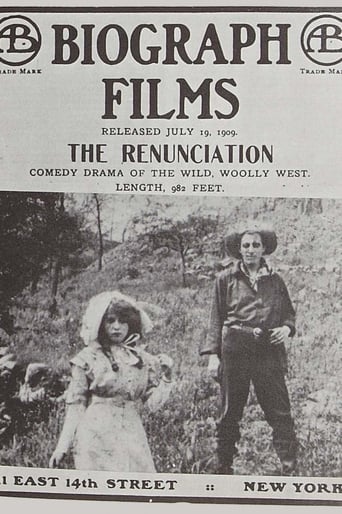
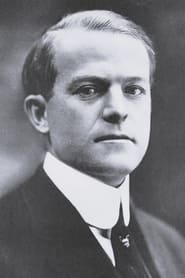
Billy Quirk

Billy Quirk

Actor

Born: March 27, 1873 in New York City, New York, USA Died: April 10, 1926 Active: 1908-1924 Birth Name: William J. Quirk

About Billy Quirk

Billy Quirk was a prolific character actor during the early silent film era, appearing in over 200 films between 1908 and 1924. He began his career with the Biograph Company, where he frequently worked under the direction of D.W. Griffith, becoming one of the director's reliable supporting actors. Quirk specialized in comedic roles and was known for his expressive face and physical comedy skills, which translated well to the medium of silent film. Throughout his career, he worked with other pioneering directors like Mack Sennett and appeared alongside early film stars such as Mary Pickford and Lionel Barrymore. As the film industry evolved and feature-length productions became the norm, Quirk continued to work steadily, though often in smaller roles. His career spanned the formative years of American cinema, from the early one-reelers to more sophisticated productions of the early 1920s. Quirk's final years were marked by declining health, though he continued to appear in films until shortly before his death in 1926.

The Craft

On Screen

Billy Quirk was known for his expressive facial features and physical comedy abilities, which made him particularly effective in silent film where visual storytelling was paramount. His acting style was typical of the early silent era - exaggerated gestures and facial expressions to convey emotion and intent to audiences. Quirk specialized in comic relief roles and character parts, often playing the bumbling friend, the drunkard, or the comic villain. His performances were energetic and broad, perfectly suited to the short one-reel comedies that dominated early cinema. As films became more sophisticated, Quirk adapted his style while maintaining his distinctive comedic timing.

Milestones

  • Early work with Biograph Company
  • Frequent collaborations with D.W. Griffith
  • Transition from short films to feature-length productions
  • Over 200 film appearances during silent era

Best Known For

Iconic Roles

  • Comedic supporting characters
  • Drunkards and comic relief roles
  • Character parts in D.W. Griffith films

Must-See Films

  • The Lonely Villa
  • 1909
  • The Golden Louis
  • 1909
  • A Trap for Santa Claus
  • 1909
  • What's Your Hurry?
  • 1909
  • The Unchanging Sea
  • 1910
  • awards
  • nominations
  • honors
  • Pioneer of American cinema,Contributor to over 200 early films
  • personalLife
  • Billy Quirk was married to actress Florence Lee, with whom he frequently appeared on screen. The couple had one child together. Quirk was known among his contemporaries as a hardworking and reliable actor who could be counted on for consistent performances. His personal life was relatively unremarkable compared to many of his Hollywood contemporaries, and he maintained a steady career throughout the silent era. In his later years, Quirk suffered from declining health, which eventually led to his early death at the age of 53.
  • spouses
  • Florence Lee (married until his death in 1926)
  • children
  • One child (name not widely documented)
  • education
  • Not widely documented in historical records
  • studioAffiliations
  • Biograph Company,Mack Sennett Studios,Various independent production companies
  • frequentCollaborators
  • D.W. Griffith,Mack Sennett,Mary Pickford,Lionel Barrymore,Florence Lee
  • mentors
  • D.W. Griffith (as director)
  • protégés
  • culturalImpact
  • Billy Quirk represents the generation of actors who helped establish the language of cinema during its formative years. As a supporting player in hundreds of early films, he contributed to the development of film acting techniques and helped audiences understand how to interpret performances on screen. His work with pioneering directors like D.W. Griffith placed him at the forefront of cinematic innovation, from early one-reelers to more complex narrative films. Quirk's specialized comic roles helped establish the importance of comic relief in dramatic narratives, a convention that continues in filmmaking today. Though not a star, his consistent presence in early cinema makes him an important figure in understanding the evolution of American film acting.
  • legacy
  • Billy Quirk's legacy lies in his contribution to the foundation of American cinema during its most experimental and formative period. With over 200 film appearances, he represents the working actors who formed the backbone of the early film industry. His films, particularly those directed by D.W. Griffith, are studied by film historians as examples of early cinematic techniques and storytelling methods. While his name is not widely recognized today, film scholars and silent film enthusiasts acknowledge his role in helping establish conventions of film acting and narrative structure. Quirk's career trajectory also illustrates the transition from the early short film format to the feature-length productions that would come to dominate Hollywood.
  • influence
  • Billy Quirk influenced the development of supporting character roles in early cinema, particularly in the realm of comic performance. His work with D.W. Griffith helped establish patterns of ensemble acting that would become standard in narrative filmmaking. While he did not directly mentor famous actors who would follow, his consistent performances in hundreds of films provided a model for reliable character acting that subsequent generations of performers would emulate. Quirk's specialized comic roles demonstrated how supporting characters could enhance narrative films without overshadowing the main story, a balance that continues to be important in filmmaking.
  • trivia
  • Appeared in over 200 films during his career,Frequently worked with pioneering director D.W. Griffith,Was married to actress Florence Lee, his frequent co-star,Specialized in comic relief roles during the silent era,Began his career during the earliest days of American cinema,Worked for the Biograph Company, one of the first film studios,Appeared in both short one-reelers and early feature films,His career spanned the transition from early cinema to more sophisticated film productions,Died at the relatively young age of 53,Many of his films are now considered lost due to the deterioration of early film stock
  • famousQuotes
  • controversies
  • externalLinks
  • [object Object]
  • faq
  • [object Object],[object Object],[object Object],[object Object],[object Object]

Films

11 films