Nursing a Viper
"When a mob attacks a nearby chateau an aristocrat bursts into the."
Keys: Space play/pause · ←/→ 10s · F fullscreen · M mute · </> speed
About this film
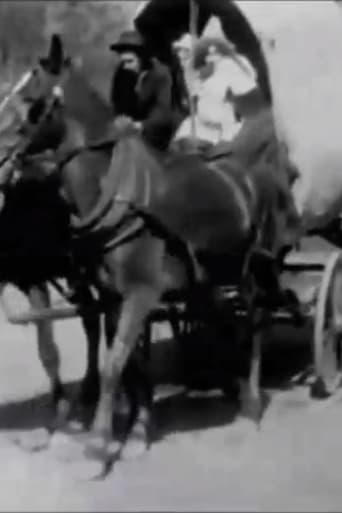
During the French Revolution, a wealthy couple lives safely by professing republican beliefs. When a mob attacks a nearby chateau an aristocrat bursts into the couple's home. They save his life by disguising him as a servant, but he soon forces his attentions on the wife.
Cast & crew
More films like this


More Drama films
View all →







More from D.W. Griffith
View all →
More about this film
About the production
Release dateJuly 15, 1909
Box officeNo records available from this period
ProductionAmerican Mutoscope and Biograph Company
Filmed inFort Lee, New Jersey, New York City, New York
This film was produced during D.W. Griffith's early tenure at Biograph, where he directed approximately 450 short films between 1908 and 1913. The production utilized natural lighting and minimal sets, typical of Biograph's economical approach. The French Revolution setting was created with period costumes and props rather than location shooting. The film was shot on 35mm film stock at Biograph's studio facilities in New York and on location in New Jersey.
Themes
Themes & topics
Historical background
The 1909 release of Nursing a Viper belongs to its era's exhibition habits rather than today's franchise model.
Why this film matters
Reference works on 1909 cinema cite Nursing a Viper when tracing genre and regional production patterns.
Making of
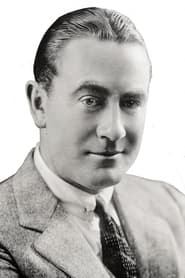
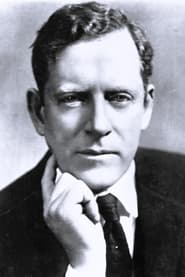
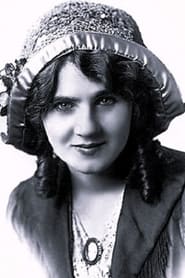
The production of 'Nursing a Viper' took place during a crucial period in Griffith's development as a filmmaker. Working under the constraints of Biograph's factory-like production system, Griffith was learning to tell complete stories within the severe time limitations of one-reel films (approximately 10-12 minutes). The cast was composed of Biograph's stock company actors, with whom Griffith worked regularly and developed a shorthand communication style. Arthur V. Johnson, Marion Leonard, and Frank Powell were among Griffith's most trusted performers during this period. The film was shot quickly, likely in just one or two days, using natural lighting and minimal set construction. Griffith was already experimenting with camera positioning and editing techniques that would become his trademarks, though this film primarily uses the more straightforward continuity editing common to the period. The mob scenes would have required coordination of numerous extras, a challenge for early filmmakers working with limited resources and technical equipment.
What critics said
Specialist critics today emphasize preservation when a viewable copy of Nursing a Viper survives.
Did you know?
- This film was part of D.W. Griffith's prolific 1909 output, during which he directed over 140 films for Biograph
- Arthur V. Johnson, who plays the aristocrat, was one of Griffith's favorite actors and appeared in over 200 of his films
- The film's title comes from the ancient proverb 'Nursing a viper in one's bosom,' referring to showing kindness to someone who betrays that trust
- Marion Leonard, who plays the wife, was married to fellow Biograph actor Harry Solter and was one of the era's most popular actresses
- Frank Powell, who plays the husband, would later become a director himself, most notably directing the controversial 1915 film 'The Birth of a Nation' after Griffith's departure from Biograph
- The film was released during a period when Griffith was rapidly developing his cinematic techniques, including cross-cutting and close-ups
- Like many Biograph films of this era, it was originally shown on a bill with several other short films as part of a typical theater program
- The film's French Revolution setting was part of a trend in early cinema to use historical settings to add dramatic weight to moral tales
- The mob scenes were likely filmed with Biograph's stock company of actors and extras, many of whom appeared in multiple films
- This film predates Griffith's more famous works but already shows his developing interest in moral complexity and social themes
Visual style
The cinematography of 'Nursing a Viper' reflects the state of the art in 1909, with the use of stationary camera positions typical of the period. The film was likely shot by Biograph staff cinematographers such as G.W. 'Billy' Bitzer or Arthur Marvin, who worked regularly with Griffith. The camera placement follows the theatrical convention of a fixed audience perspective, with scenes composed as if on a stage. Natural lighting was used, with scenes filmed outdoors or in studios with large windows to maximize available light. The film employs medium shots for most scenes, with occasional closer shots to emphasize emotional moments, a technique Griffith was pioneering. The mob scenes would have required wider shots to accommodate the larger number of actors. The cinematography serves the narrative clearly, with compositions designed to ensure the story's action and emotional beats are easily understood by the audience.
Innovations
While 'Nursing a Viper' does not represent major technical innovations, it demonstrates Griffith's growing mastery of emerging cinematic techniques. The film makes effective use of continuity editing to maintain narrative clarity across different locations within the couple's home. Griffith was beginning to experiment with cross-cutting between parallel actions, though this technique would be more fully developed in his later works. The film also shows Griffith's developing understanding of pacing and rhythm in editing, using cuts to build tension during the confrontation scenes. The use of disguise as a plot device allows for visual storytelling through costume changes rather than relying solely on intertitles. The mob scenes demonstrate early attempts at managing large groups of extras for dramatic effect, a challenge that would become easier with more advanced camera and lighting equipment in subsequent years.
Music
Like all films of 1909, 'Nursing a Viper' was a silent production accompanied by live music during exhibition. The specific musical accompaniment would have varied by theater, ranging from a single piano player to small ensembles in larger venues. Theater musicians would have selected appropriate music from their libraries, using popular songs, classical pieces, and stock musical cues to match the film's mood and action. Dramatic scenes like the aristocrat's attack on the wife would have been accompanied by tense, agitated music, while the mob scenes would have called for dramatic, chaotic musical passages. The French Revolution setting might have inspired the use of period-appropriate music like the 'Marseillaise' or other revolutionary songs. Some theaters employed cue sheets that suggested specific musical pieces for different types of scenes, though these were not standardized until later in the silent era.
Famous quotes
No dialogue was recorded in this silent film; any quotes would come from intertitles, which are not documented in available sources
Memorable scenes
- The aristocrat's desperate flight from the mob and seeking refuge in the couple's home
- The tense moment when the couple disguises the aristocrat as a servant
- The attempted assault on the wife by the man she saved
- The husband's intervention and dramatic unmasking of the aristocrat
- The final scene where the exposed aristocrat is thrust out to face the mob
What audiences thought
Audience reception of 'Nursing a Viper' in 1909 would have been gauged primarily through box office receipts and theater bookings rather than systematic surveys or reviews. Biograph films of this period were generally popular with audiences, and Griffith's work was becoming recognized for its emotional power and storytelling clarity. The film's dramatic subject matter and moral lesson would have appealed to the predominantly working-class and middle-class audiences who attended nickelodeons and early movie theaters. The French Revolution setting would have provided exotic visual interest while the story's themes of betrayal and justice would have resonated with contemporary audiences. Like most films of the era, it would have been shown as part of a varied program including comedies, travelogues, and other dramatic shorts, with individual films rarely being the primary draw for audiences.
Film connections
Influenced by
- Stage melodrama
- Literary adaptations of the French Revolution
- Earlier Biograph shorts
- Theatrical traditions
- Contemporary social dramas
- Moral tales and parables
This film influenced
- Later Griffith films dealing with moral complexity
- Other Biograph productions of 1909-1910
- Early American dramatic shorts
- Films exploring similar themes of betrayal and justice
Film restoration
The preservation status of 'Nursing a Viper' is uncertain, as many Biograph films from this period have been lost. The Library of Congress holds an extensive collection of Biograph films, but specific records for this title are not clearly documented. Some early Biograph films survive only in fragmentary form or as paper prints submitted for copyright registration. The Museum of Modern Art and other film archives have worked to preserve surviving Biograph titles, but the existence of a complete print of 'Nursing a Viper' has not been definitively confirmed in major film preservation databases.
Where to watch
- The film is not currently available on major streaming platforms. Potential viewing options might include: The Library of Congress's online collections (if preserved), The Museum of Modern Art's film archives, Specialized film archive screenings, Academic film collections, Silent film festivals featuring Griffith's early works