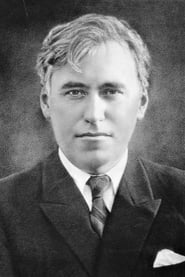

The Redman's View
"Removal and separation"
Keys: Space play/pause · ←/→ 10s · F fullscreen · M mute · </> speed
About this film
An Indian village is forced to leave its land by white settlers, and must make a long and weary journey to find a new home. The settlers make one young Indian woman stay behind.
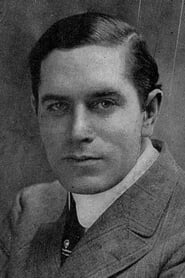
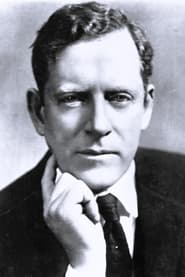
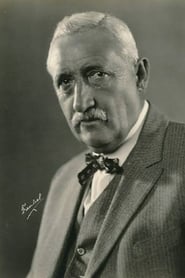
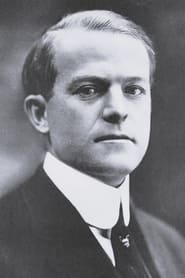
Cast & crew
More films like this


More Western films
View all →

More from D.W. Griffith
View all →
More about this film
About the production
Release dateOctober 14, 1909
ProductionAmerican Mutoscope and Biograph Company
Filmed inCalifornia, New Jersey
Filmed during D.W. Griffith's early period at Biograph, this short was typical of the one-reelers produced at the time. The production utilized outdoor locations to create authentic Western settings, a practice Griffith was pioneering. The Native American roles were played by white actors in makeup, which was standard practice for the era. Griffith was already experimenting with narrative techniques that would later define his cinematic style, including cross-cutting and emotional close-ups. The film was shot on 35mm black and white film stock, with intertitles to convey dialogue and narrative progression.
Themes
Displacement and forced migrationLove and separationCultural conflictSacrifice and dutyThe cost of progress
Themes & topics
Historical background
The Redman's View reached screens around 1909, produced in its country of origin. Programs then mixed actualities, dances, and staged scenes in single-reel slots.
Why this film matters
Researchers cite The Redman's View when tracing screen culture of its decade. Its brevity makes it useful for teaching how early narratives were staged.
Making of
The production of 'The Redman's View' took place during a remarkably prolific period in D.W. Griffith's career, when he was directing multiple films per week for the Biograph Company. The cast and crew worked under demanding conditions, often completing entire productions in just one or two days. Owen Moore and Lottie Pickford were part of Griffith's regular stock company of actors, appearing together in numerous Biograph productions. The outdoor filming required the crew to transport heavy equipment to remote locations, a significant challenge in 1909. Griffith was already developing his signature directorial style, experimenting with camera placement and narrative structure that would influence generations of filmmakers. The film's emotional depth and technical sophistication demonstrate Griffith's rapid evolution as a cinematic artist during this formative period of American cinema.
What critics said
Reviewers in 1909 weighed The Redman's View on clarity, pacing, and audience response rather than prestige status. No single canonical review dominates later reference works for the title.
Did you know?
- This was one of over 450 short films D.W. Griffith directed for the Biograph Company between 1908 and 1913
- Lottie Pickford, sister of the famous Mary Pickford, appears in this film during her early acting career
- The film was released just three years after the 1906 San Francisco earthquake, which had dramatically affected the film industry
- Owen Moore, who plays the Native American lead, would later marry Mary Pickford in 1911
- The film represents an early example of sympathetic Native American characterization, contrasting with many more hostile portrayals of the era
- At 16 minutes, this was considered a relatively long film for its time, when most pictures were under 10 minutes
- The Biograph Company often reused sets and locations across multiple films to maximize efficiency
- This film was produced during the same period as Griffith's more famous early works like 'A Corner in Wheat' (1909)
- The film's intertitles were likely hand-lettered by Biograph staff, as was common practice before standardized title cards
- Griffith was paid approximately $50 per week during his Biograph period, regardless of how many films he directed
Visual style
The cinematography by G.W. 'Billy' Bitzer, Griffith's regular collaborator, demonstrates the evolving visual sophistication of early American cinema. The film utilizes natural lighting for outdoor scenes, creating authentic Western atmospheres that enhanced the narrative realism. Bitzer employed static camera positions typical of the era but varied his framing to create visual interest and emotional emphasis. The use of location shooting rather than studio sets gave the film a visual authenticity that audiences of the period found compelling. Close-ups were used selectively to highlight emotional moments, a technique Griffith was pioneering during this period. The black and white cinematography creates stark contrasts that emphasize the dramatic elements of the story. The visual composition shows early signs of the cinematic language Griffith would later perfect, with careful attention to framing within the confined space of early film cameras.
Innovations
While 'The Redman's View' was not technically revolutionary for its time, it demonstrates several important developments in early filmmaking. The film represents Griffith's growing mastery of narrative construction within the one-reel format, using intertitles efficiently to convey story elements. The use of cross-cutting between different storylines shows Griffith's experimentation with parallel narrative techniques that would become fundamental to cinematic language. The outdoor location filming required portable equipment and logistical planning that was becoming increasingly sophisticated by 1909. The film's emotional pacing and rhythm demonstrate Griffith's understanding of cinematic timing and audience engagement. The relatively long running time for the period allowed for more complex character development than typical early shorts. The preservation of the film provides valuable documentation of early 20th-century film production techniques and the evolution of cinematic storytelling.
Music
As a silent film, 'The Redman's View' would have been accompanied by live musical performance during its original theatrical run. Typical Biograph releases were accompanied by piano or organ music, with theaters providing cue sheets suggesting appropriate musical selections for different scenes. The emotional nature of the story would have called for romantic and melancholic musical pieces during key dramatic moments. No original score was composed specifically for the film, as was standard practice for productions of this era. Modern screenings of restored versions often feature newly composed scores that attempt to capture the spirit of early 20th-century film accompaniment. The musical accompaniment would have played a crucial role in conveying emotion and narrative progression to contemporary audiences, compensating for the absence of recorded dialogue or sound effects.
Famous quotes
The white man comes with his papers and his guns, but the Great Spirit gave us this land
My heart walks with you, though my feet must stay behind
The journey is long and my father is old, but my spirit will carry us both
This land remembers our ancestors' footsteps - how can we leave it?
Love is stronger than the distance between us
Memorable scenes
- The emotional farewell between the young lovers as they are forcibly separated, with the young woman watching her beloved depart with his elderly father across the vast landscape
- The village elders discussing their forced displacement, conveying the weight of historical injustice through silent performance
- The arduous journey sequence showing the Native American tribe trekking across difficult terrain, emphasizing their resilience and determination
- The final scene suggesting the enduring connection between the separated lovers despite their physical distance
What audiences thought
Early audiences responded positively to 'The Redman's View,' particularly appreciating its emotional storyline and romantic elements. The film's themes of love and sacrifice resonated with nickelodeon patrons of the era, who were increasingly sophisticated in their appreciation of narrative films. The Western setting was popular with urban audiences who romanticized the vanishing frontier. The film's relatively longer running time for the period allowed for more character development than typical one-reelers, which audiences seemed to appreciate. The tragic romance between the young Native American lovers provided the kind of emotional melodrama that proved particularly appealing to early film audiences. The film's success contributed to Griffith's growing reputation as one of Biograph's most reliable directors and helped establish the commercial viability of more complex narrative films.
Film connections
Influenced by
- Stage melodramas of the late 19th century
- Contemporary literature about the American West
- Earlier Biograph Western shorts
- Griffith's own previous work exploring social themes
- Theatrical traditions of romantic tragedy
- Popular dime novels about frontier life
This film influenced
- Later Griffith Westerns and epics
- The development of the sympathetic Western genre
- Early 1920s films with more positive Native American portrayals
- John Ford's early Western work
- The evolution of cross-cutting techniques in narrative cinema
Film restoration
The film survives in archives and has been preserved by film institutions including the Library of Congress and the Museum of Modern Art. While not completely lost like many films from this period, existing prints may show signs of deterioration typical of early nitrate film stock. The film has been digitized as part of early cinema preservation efforts, ensuring its accessibility for modern audiences and scholars. The survival rate of Griffith's Biograph films is relatively high compared to other directors of the era, making 'The Redman's View' one of the fortunate examples of early American cinema that remains accessible for study and appreciation.
Where to watch
- Available on DVD collections of D.W. Griffith's early Biograph films
- Streaming on specialized classic film platforms
- Accessible through film archive websites and educational institutions
- Occasionally screened at film festivals and museum retrospectives dedicated to early cinema
- Available through public domain collections and digital film archives