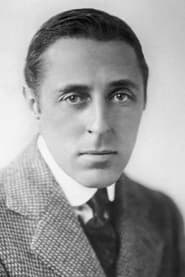
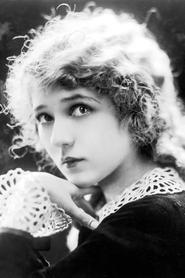
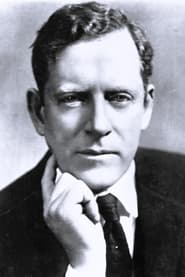

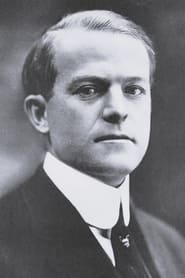

The Renunciation
"A miner's murder plot stops when love walks in."
Keys: Space play/pause · ←/→ 10s · F fullscreen · M mute · </> speed
About this film
Two miners are fighting over a woman, and one is about to murder the other in his sleep. At the critical moment, the woman introduces her fiancé from the city.
Cast & crew
More films like this

More Western films
View all →



More from D.W. Griffith
View all →
More about this film
About the production
Release dateMay 6, 1909
ProductionAmerican Mutoscope and Biograph Company
Filmed inBiograph Studio, New York City, Fort Lee, New Jersey
This was one of hundreds of short films D.W. Griffith directed for Biograph during their prolific 1908-1909 period. The film was shot in a single day, as was typical for Biograph productions of this era. The mining camp setting was likely created on Biograph's outdoor stages in Fort Lee, New Jersey, which was becoming the center of American film production before the industry moved to Hollywood.
Themes
Jealousy and rivalryMoral choice and redemptionCivilization versus frontier violenceGender dynamics in the Old WestThe futility of possessive love
Themes & topics
mining camplove triangleattempted murdermoral choiceinterventionfrontier lifejealousyengagementrenunciation
Historical background
The Renunciation (1909) reached screens through American Mutoscope and Biograph Company. Exhibitors of the time built nickelodeon-era programs that mixed shorts, features, and live acts, so a clear premise helped The Renunciation travel between cities and exchange markets.
Why this film matters
Archivists and revival programmers still cite The Renunciation (1909) when tracing studio habits, casting pools, and the visual rhetoric audiences once took for granted. Even modest surviving prints help map how The Renunciation fit beside competing releases of its day.
Making of
The production of 'The Renunciation' followed the efficient Biograph system of the era, where films were shot quickly on minimal budgets. Griffith was developing his directorial style during this period, experimenting with camera placement, editing rhythms, and actor performance. Mary Pickford, though young, was already showing the naturalistic acting style that would make her famous. The mining camp setting was typical of Griffith's early work, which often explored themes of civilization versus wilderness. The film was likely shot in one or two days with a small crew, using natural lighting and simple sets. Griffith was known for his meticulous attention to detail even in these early shorts, often rehearsing scenes multiple times to achieve the desired emotional impact.
What critics said
Trade coverage around 1909 discussed The Renunciation for pacing, clarity, and program fit rather than blockbuster grosses. Later writers value it as evidence of period style and as a reference point beside other films from the same era.
Did you know?
- the production was released when Mary Pickford was only 16 years old, early in her career before she became known as 'America's Sweetheart'
- D.W. Griffith directed approximately 450 short films for Biograph between 1908 and 1913, with 'The Renunciation' being one of his lesser-known works
- The film was shot on 35mm film at Biograph's unique 68mm format before being reduced to standard 35mm for distribution
- Anthony O'Sullivan, who plays one of the miners, was a regular Griffith collaborator who appeared in over 200 of the director's films
- James Kirkwood would later become a prominent director himself, working with stars like Mary Pickford and Pearl White
- The film's theme of romantic rivalry was a common trope in early Westerns, reflecting the perceived lawlessness of frontier life
- Like many Biograph films of this period, 'The Renunciation' was likely shown in vaudeville theaters as part of mixed bills rather than dedicated cinema screenings
- The film was released during a period when American cinema was transitioning from novelty to narrative storytelling, with Griffith at the forefront of this evolution
Visual style
The cinematography of 'The Renunciation' reflects the technical limitations and emerging techniques of 1909. Shot by Biograph's regular cinematographers, likely G.W. Bitzer or Arthur Marvin, the film uses static camera positions typical of the period, with the camera positioned to capture the entire action in a wide shot. The lighting would have been natural or basic studio lighting, creating high contrast images characteristic of early film. The composition follows theatrical conventions, with actors arranged across the frame for maximum clarity. The film may include some camera movement, as Griffith was beginning to experiment with techniques like panning to follow action. The visual style emphasizes clarity and narrative comprehension over artistic flourish, reflecting the primary goal of early narrative cinema to tell stories clearly to audiences still learning to read the language of film.
Innovations
While 'The Renunciation' does not represent a major technical breakthrough, it was part of Griffith's rapid development of film language during his Biograph period. The film likely demonstrates Griffith's growing mastery of continuity editing, ensuring clear spatial and temporal relationships between shots. The use of parallel action, showing the would-be murderer approaching while the victim sleeps, reflects Griffith's experiments with building suspense through editing. The film was shot on Biograph's proprietary film stock and processed in their laboratories, representing the vertically integrated production system of the era. At 6 minutes, the film represents the increasing length of narrative films as audiences became more sophisticated in their understanding of cinematic storytelling. The lighting and exposure techniques used would have been advanced for the period, demonstrating Biograph's technical leadership in the early film industry.
Music
As a silent film, 'The Renunciation' would have been accompanied by live music during theatrical presentations. The specific musical score is not documented, as was typical for films of this era. The accompaniment would have been provided by whatever musicians were available at each venue, ranging from a single pianist in small theaters to full orchestras in larger venues. The music would likely have included popular songs of the period, classical pieces, and improvised accompaniment timed to match the on-screen action. For dramatic moments like the attempted murder scene, the music would have become more intense and suspenseful, while the resolution would have been accompanied by more peaceful, romantic themes. The quality and style of musical accompaniment varied widely depending on the venue and the skill of the musicians.
Famous quotes
No recorded dialogue exists from this silent film
Memorable scenes
- The tense sequence where the jealous miner approaches his sleeping rival with weapon in hand, creating suspense through the looming threat of violence that is ultimately averted by the woman's timely intervention
What audiences thought
Audience reception in 1909 would have been positive for most Biograph releases, as the novelty of cinema itself was still a major draw. The simple moral tale of jealousy and renunciation would have been easily understood and appreciated by contemporary audiences. The presence of Mary Pickford, though not yet a star, would have been noted by regular filmgoers who were beginning to recognize favorite actors despite the lack of screen credits. The Western setting and dramatic conflict would have provided the excitement and entertainment value that early cinema audiences sought. Like most films of this era, it would have been shown as part of a varied program, with its impact measured by the overall quality of the presentation rather than as an individual work.
Film connections
Influenced by
- Stage melodrama conventions
- Contemporary dime novels about the West
- Earlier Biograph Western shorts
- Griffith's previous films exploring moral themes
This film influenced
- Later Griffith films exploring moral redemption
- Western shorts with similar love triangle plots
- Early films featuring Mary Pickford in moral dilemma roles
Film restoration
The preservation status of 'The Renunciation' (1909) is unclear, as many Biograph films from this period have been lost. However, the Library of Congress and other film archives hold extensive collections of D.W. Griffith's Biograph films. If the film survives, it would likely exist as a paper print deposited for copyright purposes, as was required by law during this period. Some of these paper prints have been converted back to film format. The Museum of Modern Art and the British Film Institute also hold significant collections of Griffith's early work. Researchers should consult the American Film Institute Catalog and the Library of Congress's motion picture holdings for current information on the film's survival status and accessibility.
Where to watch
- If preserved, the film may be available through specialized film archives
- Possible inclusion in collections of D.W. Griffith's early works
- Potential availability through academic film libraries
- May be included in comprehensive collections of early American cinema