What's Your Hurry?
"Papa is proud of his new birthday present, a shotgun"
Keys: Space play/pause · ←/→ 10s · F fullscreen · M mute · </> speed
About this film
Papa is proud of his new birthday present, a shotgun. Mary's boyfriend arrives for a visit and she is anxious to introduce him to Papa. When Harry sees Papa walk in with a shotgun he misunderstands and departs in terror.
Cast & crew
More films like this

More Comedy films
View all →







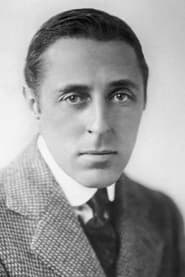
More from D.W. Griffith
View all →
More about this film
About the production
Release dateOctober 1909
Box officeUnknown - box office records were not systematically kept for short films in 1909
ProductionAmerican Mutoscope and Biograph Company
Filmed inFort Lee, New Jersey, New York City areas
This was one of approximately 45 films D.W. Griffith directed for Biograph in 1909 alone, during his incredibly prolific early period. The film was shot on 35mm film in black and white, typical of Biograph productions. Like most shorts of this era, it was likely filmed in just one or two days with minimal rehearsal time.
Themes
MiscommunicationCourtship and romanceFamily dynamicsGeneration gapFear and misunderstanding
Themes & topics
Historical background
Released in 1909 during cinema's first decade, What's Your Hurry? reached audiences when exhibitors were still defining programming conventions. The narrative hook—Papa is proud of his new birthday present, a shotgun—reflects what contemporary producers thought would draw viewers.
Why this film matters
What's Your Hurry? remains discussed by archivists tracing how screen stories of its period represented work, desire, conflict, and social order. Its central situation—Papa is proud of his new birthday present, a shotgun—still prompts questions about genre conventions and audience expectations.
Making of
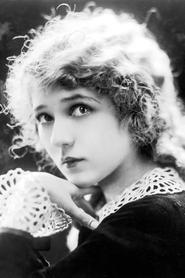
The making of 'What's Your Hurry?' was typical of the factory-like production system at Biograph under Griffith's direction. The company operated out of their studio in Fort Lee, New Jersey, which was then the center of American film production before the industry moved to Hollywood. Griffith was developing his directorial techniques during this period, experimenting with camera movement, cross-cutting, and narrative structure. The cast would have rehearsed briefly before shooting, with Griffith often improvising scenes on set. Mary Pickford, though still a teenager, was already showing the star quality that would make her famous. The film was likely shot in sequence with minimal takes due to the expensive film stock and tight production schedules. The outdoor scenes were filmed in the New York/New Jersey area, taking advantage of natural locations before studio backlots became common.
What critics said
Trade and newspaper notices for What's Your Hurry? generally emphasized casting, spectacle, and program fit rather than extended aesthetic argument. Retrospective screenings and archival notes continue to shape how viewers evaluate What's Your Hurry? today.
Did you know?
- This film showcases Mary Pickford in her early career before she became known as 'America's Sweetheart' and powerful women in Hollywood.
- D.W. Griffith directed 45 films for Biograph in 1909 alone, averaging nearly one film per week.
- The shotgun prop used in the film was likely a real firearm, as safety regulations for film props were virtually non-existent in 1909.
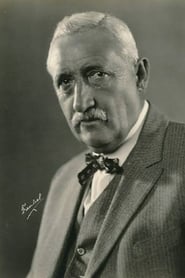
- George Nichols, who plays the father, was the father of famous director Jack Nichols and appeared in over 200 films between 1908-1930.
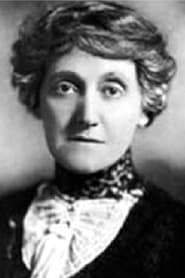
- Kate Bruce, who appears in the cast, would become one of Griffith's favorite character actresses, appearing in many of his major works including 'The Birth of a Nation'.
- The film was released during the period when Biograph was transitioning from their unique 68mm format to the industry-standard 35mm.
- Like most Biograph films of this era, it was likely shot in natural light either outdoors or in glass-enclosed studios.
- The title 'What's Your Hurry?' was a common phrase in early 20th century America, often used to tell someone to slow down or be patient.
- This film represents early examples of the chase comedy genre that would become extremely popular in silent cinema.
- The misunderstanding trope used in this film would become a staple of romantic comedy cinema for decades to come.
Visual style
The cinematography in 'What's Your Hurry?' reflects the technical standards of Biograph productions in 1909. The film was shot by G.W. Bitzer, Griffith's regular cameraman, using stationary cameras typical of the period. The lighting was primarily natural, either outdoors or through the glass walls of Biograph's studio. The camera work is functional rather than artistic, with medium shots dominating to capture the actors' expressions and movements. There are no close-ups, as that technique was not yet widely used. The composition follows the theatrical tradition of keeping the entire action within the frame. The film was shot on 35mm film at approximately 16 frames per second, the standard speed of the era.
Innovations
While 'What's Your Hurry?' does not feature major technical innovations, it represents the solid technical standards of Biograph productions in 1909. The film demonstrates the growing sophistication of narrative construction in early cinema, with clear cause-and-effect storytelling. The editing, while basic by modern standards, shows Griffith's developing sense of rhythm and pacing in comedy. The film's continuity and clear narrative progression were achievements for the period, when many films still suffered from confusing storytelling. The use of multiple locations, while simple, shows the expanding scope of film production beyond single-set scenarios. The film's preservation of visual clarity and consistent exposure reflects Biograph's reputation for technical excellence in the early film industry.
Music
As a silent film, 'What's Your Hurry?' had no synchronized soundtrack. During its theatrical run, musical accompaniment would have been provided live in the theater, typically by a pianist or small ensemble. The music would have been selected from standard compilations of popular and classical pieces, with the accompanist choosing appropriate music to match the mood of each scene - upbeat tunes for the comedy, suspenseful music for the chase sequences, and romantic themes for the reunion. No specific score was composed for this film, as individualized film scores would not become common until the late 1920s.
Famous quotes
No recorded dialogue - silent film with intertitles that have not been preserved in common documentation
Memorable scenes
- The climactic scene where Harry repeatedly encounters Papa with the shotgun in various locations, each time fleeing in panic while the bewildered father grows increasingly confused by these strange encounters, culminating in Papa physically dragging Harry back to the house for an explanation.
What audiences thought
Audiences in 1909 would have received 'What's Your Hurry?' as an entertaining comedy short, typical of the fare shown in Nickelodeon theaters. The simple premise and physical comedy would have been easily understood and appreciated by audiences of diverse backgrounds and literacy levels. The film's brief runtime made it perfect for the mixed programming of the era, where multiple shorts would be shown in one sitting. The presence of Mary Pickford, even before she achieved major stardom, would have been a draw for regular Biograph filmgoers. The misunderstanding plot would have generated laughs and been considered successful if it kept the audience engaged for its entire duration.
Film connections
Influenced by
- Stage comedy traditions
- Vaudeville routines
- Earlier Biograph comedy shorts
- French comedy films of the era
This film influenced
- Later chase comedy shorts
- Mack Sennett's Keystone comedies
- Harold Lloyd comedy shorts
- Early romantic comedy features
Film restoration
The film is believed to be preserved in film archives, likely including the Library of Congress and Museum of Modern Art collections, as part of the extensive Biograph film holdings. However, like many films from this era, it may exist only in incomplete or deteriorated copies. The film is part of the public domain due to its age.
Where to watch
- Available on various public domain film websites
- Included in some D.W. Griffith early works collections
- May be found on YouTube and other video platforms
- Accessible through film archive websites like the Internet Archive
- Sometimes included in early cinema DVD compilations