Faithful
"Feeling sorry for him."
Keys: Space play/pause · ←/→ 10s · F fullscreen · M mute · </> speed
About this film
Adonese is returning home from seeing the woman he is courting, and he is driving around a corner when his car accidentally brushes against the tramp 'Faithful' and knocks him over. Feeling sorry for him, Adonese helps him up and buys him a new suit of clothes. The naively innocent Faithful reads too much into this gesture, and he begins to follow his benefactor everywhere, expecting to receive future gifts.
Cast & crew
More films like this
More Comedy films
View all →







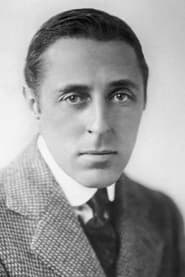
More from D.W. Griffith
View all →
More about this film
About the production
Release dateFebruary 3, 1910
ProductionAmerican Mutoscope and Biograph Company
Filmed inFort Lee, New Jersey, New York City
This film was produced during D.W. Griffith's prolific period at Biograph, where he directed hundreds of short films between 1908 and 1913. The production utilized natural lighting and location shooting, which was innovative for the time. The automobile featured in the film represented modern technology and wealth, serving as a visual symbol of the class divide between the protagonist and the tramp character.
Themes
Class differencesMisunderstood generositySocial mobilityAppearance versus realityInnocence and naivety
Themes & topics
trampautomobilemistaken identitybenefactorclothing transformationclass conflictcomedy of errorssocial climbingmisunderstandingwealthpovertykindnesspersistence
Historical background
Viewers in 1910 encountered Faithful alongside competing releases that were collectively teaching new cinematic grammar.
Why this film matters
Restorations and festival bookings keep Faithful visible among classic-film communities.
Making of
The filming of 'Faithful' took place during a transitional period in American cinema when productions were moving from New York studios to the open spaces of New Jersey and eventually California. D.W. Griffith was experimenting with narrative techniques that would later become fundamental to cinematic language. The cast worked without scripts in the modern sense, relying instead on scenario outlines and improvisation. Mack Sennett, though primarily known for comedy, displays a more restrained performance here under Griffith's direction. The production faced the typical challenges of 1910 filmmaking, including unpredictable weather for outdoor scenes and the limitations of early camera equipment. The automobile scene required careful choreography to ensure safety while creating the illusion of impact, as stunt coordination was rudimentary at best.
What critics said
Modern retrospectives screen Faithful to illustrate 1910 pacing and camera norms.
Did you know?
- This film was released during the height of D.W. Griffith's creative period at Biograph, where he averaged nearly three films per week.
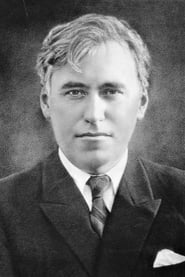
- Mack Sennett, who plays Adonese, would later become famous as 'The King of Comedy' and founder of Keystone Studios.
- The title 'Faithful' refers ironically to the tramp character's misguided loyalty to his benefactor.
- Automobiles were still relatively rare in 1910, making the car crash a significant visual element that emphasized modernity and wealth.
- The film was shot on 35mm film at approximately 16 frames per second, the standard speed of the era.
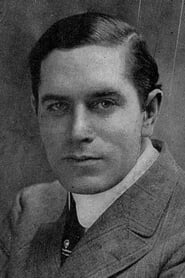
- Arthur V. Johnson was one of Griffith's favorite leading men, appearing in over 100 of the director's films.
- The suit transformation scene was accomplished through a simple cut, as special effects technology was extremely limited in 1910.
- This film is one of the earliest examples of the 'misunderstood generosity' trope that would become common in later comedy films.
- The Biograph Company typically released films on a split-reel basis, meaning this 11-minute film would have shared a reel with another short feature.
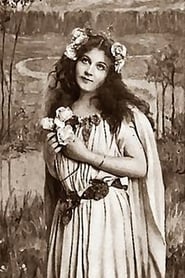
- Florence Barker, who plays the love interest, died tragically young in 1913 at age 22, cutting short a promising career.
Visual style
The cinematography of 'Faithful' reflects the technical limitations and aesthetic conventions of 1910 filmmaking. Shot by Biograph's regular cameramen, likely including G.W. Bitzer or Arthur Marvin, the film utilizes static camera positions typical of the period, with the camera remaining fixed for most scenes. The lighting relies entirely on natural illumination for exterior scenes, creating the high-contrast look characteristic of early outdoor filming. The composition follows the theatrical tradition of placing important action in the center of the frame, though Griffith was beginning to experiment with more dynamic staging. The transformation of the tramp's appearance is achieved through simple editing rather than technical effects, demonstrating the straightforward approach to visual storytelling of the era. The film's visual style prioritizes clarity of narrative over artistic experimentation, ensuring that audiences could easily follow the comedic situations.
Innovations
While 'Faithful' does not feature major technical innovations, it demonstrates the refinement of filmmaking techniques that were cutting-edge in 1910. The film employs continuity editing to maintain narrative coherence across multiple scenes and locations. The use of location shooting, rather than relying entirely on studio sets, represents the increasing mobility of film production equipment. The automobile sequence required careful timing and coordination between actors and camera operator to create the illusion of impact safely. The costume transformation, though simple, effectively communicates character change through visual means. The film's pacing and rhythm show Griffith's developing understanding of how to structure comedic timing through editing. The preservation of the film itself represents a technical achievement, as many films from this period have been lost due to the unstable nature of early film stock.
Music
As a silent film, 'Faithful' would have been accompanied by live musical performance during its original theatrical run. The typical accompaniment for a comedy short of this length would have been a pianist or small ensemble playing popular tunes of the era, classical pieces, or specially compiled mood music. The music would have been synchronized to the on-screen action, with upbeat tempos during comedic moments and more sentimental melodies for the romantic subplot. No original score was composed specifically for this film, as individualized film scoring would not become common practice until the late 1920s. The musical accompaniment would have varied from theater to theater, with each venue's musicians selecting appropriate pieces from their repertoire. Modern screenings of the film typically feature period-appropriate music compiled by silent film accompanists.
Famous quotes
As a silent film, 'Faithful' contains no spoken dialogue. The story is told entirely through visual action, intertitles, and the actors' performances.
Memorable scenes
- The transformation scene where the tramp changes from ragged clothes to a new suit, visually representing his hope for social advancement. The persistent following sequence where Faithful shadows Adonese through various locations, creating increasingly awkward situations. The initial automobile accident that sets the entire plot in motion, demonstrating both the novelty of cars and the theme of unintended consequences.
What audiences thought
Audiences in 1910 generally received 'Faithful' positively as an entertaining short comedy that provided both laughs and a simple moral lesson. The visual transformation of the tramp character likely appealed to viewers' fascination with makeovers and social mobility fantasies. The automobile scene would have been particularly exciting for audiences, as cars were still novel and impressive to most people in 1910. The film's straightforward narrative and clear character motivations made it accessible to the increasingly diverse immigrant audiences who were becoming a significant portion of moviegoers. The chemistry between the lead actors and the resolution of the comedic misunderstandings would have provided satisfying entertainment for the typical nickelodeon patron of the era.
Film connections
Influenced by
- Theatrical comedy traditions
- Victorian literature themes
- Silent era narrative conventions
- Biograph studio style
- D.W. Griffith's developing directorial methods
This film influenced
- Later comedy shorts featuring mistaken generosity
- Charlie Chaplin's tramp character films
- Keystone Studio comedies
- Harold Lloyd's transformation comedies
Film restoration
The film is preserved in the Library of Congress collection and has been made available through various archival sources. As a Biograph production, it survived the company's practice of copying films for international distribution, which inadvertently preserved many titles that might otherwise have been lost. The existing prints show some deterioration typical of nitrate film from this period, but remain viewable. The film has been digitized as part of various silent film preservation initiatives and is occasionally screened at film festivals and archival presentations.
Where to watch
- The film is available through the Library of Congress's National Film Registry website
- Various silent film streaming platforms and archives
- Specialized DVD collections of D.W. Griffith's early work
- Museum of Modern Art's film collection screenings
- UCLA Film & Television Archive viewings