A Strange Meeting
"A torn woman is drawn into robbing her own minister."
Keys: Space play/pause · ←/→ 10s · F fullscreen · M mute · </> speed
About this film
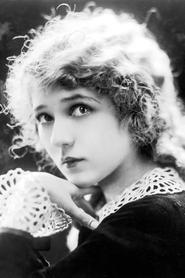
Mary Rollins is torn between selfish depravity and righteous living. After she's coerced into helping with the burglary of her minister's apartment, she comes face to face with her misdeeds.
Cast & crew
More films like this


More Drama films
View all →







More from D.W. Griffith
View all →
More about this film
About the production
Release dateOctober 21, 1909
ProductionAmerican Mutoscope and Biograph Company
Filmed inNew York City, New York, Biograph Studio, Manhattan
Filmed during D.W. Griffith's prolific period at Biograph where he directed approximately one film per week. The film was shot on 35mm black and white film stock typical of the era. As with most Biograph productions of 1909, this was likely completed in one or two days with minimal rehearsal time. The production utilized natural lighting and basic interior sets constructed at the Biograph studio in Manhattan.
Themes
Moral choice and redemptionCrime and punishmentReligious faith and doubtSocial class and opportunityUrban corruption
Themes & topics
Historical background
A Strange Meeting (1909) survives in catalogs and archives as a record of the earliest projected-film era.
Why this film matters
Scholars and collectors reference A Strange Meeting when discussing how the earliest projected-film era filmmakers addressed popular themes.
Making of
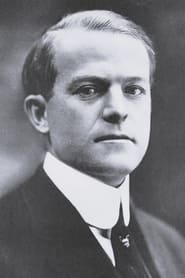
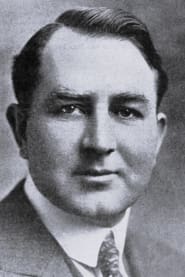
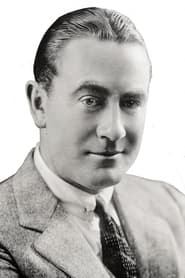
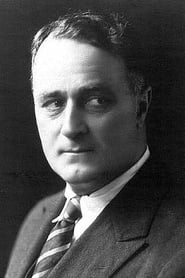
The production of 'A Strange Meeting' took place during D.W. Griffith's formative years at the Biograph Company, where he was rapidly developing his directorial voice. Working with cinematographer Billy Bitzer, Griffith was experimenting with narrative techniques that would later become hallmarks of classical cinema. The cast, comprised primarily of Biograph's stock company actors, would have been familiar with Griffith's directing style and expectations. Arthur V. Johnson, one of Griffith's most trusted performers, likely brought gravitas to his role, while Mack Sennett was still early in his career before transitioning to comedy. The film was shot in the cramped Biograph studio spaces, requiring creative staging and camera placement. Griffith was known for his meticulous attention to detail even in these rapid productions, often demanding multiple takes to achieve the emotional tone he desired. The burglary sequence would have required careful choreography within the limited space available, showcasing the technical ingenuity of early filmmakers working under significant constraints.
What critics said
Later retrospectives treat A Strange Meeting (1909) as representative the earliest projected-film era fare valued by archivists and genre historians.
Did you know?
- This was one of over 140 short films D.W. Griffith directed in 1909 alone, demonstrating his incredible productivity during this period.
- Arthur V. Johnson, who plays a leading role, was one of Griffith's favorite actors and appeared in dozens of Biograph films during this era.
- Mack Sennett, who appears in this film, would later become famous as the founder of Keystone Studios and a pioneer of slapstick comedy.
- Stephanie Longfellow, who plays Mary Rollins, was the grandniece of renowned poet Henry Wadsworth Longfellow.
- The film was released during a pivotal year when Griffith was beginning to develop his signature cinematic techniques that would revolutionize filmmaking.
- Like many Biograph films of this period, original prints were often destroyed after their theatrical run to recover the silver content from the film stock.
- This film was part of Griffith's series of moral tales that explored themes of redemption and social consciousness.
- The minister character was typical of Griffith's tendency to include religious authority figures as moral anchors in his narratives.
- Biograph films from 1909 were typically distributed to nickelodeons, where admission cost just five cents.
- The film's title reflects Griffith's tendency to use evocative, often mysterious titles that suggested the film's dramatic content.
Visual style
The cinematography in 'A Strange Meeting' reflects the work of Billy Bitzer, Griffith's longtime collaborator and among the leading innovative cinematographers of the early cinema era. The film likely employs the relatively static camera positions typical of 1909, but with Griffith's emerging sense of visual composition and dramatic framing. The burglary sequence would have utilized careful lighting to create shadows and suspense within the confined sets. Bitzer and Griffith were beginning to experiment with camera movement and angle variations during this period, though most shots would still have been from eye level. The film was shot on 35mm black and white film stock, with the visual contrast enhanced through careful lighting design. The interior scenes would have been lit using artificial lighting, as natural light was insufficient for the slow film stocks of the era. The visual storytelling emphasizes facial expressions and gestures, which were crucial for conveying emotion and narrative in silent cinema.
Innovations
While 'A Strange Meeting' may not feature groundbreaking technical innovations, it was produced during a period when Griffith and his cinematographer Billy Bitzer were developing many techniques that would become fundamental to cinema. The film likely demonstrates Griffith's emerging mastery of continuity editing and narrative pacing, which were still being refined in 1909. The cross-cutting techniques that Griffith was pioneering during this period may be evident in the burglary sequence, creating tension by cutting between different actions and perspectives. The film also reflects the sophistication of Biograph's production values, including professional lighting design and set construction that were advancing beyond the primitive conditions of earlier cinema. The emotional performances directed by Griffith represent an advancement in screen acting, moving away from the theatrical style of earlier films toward more naturalistic expression suitable for the intimate medium of cinema.
Music
As a silent film, 'A Strange Meeting' would have been accompanied by live musical performance during theatrical exhibitions. The typical nickelodeon presentation would have featured a pianist or small ensemble providing improvised or stock musical accompaniment. For dramatic scenes like the burglary, the music would have been tense and suspenseful, while moments of moral revelation would have been accompanied by more uplifting or contemplative themes. Some theaters might have used cue sheets published by the studios to guide musicians in selecting appropriate pieces. The musical selections would have drawn from popular classical pieces, operatic excerpts, and original compositions specifically created for film accompaniment. The score would have been crucial in establishing mood and enhancing the emotional impact of key scenes, particularly in conveying Mary's internal conflict and the film's moral themes.
Famous quotes
No dialogue exists as this is a silent film, but intertitles would have conveyed key narrative points such as Mary's moral struggle and the consequences of her choices.
Memorable scenes
- The burglary sequence where Mary confronts her conscience while helping to rob her minister's apartment, creating dramatic tension between her criminal actions and moral awareness.
What audiences thought
Audiences in 1909 would have received 'A Strange Meeting' as a compelling moral tale that resonated with the social and ethical concerns of the Progressive Era. The film's themes of redemption and moral choice would have appealed to the largely working-class nickelodeon audiences who sought both entertainment and moral guidance from motion pictures. The dramatic burglary sequence would have provided the excitement and suspense that audiences craved, while the resolution would have satisfied their desire for moral clarity. Contemporary accounts suggest that Griffith's films were consistently popular with audiences, who appreciated his emotional storytelling and the recognizable faces of Biograph's stock company actors. The film's relatively short runtime (approximately 11 minutes) made it ideal for the varied programming typical of nickelodeon exhibitions, where it would have been shown alongside other short subjects.
Film connections
Influenced by
- Stage melodramas of the 19th century
- Victorian moral literature
- Social reform movements of the Progressive Era
- Earlier Biograph productions
- Contemporary theatrical productions
This film influenced
- Later Griffith moral tales
- Biograph crime dramas of 1910-1911
- Early Hollywood social problem films
- Moral melodramas of the 1910s
Film restoration
The preservation status of 'A Strange Meeting' is uncertain, as many Biograph films from 1909 have been lost. However, the Library of Congress and other film archives hold extensive collections of Griffith's Biograph work, and prints or fragments may exist in these collections. Some early Griffith films have been preserved through paper prints submitted for copyright protection, which can be reconstructed. The Museum of Modern Art and the British Film Institute also maintain collections of early American films that may include this title.
Where to watch
- The film may be available through specialized film archives
- Potential inclusion in comprehensive D.W. Griffith collections
- Possible availability through academic film libraries
- May be included in streaming services specializing in early cinema
- Could be accessed through the Library of Congress's digital collections if preserved