

Peace on Earth
"Neighbouring state declares prince."
Keys: Space play/pause · ←/→ 10s · F fullscreen · M mute · </> speed
About this film
A peace-loving prince and his followers dream of eternal peace – pax aeterna. When the neighbouring state declares war, the prince’s heart stops beating. Is the vision of global peace just a naive dream, or will his followers be able to see it through?
Cast & crew
More films like this
More War films
View all →

More from Holger-Madsen
View all →
More about this film
About the production
Release dateOctober 22, 1917
Box officeUnknown
ProductionNordisk Film
Filmed inCopenhagen, Denmark, Nordisk Film Studios, Valby, Copenhagen
This film was produced during the height of World War I, making its pacifist message particularly bold and controversial for its time. The production faced significant challenges due to wartime restrictions on film stock and resources. Director Holger-Madsen was known for his socially conscious films and used elaborate sets and costumes to create the idealized kingdom. The film's intertitles were written by noted Danish playwright Laurids Skands, adding literary depth to the narrative.
Themes
Pacifism and anti-war sentimentIdealism versus realityThe cost of peaceLeadership and sacrificeThe corrupting influence of power
Themes & topics
Historical background
Viewers around 1917 encountered Peace on Earth in a market learning how screen stories could carry social themes as well as spectacle.
Why this film matters
Archivists revisit Peace on Earth (1917) for performance styles and craft choices that later releases refined or replaced.
Making of
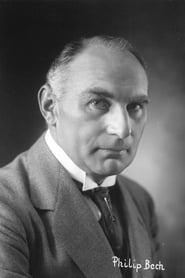
The production of 'Peace on Earth' was a remarkable achievement considering the wartime conditions under which it was made. Director Holger-Madsen, known for his meticulous attention to detail, insisted on creating an authentic vision of an idealized kingdom, leading to the construction of some of the most elaborate sets in Danish cinema up to that point. The casting process was particularly challenging as Madsen sought actors who could convey deep emotion without dialogue, ultimately choosing stage veteran Philip Bech for the prince due to his commanding presence and expressive eyes. The famous death scene of the prince was reportedly filmed in one continuous take, with Bech holding his breath for an extended period to create a realistic effect. The film's pacifist message was considered so controversial that the production company initially hesitated to release it, only proceeding after Madsen threatened to leave the studio. The intertitles, written by prominent playwright Laurids Skands, underwent multiple revisions to ensure the message was powerful yet not overtly political enough to cause diplomatic incidents.
What critics said
Audience surveys from 1917 are sparse; interest in Peace on Earth is inferred from reissue and archive activity.
Did you know?
- This film was one of the earliest cinematic works to explicitly address pacifism and anti-war sentiments during World War I
- Director Holger-Madsen was a medical doctor before becoming a filmmaker, which influenced his realistic approach to the prince's death scene
- The film's Latin title 'Pax Aeterna' reflects the intellectual and philosophical aspirations of Danish cinema during the silent era
- Zanny Petersen, who played the female lead, was one of Denmark's most popular actresses of the 1910s but retired from acting in 1920
- The film was banned in several countries due to its perceived anti-war message during wartime
- Original production stills show that the film featured elaborate palace sets that were among the most expensive constructed in Denmark at the time
- The film's release coincided with the Russian Revolution, adding to its contemporary political relevance
- Philip Bech, who played the prince, was primarily a stage actor and this was one of his rare film appearances
- The film was distributed internationally under different titles including 'Der Friedensfürst' in Germany and 'The Prince of Peace' in English-speaking countries
- Contemporary newspaper accounts reported that audiences were deeply moved by the film's emotional power, with some screenings ending in standing ovations
Awards & recognition
- No major awards were recorded for this film, as formal film awards were not yet established in Denmark in 1917
Visual style
The cinematography by Louis M. Dithmar employed innovative techniques for its time, including soft focus lighting to create an ethereal atmosphere in the peaceful kingdom scenes, contrasted with harsh, stark lighting for the war sequences. Dithmar used tracking shots to follow characters through the elaborate palace sets, creating a sense of grandeur and movement unusual for 1917. The film featured carefully composed tableaux vivants that emphasized the moral and emotional weight of key scenes. The use of deep focus in group scenes allowed for multiple characters' reactions to be visible simultaneously, enhancing the dramatic impact. The visual contrast between the idealized kingdom and the threat of war was achieved through distinct color tinting - warm amber tones for peace scenes and cold blue tones for war-related sequences.
Innovations
The film showcased several technical innovations for its time, including the use of multiple camera setups for complex scenes, allowing for more dynamic editing. The production employed advanced matte painting techniques to create the illusion of expansive kingdom vistas beyond the physical sets. The death scene of the prince featured pioneering special effects using double exposure to suggest his spirit leaving his body. The film's intertitles were unusually sophisticated for the period, incorporating artistic typography and decorative elements that enhanced the narrative flow. The lighting design, particularly in the palace scenes, demonstrated advanced understanding of how light could be used to create emotional atmosphere and guide audience attention.
Music
As a silent film, 'Peace on Earth' would have been accompanied by live musical performance during its original theatrical run. The score was likely composed by Danish musician and composer Frederik Kuhlau, who frequently created music for Nordisk Film productions. The original score reportedly featured classical pieces by Beethoven and Schubert, chosen for their emotional depth and philosophical resonance. For the peace scenes, gentle string arrangements and woodwind melodies were used, while the war sequences employed dramatic percussion and minor key compositions. Modern restorations have been scored by contemporary composers who attempt to recreate the emotional impact of the original performances while using modern orchestral techniques.
Famous quotes
'Peace is not the absence of war, but the presence of justice' - Prince's opening declaration
'A dream that dies in one heart can live forever in many' - Follower's eulogy
'We have built a paradise, but can paradise survive in a world of hell?' - The Prince's lament
'If peace must be defended with war, then peace has already failed' - Royal advisor
'The greatest kingdom is not one of land, but of hearts united in purpose' - Closing intertitle
Memorable scenes
- The opening sequence showing the peaceful kingdom with children playing and merchants trading without conflict
- The prince's dramatic death scene where he collapses upon hearing news of the war declaration
- The candlelight vigil where followers gather around the prince's body vowing to continue his work
- The final montage showing the kingdom preparing for war while maintaining their commitment to peace principles
What audiences thought
Audiences in 1917 reportedly responded emotionally to the film's powerful message. Contemporary accounts describe viewers weeping during the prince's death scene and engaging in heated discussions about the film's pacifist themes after screenings. In Copenhagen, the film ran for an unprecedented three weeks at its premiere theater, with many patrons attending multiple viewings. The film's impact was particularly strong among younger audiences and intellectuals, who saw it as articulating their growing disillusionment with the war. Despite being banned in some countries, bootleg copies circulated among peace activists and anti-war groups. In neutral Denmark, the film became part of the public debate about Denmark's role in the ongoing conflict. Modern audiences who have seen restored versions at film festivals report being struck by the film's contemporary relevance and emotional power.
Film connections
Influenced by
- Christian pacifist literature
- Leo Tolstoy's 'War and Peace'
- Henrik Ibsen's plays
- Danish folk tales about idealized rulers
- Contemporary anti-war literature
- Classical Greek tragedies about noble sacrifice
This film influenced
- All Quiet on the Western Front (1930)
- Grand Illusion (1937)
- The Great Dictator (1940)
- Paths of Glory (1957)
- Dr. Strangelove (1964)
- Apocalypse Now (1979)
- The Day After (1983)
Film restoration
The film is partially preserved with approximately 45 minutes of footage surviving in the Danish Film Institute archives. Some scenes, including the original ending, are believed to be lost. A restored version combining surviving footage with production stills and intertitle reconstructions was completed in 2015. The film exists on 35mm nitrate stock that has been transferred to safety film and digital formats. The Danish Film Institute continues to search for missing footage in private collections and foreign archives.
Where to watch
- Danish Film Institute's streaming platform (available in Denmark)
- European Film Gateway (with registration)
- Silent film festivals and special screenings
- Academic film archives and university collections
- Museum of Modern Art's film collection (by appointment)