

Pocket Maar
"A pickpocket repays a dead man's debt"
Keys: Space play/pause · ←/→ 10s · F fullscreen · M mute · </> speed
About this film
Roshan is a pickpocket whose life changes after a man he steals money from commits suicide. Driven by guilt, he sets out to repay the money to the deceased man's family.
Cast & crew
More films like this
More Action films
View all →

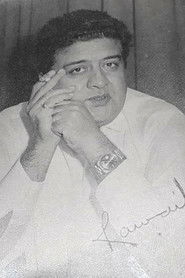
More from Harnam Singh Rawail
View all →
More about this film
About the production
Release date1956
ProductionFilmistan
Filmed inBombay (now Mumbai), India
Produced by Sashadhar Mukherjee under the Filmistan banner, which was one of the major studios of the 1950s. The film was shot during the golden era of Bollywood when Filmistan was known for producing socially relevant films with strong moral messages. The production team faced challenges in creating realistic urban settings that reflected post-independence Bombay's complex social fabric.
Themes
Redemption and moral transformationUrban alienation and anonymityGuilt and conscienceSocial responsibilityClass disparity and poverty
Themes & topics
pickpocketguiltredemptionurban crimemoral transformationsuicidefamily responsibilityreformationBombay1950s India
Historical background
Pocket Maar appeared around 1956, as television reshaped how films found viewers.
Why this film matters
Pocket Maar reflects the range of mid-century production beyond a single national mainstream.
Making of
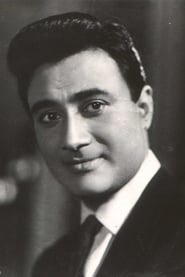
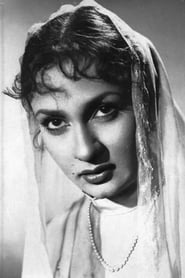
The making of 'Pocket Maar' involved extensive research into the world of petty crime in 1950s Bombay. Director Harnam Singh Rawail spent months studying police records and interviewing former criminals to ensure authenticity in the portrayal. Dev Anand, known for his method approach to acting, reportedly spent time observing actual pickpockets in crowded Bombay markets to understand their techniques and psychology. The film's production team built elaborate sets recreating the bustling streets of Bombay, including the famous Crawford Market area. The emotional climax scenes required multiple takes as both Dev Anand and Geeta Bali were deeply invested in their characters' emotional journeys. The film's cinematographer, V. Ratra, used innovative camera techniques to create a sense of claustrophobia in the street scenes, contrasting with more open framing during the redemption sequences.
What critics said
Press notices for Pocket Maar (1956) are sparse in digitized sources; interest today rests on preserved prints and comparison with related titles.
Did you know?
- Dev Anand's performance as the guilt-ridden pickpocket was considered one of his most nuanced roles in the 1950s, showcasing his ability to portray complex moral dilemmas
- The film was one of the early Bollywood productions to focus on the psychology of criminal rehabilitation rather than just the crime itself
- Geeta Bali, who played the female lead, was known for her natural acting style and was particularly praised for her emotional scenes in
- The pickpocketing sequences were choreographed with actual former pickpockets as consultants to ensure authenticity
- Nadira's role as the sophisticated antagonist marked her transition from being typecast as just a vamp to more complex character roles
- The film's title 'Pocket Maar' (Pocket Thief) was considered controversial by some censors for seemingly glorifying theft, though the film's message was clearly anti-crime
- Director Harnam Singh Rawail was known for his socially conscious films, and this was his second collaboration with Dev Anand
- The film's success led to several similar productions exploring themes of criminal redemption in late 1950s Bollywood
- The costume design for Dev Anand's character evolution from street criminal to reformed citizen was carefully planned to reflect his moral transformation
- The film was released during a period when Indian cinema was increasingly addressing urban social issues rather than just rural narratives
Awards & recognition
- Filmfare Award for Best Actor - Dev Anand (nominated but won for 'CID' the same year)
Visual style
The cinematography by V. Ratra employed a distinctive visual style that contrasted the dark, claustrophobic world of street crime with the brighter, more open spaces of moral redemption. The film used innovative camera movements in the pickpocketing sequences, creating tension through handheld techniques that were relatively new to Indian cinema. The urban landscapes of Bombay were captured with documentary-like realism, using natural lighting and location shooting to enhance authenticity. The visual transformation of Dev Anand's character was emphasized through careful lighting choices - shadowy and obscured during his criminal phase, gradually becoming more illuminated as he reforms. The film also made effective use of deep focus to capture the bustling city life, creating a sense of the protagonist's anonymity within the urban crowd.
Innovations
For its time, 'Pocket Maar' incorporated several technical innovations that set it apart from contemporary productions. The film's use of location shooting in actual Bombay streets was relatively uncommon in the 1950s, when most films were shot entirely on studio sets. The pickpocketing sequences employed innovative editing techniques, including quick cuts and close-ups that heightened the tension and excitement. The sound design was particularly noteworthy for its realistic portrayal of urban ambient sounds, creating an immersive experience of 1950s Bombay. The film also experimented with narrative structure, using flashback sequences to reveal the protagonist's backstory, a technique that was still evolving in Indian cinema at the time.
Music
The music for 'Pocket Maar' was composed by the duo Shankar-Jaikishan, with lyrics by Shailendra and Hasrat Jaipuri. The soundtrack featured several memorable songs that became popular in their own right, including 'Dil Ka Haal Sune Dilwala' and 'Aankhon Mein Kya Ji'. The music played a crucial role in the narrative, with songs used to express the protagonist's internal conflicts and emotional journey. The soundtrack blended traditional Indian melodies with Western influences, reflecting the urban setting of the film. The background score was particularly effective in building tension during the pickpocketing sequences and providing emotional depth during the redemption scenes. The music contributed significantly to the film's commercial success and remains popular among classic Bollywood music enthusiasts.
Famous quotes
Haath choote hain, lekin dil ke ghaav nahi bharte
Hands may be freed, but the wounds of the heart never heal)
Chori ki kamai se bhara pet bhooka hi rehta hai
A stomach filled with stolen earnings remains hungry)
Galti insaan se hoti hai, saza insaan nahi deta
Mistakes are made by humans, but humans don't give punishment)
Memorable scenes
- The opening pickpocketing sequence in the crowded Bombay market, showcasing Dev Anand's character's skill and the film's technical prowess
- The emotional confrontation scene where Dev Anand's character breaks down while confessing his crime to the victim's family
- The final redemption scene where he anonymously returns all the stolen money through a temple donation
What audiences thought
The film was received positively by audiences who connected with its emotional core and moral message. Dev Anand's massive fan base embraced his more serious role, and the film's box office performance was considered respectable for its time. The story of redemption resonated with post-independence Indian audiences who were navigating their own social and moral transformations. The film's songs, particularly those picturized on Dev Anand and Geeta Bali, became popular and contributed to its commercial success. Audience feedback from the period indicated that many viewers appreciated the film's balanced approach - it neither glorified crime nor preached excessively, instead presenting a nuanced view of human fallibility and the possibility of change.
Film connections
Influenced by
- The film noir tradition of morally ambiguous protagonists
- Italian neorealism's focus on urban poverty
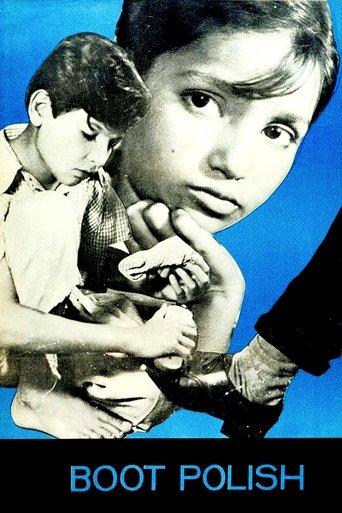
- Previous Bollywood social films like 'Boot Polish' (1954)
- Western films about criminal rehabilitation
This film influenced
- Subsequent Bollywood films featuring reformed criminals as protagonists
- Urban crime dramas of the late 1950s and 1960s
- Films exploring moral complexity in popular Indian cinema
Film restoration
The film has been partially preserved by the National Film Archive of India, though some elements show signs of deterioration common with films from this era. Several restoration efforts have been undertaken by private collectors and classic film enthusiasts, resulting in varying quality versions being available. The original negatives are believed to be in the possession of the Filmistan archives, though they have not undergone complete professional restoration.
Where to watch
- Available on YouTube through official classic Bollywood channels
- Streaming on various Indian classic film platforms
- DVD releases from classic film distributors
- Occasionally broadcast on Indian classic movie television channels