

Popeye the Sailor Meets Ali Baba's Forty Thieves
"Dispatched under pressure"
Keys: Space play/pause · ←/→ 10s · F fullscreen · M mute · </> speed
About this film
Popeye the Sailor, accompanied by Olive Oyl and Wimpy, is dispatched to stop the dreaded bandit Abu Hassan and his force of forty thieves.
Cast & crew
More films like this
More Comedy films
View all →







More from Dave Fleischer
View all →

More about this film
About the production
Release dateNovember 26, 1937
Box officeNot tracked separately for theatrical shorts in 1937, but was highly successful as part of Paramount's exhibition package
ProductionFleischer Studios, Paramount Pictures
Filmed inFleischer Studios, Miami, Florida, Additional animation work at New York studio
This was one of three special three-reel Popeye cartoons produced by Fleischer Studios, given the same treatment as their Betty Boop specials. The animation utilized the Fleischer Studios' trademark 3D background effects (Stereo-optical process) and featured more detailed character animation than regular Popeye shorts. The production took approximately 6-8 months to complete, compared to 4-6 weeks for standard cartoons.
Themes
Themes & topics
Historical background
Popeye the Sailor Meets Ali Baba's Forty Thieves (1937) emerged during the studio-system peak and early sound decades, when exhibition habits and national film industries were still taking shape.
Why this film matters
Popeye the Sailor Meets Ali Baba's Forty Thieves remains accessible through digital archives, giving modern viewers a direct link to 1937 screen culture.
Making of
The production of 'Popeye the Sailor Meets Ali Baba's Forty Thieves' represented a major undertaking for Fleischer Studios, requiring nearly double the resources of a standard Popeye cartoon. The studio had recently relocated from New York to Miami, Florida, taking advantage of cheaper labor and facilities. Director Dave Fleischer supervised a team of approximately 150 animators and artists for this special production. The voice recording sessions were particularly lively, with Jack Mercer (Popeye), Mae Questel (Olive Oyl), and Lou Fleischer (Wimpy) often ad-libbing lines that made it into the final cut. The animation team developed new techniques for depicting desert landscapes and sand effects, creating some of the most visually striking backgrounds in the Popeye series. The film's elaborate action sequences required extensive planning through storyboards and preliminary animation tests, a practice that was becoming standard for high-budget animated features.
What critics said
Trade and revival screenings have kept Popeye the Sailor Meets Ali Baba's Forty Thieves (1937) on the map for collectors and scholars rather than mass first-run promotion.
Did you know?
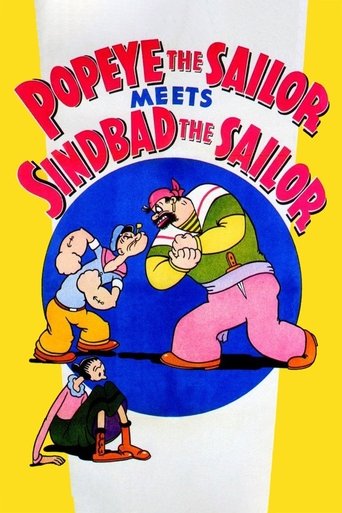
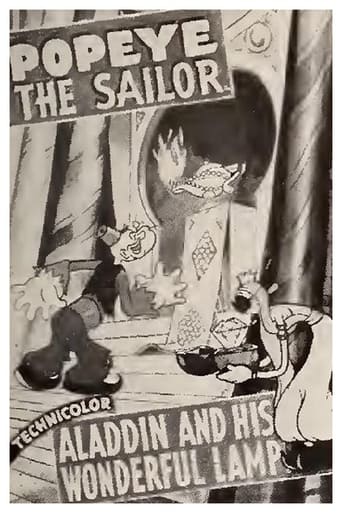
- This was the second of three special three-reel Popeye cartoons, following 'Popeye the Sailor Meets Sindbad the Sailor' (1936) and preceding 'Aladdin and His Wonderful Lamp' (1939)
- The cartoon was nominated for an Academy Award for Best Animated Short Film, though it did not win
- Abu Hassan was designed to resemble the then-popular actor Wallace Beery, known for playing tough, burly characters
- The thieves' chant 'Open Sesame' was a direct reference to the original Arabian Nights tale, but with a comedic twist
- This cartoon featured some of the most complex animation sequences ever produced by Fleischer Studios at the time
- The original theatrical release included a live-action introduction featuring Max Fleischer
- The spinach sequence in this cartoon is particularly elaborate, showing Popeye's transformation in multiple stages
- The film's success led to increased merchandising of Popeye in Arabian-themed toys and products
- Voice actor Jack Mercer improvised many of Popeye's mumbling asides during recording sessions
- The cartoon was one of the first to use the multiplane camera effect extensively for depth in the desert scenes
Awards & recognition
- Academy Award nomination for Best Animated Short Film (1938)
Visual style
The cartoon showcases Fleischer Studios' innovative Stereo-optical process, which created a 3D effect by placing animated cels over three-dimensional miniature sets. This technique was particularly effective in the desert scenes, creating an unprecedented sense of depth and space in animation. The cinematography employed dynamic camera movements, including sweeping pans across the desert landscape and dramatic zooms during action sequences. The lighting effects were sophisticated for the time, with realistic shadows and highlights that enhanced the three-dimensional illusion. The film used color tinting in certain releases, particularly for the desert sequences, creating a golden, sun-baked atmosphere. The animation team developed new techniques for depicting sand, dust, and wind effects that added to the visual realism. The chase sequences featured innovative perspective shots that followed the action through complex environments, demonstrating the cinematographers' mastery of movement and composition.
Innovations
The cartoon pioneered several technical innovations in animation, most notably the extensive use of the Stereo-optical process for creating three-dimensional backgrounds. The animation team developed new methods for depicting complex crowd scenes with forty thieves moving simultaneously, a significant technical challenge for the time. The film featured some of the most sophisticated character animation of its era, with particularly fluid movement during the action sequences. The sand and dust effects were created using multiple animation techniques including rotoscoping and particle animation, resulting in remarkably realistic environmental effects. The production utilized early forms of exposure sheets for precise timing of animation and sound, improving synchronization quality. The cartoon also featured innovative use of color processing in some releases, experimenting with two-color Technicolor for certain sequences. The complex camera movements and perspective shots required new mechanical solutions for the animation stands, pushing the boundaries of what was technically possible in 1937.
Music
The musical score was composed by Sammy Timberg, Fleischer Studios' resident composer who created many of Popeye's most memorable musical themes. The soundtrack incorporated original compositions along with adaptations of traditional Arabian melodies, creating an authentic exotic atmosphere while maintaining the cartoon's comedic tone. The famous 'I'm Popeye the Sailor Man' theme was cleverly integrated with Middle Eastern musical elements. Sound effects were particularly innovative for the time, with the Foley team creating distinctive sounds for the thieves' movements, the desert environment, and Popeye's spinach-powered actions. The voice performances by Jack Mercer, Mae Questel, and Lou Fleischer were recorded using the latest sound technology of the era, capturing their nuanced performances with clarity. The musical accompaniment during the action sequences was synchronized precisely with the animation, enhancing the comedic timing and dramatic impact. The soundtrack also featured early use of stereo effects in some theaters, taking advantage of emerging sound technology.
Famous quotes
I'm strong to the finich, 'cause I eats me spinach!
Well, blow me down!
Open sesame? I'll open your face!
Abu Hassan, you're going to jail!
That's all I can stands, 'cause I can't stands no more!
Memorable scenes
- The spectacular opening sequence showing the vast Arabian desert with the Stereo-optical 3D effect
- Popeye's transformation after eating spinach, shown in multiple stages with dynamic animation
- The elaborate battle scene where Popeye single-handedly defeats all forty thieves
- The discovery of the thieves' hidden cave with its treasure-filled interior
- The comedic chase sequence through the desert landscape with innovative camera movements
- The final confrontation between Popeye and Abu Hassan with its dramatic buildup and resolution
What audiences thought
The cartoon was enormously popular with audiences upon its release, often playing to sold-out theaters as part of double bills. Children and adults alike responded enthusiastically to Popeye's heroic adventure and the spectacular action sequences. The film's success led to increased demand for Popeye merchandise, particularly toys and games featuring the Arabian theme. Audience reaction was so positive that theaters often held the cartoon over for additional weeks, unusual for an animated short. The film's popularity contributed to Popeye becoming widely recognized cartoon characters of the 1930s, second only to Mickey Mouse in merchandising revenue. Contemporary audience letters to exhibitors frequently mentioned this cartoon as a highlight of their theater visits, with many requesting encores. The enduring popularity of this specific cartoon is evidenced by its continued inclusion in Popeye compilation releases and television broadcasts for decades.
Film connections
Influenced by
- One Thousand and One Nights (Arabian Nights)
- Douglas Fairbanks' 'The Thief of Bagdad' (1924)
- Disney's 'Silly Symphonies' series
- Max Fleischer's earlier 'Out of the Inkwell' series
This film influenced
- Popeye the Sailor Meets Aladdin and His Wonderful Lamp (1939)
- Warner Bros.' 'Ali Baba Bunny' (1957)
- Various later Arabian-themed cartoons
- Modern adventure animation series
Film restoration
The film is well-preserved in the UCLA Film and Television Archive and the Library of Congress. Original 35mm nitrate negatives have been transferred to safety stock, and high-quality digital restorations have been produced for home video releases. The cartoon entered the public domain in 1966 due to copyright renewal issues, which has ironically contributed to its widespread availability and preservation through multiple copies and formats.
Where to watch
- Available on DVD in 'Popeye the Sailor: 1936-1938 Collection' from Warner Home Video
- Streaming on various classic animation platforms including Boomerang and Pluto TV
- Public domain versions available on YouTube and Internet Archive
- Included in many Popeye compilation releases from various distributors
- Available for digital purchase on Amazon Prime Video and iTunes