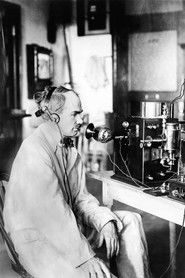
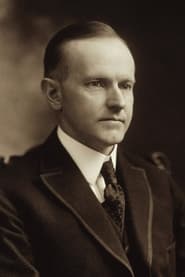
President Coolidge, Taken on the White House Grounds
Plot
This extremely brief actuality film shows President Calvin Coolidge on the White House grounds, captured with synchronized sound and presented as a landmark experiment in talking-picture technology. Rather than a dramatized narrative, it functions as a historical record: the president is filmed in an outdoor setting while Lee De Forest's sound-on-film process records his voice and ambient audio. The film's significance comes less from plot than from its status as a demonstration that moving images and recorded sound could be combined in a stable public presentation. Because of its short form, the film consists of a single presidential appearance and the novelty of synchronized speech, making it one of the earliest surviving examples of recorded sound in a motion-picture context.
Director
Lee De ForestCast
About the Production
This film was produced as part of Lee De Forest's Phonofilm demonstrations, a series of short sound-on-film subjects designed to prove the viability of synchronized recorded sound years before the feature-length talkie era. It is notable as the first presidential film with sound recording and one of the best-known political actuality shorts from the silent-to-sound transition period. The production depended on De Forest's optical sound process, in which audio was recorded photographically on the film strip, allowing synchronized playback. As with many Phonofilm shorts, the film was short, experimental, and intended as a technological proof-of-concept rather than a commercial narrative release. The outdoor White House setting added prestige and publicity value, and Coolidge's participation gave the project significant historical cachet. Precise running time, release date, and commercial performance are not consistently documented in surviving sources.
Historical Background
The film was made in 1924, during a period when the American film industry was still overwhelmingly silent but several inventors and companies were racing to develop reliable synchronized sound systems. Lee De Forest's Phonofilm was one of the earliest practical optical sound-on-film technologies, arriving years before the commercial success of Warner Bros.' Vitaphone-driven talkies. The presence of President Calvin Coolidge also reflects the growing role of motion pictures as a modern political and public-relations medium in the 1920s. In broader historical terms, the film sits at the intersection of technological experimentation, mass media modernization, and the rising celebrity culture surrounding both presidents and inventors.
Why This Film Matters
The film is culturally significant as a pioneering fusion of politics, technology, and cinema history. It helped demonstrate that a public figure could be recorded speaking on film, foreshadowing the sound era's transformation of newsreels, political coverage, and screen performance. As an early presidential sound film, it occupies a special place in both American political media history and the evolution of audiovisual recording. Its importance is less about audience entertainment than about proving a technological concept that would eventually reshape world cinema.
Making Of
The film emerged from Lee De Forest's larger effort to persuade exhibitors, journalists, and investors that sound-on-film was practical and marketable. By recording a high-profile figure such as Calvin Coolidge, De Forest could showcase the process with a subject guaranteed to attract attention and lend legitimacy to the technology. Like many Phonofilm productions, it was likely assembled quickly as a demonstration subject rather than as a formally scripted production, with the emphasis on capturing clear speech and usable synchronization. The project reflects the experimental, promotional nature of early sound cinema, when inventors often staged short public-facing subjects to prove a technical principle before Hollywood embraced the format on a larger scale.
Visual Style
The cinematography is straightforward and documentary-like, designed to clearly present the president and support the sound demonstration rather than create elaborate visual composition. The outdoor White House setting likely required practical camera placement and attention to audio capture in a less controlled environment. Visual style would have been secondary to the technical aim of keeping the subject visible and the spoken content intelligible. As an early sound experiment, the image likely favors stability, simplicity, and direct framing over movement or expressive lighting.
Innovations
The central technical achievement is the use of Lee De Forest's Phonofilm system, an early optical sound-on-film method that recorded sound photographically on the motion-picture strip. This was a major step toward the later standardization of sound cinema because it avoided separate sound discs and the synchronization problems they posed. The film is historically notable for applying the process to a high-profile public figure, thereby demonstrating its usability for speech recording. Its survival in film history also makes it an important reference point in the development of talking pictures and audio-visual synchronization.
Music
The film's key audio component is synchronized recorded speech and ambient sound captured through De Forest's Phonofilm process. There is no conventional composed musical score associated with the film in surviving documentation. The importance of the soundtrack lies in its technological function: it demonstrates that spoken words could be recorded optically on film and reproduced in sync with the image. This places the film among the earliest examples of sound-on-film recording to be publicly exhibited.
Famous Quotes
null
Memorable Scenes
- President Calvin Coolidge appearing on the White House grounds in a rare early sound recording that preserves both image and speech.
- The demonstration-like presentation of a sitting president as proof that synchronized film sound could work in public exhibition.
Did You Know?
- It is widely regarded as the first presidential film recorded with sound.
- The film was made using Lee De Forest's Phonofilm process, an important early optical sound-on-film system.
- Rather than being a conventional movie, it is an actuality short documenting President Calvin Coolidge.
- Its historical value lies in technology history as much as in political history.
- The White House grounds served as the filming location, giving the film a unique official setting.
- De Forest used short Phonofilm subjects like this to demonstrate that synchronized sound could be captured and projected from film.
- The film predates the commercial breakthrough of sound features by several years.
- Because it is a very short non-narrative film, it is often discussed in histories of early talking pictures rather than in general cinema surveys.
- The presence of a sitting U.S. president helped publicize De Forest's experimental sound technology.
- Surviving references to the film often emphasize its pioneering status more than detailed plot or production information.
What Critics Said
Contemporary critical reaction is not well documented in surviving widely cited reviews, which is typical for short experimental actuality films from the 1920s. Historically, the film has been viewed positively by film scholars and archivists as an important milestone in early sound experimentation. Modern assessment generally focuses on its technical and historical importance rather than aesthetic qualities, since its purpose was demonstrative rather than dramatic. It is commonly cited in histories of sound cinema as a noteworthy precursor to the feature-length talking picture.
What Audiences Thought
There is no robust surviving record of mainstream box-office audience response, likely because the film functioned as a demonstration and exhibition subject rather than a widely distributed commercial attraction. Audiences who saw Phonofilm shorts at vaudeville venues or special screenings were often responding to the novelty of synchronized speech and the clarity of the sound reproduction. The involvement of President Coolidge would have made the film especially newsworthy and memorable for viewers at the time. Today, audiences encounter it primarily as a historical artifact rather than as a mass entertainment release.
Film Connections
Influenced By
- Lee De Forest's Phonofilm demonstrations
- Early cinematic actuality films
- Newsreel-style presidential filming
This Film Influenced
- Early sound newsreels
- Political campaign films with synchronized speech
- Historical documentary recordings of public figures
You Might Also Like
More from Lee De Forest
View allFilm Restoration
The film is considered historically significant and extant in archival references; however, detailed preservation and restoration information is not consistently documented in widely accessible sources.