Romance of a Jewess
"Griffith short shows the director's interest in Jewish ghetto life, portrayed here with."
Keys: Space play/pause · ←/→ 10s · F fullscreen · M mute · </> speed
About this film
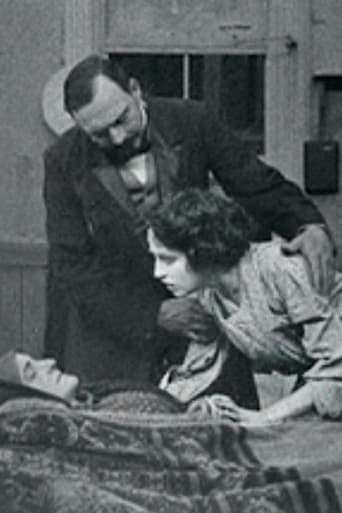
The melodramatic plot involves the conflict between generations in an immigrant Jewish family. Griffith short shows the director's interest in Jewish ghetto life, portrayed here with sympathy and sentimentality.
Cast & crew
More films like this
More Comedy films
View all →







More from D.W. Griffith
View all →
More about this film
About the production
Release dateOctober 1908
Box officeNot documented - box office tracking was not standard practice for shorts in 1908
ProductionAmerican Mutoscope and Biograph Company
Filmed inBiograph Studio, New York City, New York City streets (possibly Lower East Side for ghetto scenes)
This was one of D.W. Griffith's earliest directorial efforts, made during his first year with Biograph. The film was shot on 35mm black and white film stock typical of the period. Griffith was still developing his signature directorial style, but already showing interest in social themes and sympathetic portrayals of immigrant communities. The production would have been completed in just one or two days, as was standard for Biograph shorts of this era.
Themes
Generational conflict in immigrant familiesCultural assimilation vs. traditionRomantic love vs. arranged marriageJewish immigrant experience in AmericaFather-daughter relationships
Themes & topics
immigrant familyJewish ghettoforbidden lovegenerational conflictarranged marriagecultural traditionassimilationmelodramafamily dramaearly cinemasilent filmNew York City
Historical background
Made in 1908, in United States, under D. W. Griffith, Romance of a Jewess belongs to drama film filmmaking during early cinema when shorts dominated nickelodeon programs. Romance of a Jewess is a 1908 American silent short drama film written and directed by D.
Why this film matters
Within drama film history, D. W. Griffith's name attaches to the work; surviving prints help researchers study silent-era craft; 1908 film by D. W. Griffith.
Making of
The production of 'Romance of a Jewess' took place during D.W. Griffith's formative period as a director. Griffith had only recently transitioned from acting to directing at Biograph, and was rapidly developing his craft. The film was likely shot in just one or two days, as was typical for Biograph productions of this era. The cast, led by Florence Lawrence who would soon become cinema's first major star, worked under Griffith's direction during long shooting days. The film's portrayal of Jewish life required careful consideration of sets and costumes to create an authentic ghetto atmosphere. Griffith's interest in social themes was already evident, though he had not yet developed the sophisticated cross-cutting techniques that would make him famous. The production team would have worked with limited equipment and natural lighting, as artificial lighting technology was still primitive in 1908.
What critics said
Contemporary reviews of Romance of a Jewess are sparse in open sources; later catalog entries chiefly summarize plot and credits.
Did you know?
- This film was made during D.W. Griffith's first year as a director at Biograph, before he developed his revolutionary cinematic techniques
- Florence Lawrence, often called 'The First Movie Star,' appears in this early Griffith work before her stardom was fully established
- The film represents one of Hollywood's earliest sympathetic portrayals of Jewish immigrant life
- Griffith made over 40 short films in 1908 alone, showing his incredible productivity during this period
- The film was released before the Motion Picture Patents Company (Edison Trust) was fully established, during a chaotic period of American cinema
- Jewish characters in early American cinema were often portrayed stereotypically, making Griffith's relatively nuanced approach notable for the time
- The film's title uses the somewhat archaic term 'Jewess' which was common in 1908 but would be considered dated today
- This was one of the first films to explore generational conflict in immigrant families, a theme that would become common in later American cinema
- The film was likely shot on location or on studio sets designed to resemble New York's Lower East Side Jewish ghetto
- Griffith would later become infamous for 'The Birth of a Nation' (1915), making his early sympathetic treatment of minorities particularly noteworthy
Visual style
The cinematography was typical of 1908 Biograph productions, using stationary cameras positioned to capture the action in theatrical compositions. The film was shot on 35mm black and white film stock with a hand-cranked camera, resulting in variable frame rates by modern standards. Lighting would have been primarily natural, with some use of reflectors. The camera work shows Griffith's early experimentation with varying shot distances, though he had not yet developed the sophisticated editing techniques that would characterize his later work. The visual style was straightforward and functional, focusing on clear storytelling rather than artistic innovation.
Innovations
While not technically innovative compared to Griffith's later groundbreaking works, the film represents the standard technical quality of Biograph productions in 1908. The film was shot using the Biograph's proprietary 68mm format before being contact-printed to 35mm for distribution, which gave Biograph films superior image quality for the period. The production would have utilized the latest available equipment, including the Biograph camera which was known for its reliability. The film's editing, while basic by modern standards, shows the emerging continuity editing techniques that Griffith would help perfect in subsequent years.
Music
As a silent film, 'Romance of a Jewess' would have been accompanied by live music during exhibition. Nickelodeons typically employed pianists or small ensembles to provide musical accompaniment. The specific musical selections would have been left to the discretion of the individual theater's musicians, though they likely used popular songs of the era and classical pieces appropriate to the film's emotional tone. For scenes depicting Jewish life, musicians might have incorporated Jewish musical themes or klezmer-style melodies if available. No original composed score was created for the film, as was standard practice for shorts of this period.
Famous quotes
No recorded dialogue exists from this silent film
Memorable scenes
- The emotional confrontation between the young woman and her father when he discovers her secret romance
- The young woman's longing glances toward her forbidden love
- The family gathering where cultural traditions are emphasized
- The final resolution scene attempting to bridge generational and cultural divides
What audiences thought
Audience reception data for 1908 shorts is virtually nonexistent, as systematic audience research was not conducted during this period. However, Biograph films were generally popular with nickelodeon audiences of the time. The film's themes of romance and family conflict would have been accessible to contemporary audiences, including the many recent immigrants who attended nickelodeons. The sympathetic portrayal of Jewish life might have resonated particularly with Jewish audiences in urban areas. Like most Biograph shorts of this era, the film likely served as part of a varied program that included several other short films, musical acts, and sometimes live performances.
Film connections
Influenced by
- Stage melodramas of the late 19th century
- Contemporary literature about immigrant life
- Newspaper stories about immigrant communities
- Theatrical traditions of ethnic drama
This film influenced
- Later D.W. Griffith films dealing with social themes
- 1920s and 1930s Hollywood films about immigrant life
- Jewish-themed films of the silent era
Film restoration
The preservation status of 'Romance of a Jewess' is uncertain. Many Biograph films from 1908 have survived, but some remain lost or exist only in fragmentary form. The film may exist in film archives such as the Library of Congress, the Museum of Modern Art, or the George Eastman Museum, which hold extensive Biograph collections. However, specific information about this title's survival is not widely documented, suggesting it may be among the many early films that are lost or only partially preserved.
Where to watch
- If preserved, the film would likely be accessible only through specialized film archives
- Potential viewing through the Library of Congress's motion picture collection
- Possible inclusion in specialized early cinema collections or DVD compilations of D.W. Griffith's early work
- Academic institutions with film studies programs may have access
- Film museums specializing in early cinema might screen it occasionally