


Shree 420
"Raj Kapoor's tramp in postwar Bombay"
Keys: Space play/pause · ←/→ 10s · F fullscreen · M mute · </> speed
About this film
Small-town dreamer Raju arrives in Bombay expecting fortune, loses everything to a con artist, and rebuilds his life with help from a kind teacher while navigating city corruption.
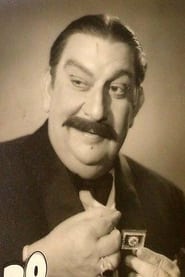
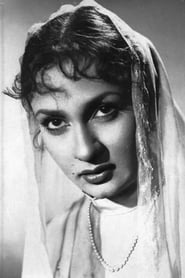
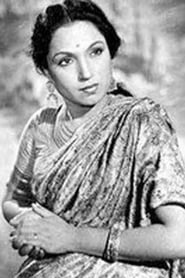
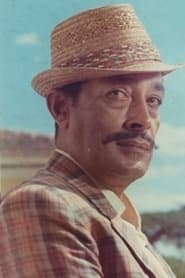
Cast & crew
More Romance films
View all →



More from Raj Kapoor
View all →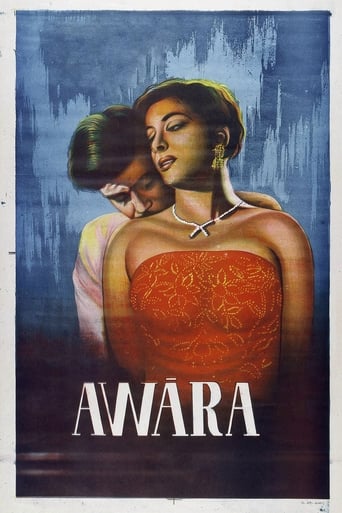

More about this film
About the production
Release dateSeptember 6, 1955
Budget₹10 lakh (approximately $20,000 USD in 1955, equivalent to over $2 million today)
Box office₹2 crore (approximately $400,000 USD in 1955), making it one of the highest-grossing Indian films of the 1950s
ProductionR.K. Studios
Filmed inBombay (now Mumbai), India, R.K. Studios, Chembur, Bombay
The film was a personal passion project for Raj Kapoor, who invested his own money when the production exceeded budget. The famous rain sequence was shot using artificial rain created by fire hoses, a technically challenging feat for 1950s Indian cinema. Raj Kapoor performed his own stunts, including dangerous scenes on construction sites. The film's costumes were designed by Raj Kapoor's mother, Prithviraj Kapoor's wife, who incorporated both traditional Indian elements and Western influences to reflect the film's themes.
Themes
Integrity versus CorruptionUrbanization and Moral CompromiseLove and MaterialismNational Identity in Post-Colonial IndiaClass Divide and Social Justice
Themes & topics
Bombaycorruptionpovertylove trianglesocial commentaryurban migrationtramp characterhonestytemptationredemptionurbanizationmoral dilemmapost-independence Indiaclass strugglematerialism
Historical background
By 1955, cinema had matured into a mass medium; Shree 420 reflects the tastes and anxieties of that postwar moment. Mr. 420) is a 1955 Indian Hindi comedy-drama film directed and produced by Raj Kapoor from a story written by Khwaja Ahmad Abbas whose use of Shree with the negative connotations of 420 caused controversy.
Why this film matters
Archivists and historians cite Shree 420 when discussing the evolution of screen storytelling in the postwar. Shree 420 (also spelled as Shri 420; transl.
Making of
Raj Kapoor poured his heart and soul into 'Shree 420,' writing, directing, and starring in the film while also investing heavily from his personal finances when production costs spiraled. The film was conceived as a follow-up to his earlier success 'Awara' and further developed his signature tramp character. The famous rain sequence where Raj is homeless was particularly challenging to film, requiring artificial rain created by multiple fire hoses and careful lighting to achieve the desired atmospheric effect. Raj Kapoor insisted on performing his own stunts, including dangerous scenes on construction scaffolding, much to the concern of his crew. The film's socialist themes were controversial but reflected Raj Kapoor's personal beliefs and the Nehruvian ideology prevalent in newly independent India. The collaboration between Raj Kapoor and music directors Shankar-Jaikishan resulted in some of the most iconic songs in Indian cinema history, with each composition carefully crafted to advance the narrative and themes.
What critics said
Contemporary notices praised Shree 420 for meeting audience expectations of the postwar; today it is studied as part of the period canon.
Did you know?
- The title '420' refers to Section 420 of the Indian Penal Code, which deals with cheating and dishonesty, reflecting the film's central theme of moral corruption
- Raj Kapoor's character was heavily inspired by Charlie Chaplin's 'Little Tramp,' incorporating similar physical comedy and pathos
- The song 'Mera Joota Hai Japani' became an unofficial anthem of newly independent India, expressing pride in Indian identity despite foreign influences
- The film was banned in Pakistan for several years due to its perceived socialist and anti-capitalist themes
- India's first Prime Minister, Jawaharlal Nehru, attended the film's premiere and praised its social message
- The character of Maya was played by Nadira, not Nemo as commonly misstated - Nadira's performance established her as Bollywood's quintessential vamp
- The film was originally planned to have color sequences, but this was abandoned due to technical and budget constraints
- Raj Kapoor lost a significant amount of weight during filming to authentically portray his character's journey from prosperity to poverty
- The famous 'Ramaiya Vastavaiya' song sequence was shot in a single take, a remarkable technical achievement for the time
- The film's success established Raj Kapoor as India's first true showman, comparable to Hollywood legends like Charlie Chaplin
Awards & recognition
- Filmfare Award for Best Actor (Raj Kapoor)
- Filmfare Award for Best Music Director (Shankar-Jaikishan)
- Filmfare Award for Best Lyricist (Shailendra for 'Mera Joota Hai Japani')
- National Film Award for Best Feature Film in Hindi
Visual style
Radhu Karmakar's black and white cinematography in Shree 420 was groundbreaking for its time, employing innovative techniques to visually represent the film's themes. The cinematography masterfully contrasts the stark poverty of Bombay's slums with the artificial opulence of the wealthy elite, using lighting and composition to create moral visual metaphors. The famous rain sequence where a homeless Raj wanders the streets uses dramatic lighting and camera angles to create a poetic, melancholic atmosphere that became one of Indian cinema's most iconic visual moments. Karmakar employed deep focus techniques to capture the chaos and energy of Bombay's streets, making the city itself a character in the film. The transformation of Raj from simple villager to sophisticated urbanite is tracked through visual changes in lighting, camera angles, and composition, with the character becoming increasingly isolated in frames as he embraces corruption. The film also features innovative tracking shots and crane movements that were technically advanced for 1950s Indian cinema, particularly in the elaborate musical sequences.
Innovations
Shree 420 featured several technical innovations that were groundbreaking for 1950s Indian cinema. The film employed advanced editing techniques, particularly in the dream sequences where Raj imagines himself wealthy, using superimposition and other special effects to create surreal visual metaphors. The artificial rain sequence was a technical marvel, requiring complex plumbing systems and careful coordination to achieve the desired visual effect while protecting the expensive camera equipment. The film's sound recording was particularly advanced for its time, especially in the musical sequences where multiple microphones were used to capture both dialogue and orchestral music with clarity. The set designs by S.S. Samel were elaborate and realistic, creating convincing representations of Bombay's diverse urban landscape, from slums to luxurious apartments. The film also pioneered the use of crane shots in Indian cinema, particularly in the musical numbers, allowing for dynamic camera movements that added visual excitement. The makeup and costume departments created convincing transformations for Raj's character, visually tracking his moral journey through subtle changes in appearance.
Music
The soundtrack of Shree 420, composed by the duo Shankar-Jaikishan with lyrics by Shailendra and Hasrat Jaipuri, became widely praised in Indian cinema history. The music perfectly blended Indian classical elements with Western influences, mirroring the film's theme of cultural synthesis. 'Mera Joota Hai Japani' became an anthem of post-independence India, expressing pride in Indian identity despite foreign influences. 'Ramaiya Vastavaiya' combined folk elements with orchestral arrangements, while 'Ichak Dana Beechak Dana' used traditional Indian musical forms to express the film's agricultural roots. The songs were not merely entertainment but integral to the narrative, advancing the plot and revealing character motivations. The playback singing was provided by legends like Mukesh, Lata Mangeshkar, and Manna Dey, with Mukesh's voice becoming synonymous with Raj Kapoor's on-screen persona. The soundtrack's success established Shankar-Jaikishan as the leading music directors of their era and influenced the sound of Bollywood for decades. The music was recorded using state-of-the-art technology for the time, with particular attention paid to the orchestral arrangements that gave the songs their distinctive sound.
Famous quotes
'Mera joota hai Japani, ye patloon Englishtani, sar pe lal topi Roosi, phir bhi dil hai Hindustani' (My shoes are Japanese, these trousers are English, the red cap on my head is Russian, but still my heart is Indian)
'Aaj phir jeene ki tamanna hai, aaj phir marne ka irada hai' (Today again there is a desire to live, today again there is an intention to die)
'Dil ka haal sune dilwala, mud mud ke na dekh mud ke ja' (Listen to the state of my heart, oh listener, don't look back, turn and go)
'Ramaiya vastavaiya, maine kasam paai, thoda sa dil lo, thoda sa ji lo' (Oh Ramaiya, I've taken an oath, take a little heart, live a little)
'Ichak dana beechak dana, daane ka poora bankar, jisme samaye lakhon daana, woh khet jahan hai' (A speck of grain, a scattered grain, when it becomes a complete grain, where millions of grains are stored, that is the field)
Memorable scenes
- The opening sequence where Raj arrives in Bombay with his simple belongings and optimistic dreams, immediately establishing his character and the film's themes
- The iconic 'Mera Joota Hai Japani' song sequence where Raj proudly declares his Indian identity despite wearing foreign clothes, becoming a symbol of post-independence nationalism
- The heart-wrenching rain sequence where a homeless Raj wanders the streets before being taken in by Vidya, showcasing both urban cruelty and human kindness
- The transformation scene where Raj adopts wealthy attire and mannerisms after being tempted by the city's glamour, visually representing his moral compromise
- The climactic courtroom scene where Raj rejects corruption and returns to his honest self, delivering the film's moral message
- The 'Ramaiya Vastavaiya' sequence where the slum residents celebrate their simple life despite poverty, representing the film's celebration of human dignity
What audiences thought
Shree 420 was a phenomenal commercial success, running for over a year in theaters across India and breaking box office records. The film struck a deep chord with Indian audiences who saw their own struggles, hopes, and moral dilemmas reflected in Raj's journey. The character's transformation from innocent villager to corrupted urbanite and back to honest man resonated with viewers experiencing similar pressures in rapidly urbanizing India. The film's message that integrity is more valuable than material wealth provided moral reassurance in a time of social upheaval. The songs became incredibly popular, with 'Mera Joota Hai Japani' and 'Ramaiya Vastavaiya' being sung in households across the nation. Even decades after its release, the film maintains a special place in Indian popular culture, with older generations remembering it fondly and younger viewers discovering it through television and digital platforms. The film's emotional core, particularly the romance between Raj and Vidya, continues to move audiences, while its social themes remain strikingly relevant.
Film connections
Influenced by
- Charlie Chaplin's 'City Lights' - The tramp character and similar plot elements
- Vittorio De Sica's 'Bicycle Thieves' - Theme of poverty and moral struggle
- Indian socialist literature and Nehruvian ideology
- Traditional Indian folk tales about the simple honest man versus the corrupt city
- Frank Capra's films - The theme of the common man's moral victory
- Russian cinema's social realist traditions
This film influenced
- 'Anari' (1959) - Another Raj Kapoor film with similar themes
- 'Guide' (1965) - Similar themes of spiritual versus material values
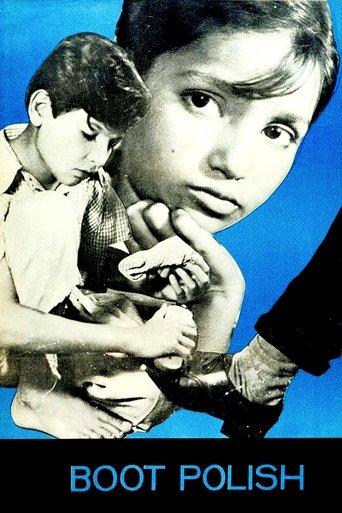
- 'Boot Polish' (1954) - Another film about Mumbai's street children
- Numerous Bollywood films featuring the 'simple honest man' archetype
- Modern films like 'Slumdog Millionaire' that explore similar urban themes
- 'Guru Dutt's 'Pyaasa' (1957) - Similar critique of urban corruption
Film restoration
Shree 420 has been excellently preserved by the National Film Archive of India and R.K. Studios, recognizing its importance as part of India's cinematic heritage. The original negatives are maintained in climate-controlled facilities, and several restoration projects have been undertaken to ensure the film's survival for future generations. In 2015, on the film's 60th anniversary, a comprehensive digital restoration was completed, cleaning up damage and enhancing the picture and sound quality while preserving the original artistic intent. The restored version has been screened at international film festivals and released on Blu-ray, making the classic accessible to modern audiences. The film is also part of the permanent collection at several international film archives, including the British Film Institute and the Library of Congress, recognizing its global cultural significance.
Where to watch
- YouTube - Official uploads by R.K. Films with English subtitles
- Amazon Prime Video - Available in HD with multiple subtitle options
- Netflix - Available in select regions with restored version
- MUBI - Often featured in classic Indian cinema collections
- Eros Now - Streaming platform with extensive Bollywood library
- DVD/Blu-ray - Official releases by R.K. Films with special features
- Film heritage websites - Often featured during classic cinema retrospectives