Sweet and Twenty
“A delightful comedy of errors and youthful romance.”
About Sweet and Twenty
Alice and Frank are a young couple deeply in love, but their happiness is jeopardized when Alice accidentally witnesses Frank sharing a kiss with her sister. Unaware that the kiss was a clumsy accident or a misunderstanding of affection, Alice becomes inconsolable and breaks off their engagement in a fit of jealous rage. Desperate to prove the depth of his devotion and despair, Frank dramatically declares that he will end his life by throwing himself into the nearby river. However, as he stands on the water's edge, his bravado fades and he finds himself unable to take the plunge, humorously stalling for time. Just as his cowardice becomes apparent, Alice arrives on the scene, having been overcome with worry and regret, leading to a sentimental reconciliation where the misunderstanding is cleared and their romance is restored.
Cast & crew
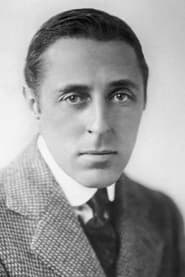
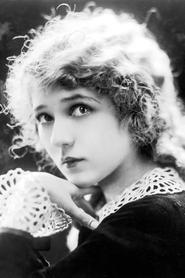
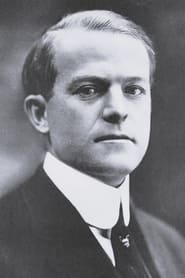
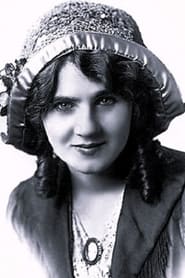
More films like this
More from D.W. Griffith
View all →
More about Sweet and Twenty
Production
- Release date
- July 12, 1909
- Country
- United States
- Budget
- Approximately $400 - $600 (Estimated based on Biograph standard short film costs in 1909)
- Production
- American Mutoscope and Biograph Company
- Filmed in
- Greenwich, Connecticut, Biograph Studio (11 East 14th Street, New York City)
The film was shot over the course of just a few days in early June 1909. D.W. Griffith was at the height of his experimental period at Biograph, frequently taking his troupe of actors to suburban locations in Connecticut and New Jersey to utilize natural light and scenic landscapes. This film is notable for being one of the very early collaborations between Griffith and Mary Pickford, who had only recently joined the company in April 1909. The production utilized the 'Biograph style' of acting, which was gradually moving away from stagey histrionics toward a more subtle, cinematic naturalism.
Themes & topics
Historical background
In 1909, the motion picture industry was transitioning from a novelty 'peep show' attraction to a legitimate form of narrative storytelling. The 'Nickelodeon Era' was at its peak, and audiences were demanding more sophisticated plots and recognizable actors. This film was made during the period when the 'Motion Picture Patents Company' (the Trust) attempted to monopolize the industry. Biograph was a leading member of this trust, and their films were considered the gold standard of quality at the time. Socially, the film reflects the Edwardian era's romanticized views of youth and courtship, while also playing into the emerging 'New Woman' archetype through Pickford's assertive character.
Why this film matters
The film is culturally significant primarily as a showcase for the early development of Mary Pickford and Florence Lawrence. It represents the moment when the 'star system' began to emerge, even though actors were not yet credited by name on screen (audiences simply knew them by their studio nicknames). Furthermore, it demonstrates D.W. Griffith's early mastery of the romantic comedy genre, proving that he could handle lighthearted, character-driven narratives just as effectively as the heavy dramas and innovative thrillers for which he is better known.
Making of
During the production of 'Sweet and Twenty', D.W. Griffith was known for his rigorous directing style, often shouting instructions to actors while the camera was cranking. Mary Pickford famously clashed with Griffith initially, as she preferred a more restrained acting style compared to the exaggerated gestures he often demanded of his players. However, in this specific production, the comedic timing required for the 'suicide' scene allowed for a blend of physical comedy and genuine emotion. The crew had to manage the logistics of filming near water with heavy, hand-cranked wooden cameras, which were prone to jamming in humid outdoor conditions.
What critics said
At the time of its release, The New York Dramatic Mirror and other trade journals praised Biograph films for their superior photography and the 'naturalness' of their players. Modern critics and film historians view 'Sweet and Twenty' as a charming, if slight, example of Griffith's early work, noting the chemistry between Pickford and Quirk. It is often studied by scholars to trace the evolution of Pickford's acting technique and Bitzer's outdoor cinematography.
What audiences thought
Audiences in 1909 responded very favorably to the film, particularly because of the presence of Florence Lawrence and the rising popularity of Mary Pickford. The relatable theme of a lover's quarrel followed by a comedic 'fake' suicide attempt resonated with the working-class audiences of the Nickelodeons, who appreciated the mix of melodrama and slapstick.
Visual style
The cinematography by G.W. Bitzer is characterized by its use of deep focus in outdoor settings, allowing the lush Connecticut scenery to frame the actors. Bitzer used a hand-cranked Pathe camera, and while the camera remains mostly stationary (as was the custom), the framing is tight enough to capture the nuanced facial expressions of the actors, a technique Griffith was pioneering to move away from the 'long shot' stage perspective.
Innovations
The film utilizes effective 'cross-cutting' or parallel editing to build tension and humor as Alice rushes to save Frank while he hesitates at the river. This technique was one of Griffith's major contributions to cinematic language, and while used simply here, it laid the groundwork for his later complex editing structures.
Music
As a silent film, there was no recorded soundtrack. Original screenings would have been accompanied by a live pianist or organist, likely playing popular sentimental ballads or light classical pieces of the era to match the comedic and romantic tone.
Film restoration
Preserved. Prints exist in the Library of Congress film archive and the Museum of Modern Art (MoMA) film collection.
Did you know?
- This film features Mary Pickford in one of her earliest screen roles, filmed just months after she began her legendary career at Biograph.
- The title 'Sweet and Twenty' is a reference to a line from William Shakespeare's play 'Twelfth Night' ('Then come kiss me, sweet and twenty').
- Florence Lawrence, who plays the sister, was known at the time as 'The Biograph Girl' and was arguably the first true movie star in cinema history.
- The film is a 'split-reel' or short one-reeler, which was the standard format for comedies and dramas before the advent of feature-length films.
- Billy Quirk, who plays Frank, became a frequent leading man for Griffith in light comedies before moving on to Pathé and Vitagraph.
- The film was shot by G.W. 'Billy' Bitzer, the legendary cinematographer who would later film 'The Birth of a Nation' and 'Intolerance'.
- Mary Pickford was only 17 years old when this film was produced, though she was already demonstrating the screen presence that would make her 'America's Sweetheart'.
- The movie was filmed on location in Greenwich, Connecticut, providing a lush, pastoral backdrop that was a trademark of Griffith's early romances.
Memorable scenes
- The scene at the riverbank where Frank repeatedly prepares to jump into the water but finds various excuses to stop, checking the temperature and his own courage, which serves as the film's comedic centerpiece.
- The final embrace between Alice and Frank where the sister helps mediate the reconciliation.
Influenced by
- The stage melodramas of the late 19th century
- Shakespearean comedy of errors
- French Pathé comedies
This film influenced
- The 'L-KO' and Keystone comedies of the 1910s
- Later Mary Pickford vehicles like 'The New York Hat'
Where else to watch
- YouTube (Public Domain)
- Internet Archive
- Kino Lorber's 'Griffith Masterworks' collections
- Milestone Films collections
Famous quotes
Intertitle: 'Alice's jealousy is aroused.'
Intertitle: 'Frank decides that life is no longer worth living.'
Intertitle: 'All is forgiven.'