
Taqdeer
"The star cast included a young Nargis in her first lead role along with Motilal, Chandra."
Keys: Space play/pause · ←/→ 10s · F fullscreen · M mute · </> speed
About this film
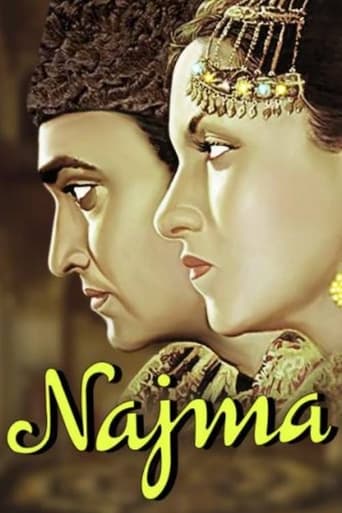
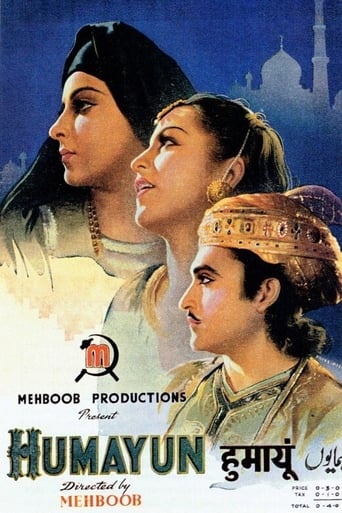
In between his more ambitious Najma (1943) and Humayun (1945), Mehboob made this lightweight comedy about Justice Gangaprasad (Chandramohan) and theatre-owner Seth Badriprasad (Charlie) who lose their daughter and son respectively in the Kumbh Mela. The star cast included a young Nargis in her first lead role along with Motilal, Chandra Mohan, Charlie, Jilloobai and Kayam Ali.
Cast & crew
More films like this

More Comedy films
View all →







More from Mehboob Khan
View all →

More about this film
About the production
Release date1943
Box officeModerately successful - performed well in urban centers but didn't match the commercial success of Mehboob Khan's more ambitious productions
ProductionMehboob Productions
Filmed inBombay (now Mumbai) studios, Some scenes possibly filmed at actual Kumbh Mela locations
Filmed during the peak of World War II when resources were scarce and film stock was rationed. Mehboob Khan reportedly made this lighter film to provide entertainment relief to audiences during the tense political climate of the Quit India Movement. The production faced challenges due to wartime restrictions but was completed efficiently as a quick follow-up to the more elaborate 'Najma'.
Themes
Destiny and fateFamily separation and reunionThe power of love to overcome obstaclesSocial class differencesThe importance of tradition and festivals in Indian culture
Themes & topics
Historical background
Made in 1943, in British Raj, under Mehboob Khan, Taqdeer belongs to drama film filmmaking as studio systems and national cinemas competed for audiences. Taqdeer is a 1943 Indian Hindi language comedy film.
Why this film matters
Within drama film history, Mehboob Khan's name attaches to the work; 1943 film by Mehboob Khan; It was directed by Mehboob Khan under his Mehboob Productions banner..
Making of
Mehboob Khan, known for his socially conscious cinema, took a departure with 'Taqdeer' to create a light-hearted entertainer. The director reportedly wanted to experiment with the comedy genre while maintaining his signature emotional depth. The casting of young Nargis opposite the established Motilal created significant buzz in the industry. During filming, Mehboob Khan faced challenges with the Kumbh Mela sequences, as gathering large crowds for shooting was difficult during wartime restrictions. The director improvised by using stock footage and clever editing to create the illusion of massive gatherings. The film's production was notably quick, completed in just over two months, as Mehboob Khan wanted to capitalize on the success of his previous film 'Najma'. The music recording sessions were particularly memorable, with Rafiq Ghaznavi experimenting with a fusion of traditional Indian melodies and Western orchestration to create a distinctive sound.
What critics said
Contemporary reviews of Taqdeer are sparse in open sources; later catalog entries chiefly summarize plot and credits.
Did you know?
- This was one of Nargis's early films, released when she was just 14 years old, marking her transition from child artist to leading lady
- Actor Charlie (real name: V. H. Desai) in a supporting role as Seth Badriprasad, showcasing his comic timing
- Mehboob Khan made this film as a commercial venture between two of his more ambitious and socially relevant projects
- The Kumbh Mela sequence was reportedly filmed using actual footage from the 1942 Kumbh Mela, adding authenticity to the production
- Music director Rafiq Ghaznavi composed the soundtrack, which included several popular songs that became hits of the year
- The film's title 'Taqdeer' (Destiny/Fate) reflected Mehboob Khan's recurring theme of destiny playing a crucial role in human lives
- This was one of the few comedies Mehboob Khan directed, as he was primarily known for his social dramas and epics
- The film's success at the box office helped finance Mehboob Khan's next ambitious project 'Humayun'
- Motilal and Chandramohan, two of the era's most respected actors, shared screen space for the first time in this film
- The screenplay was written by Wajahat Mirza, who would later co-write Mehboob Khan's masterpiece 'Mother India'
Visual style
The cinematography by Faredoon Irani was notable for its effective use of lighting to create mood, particularly in the Kumbh Mela sequences where he managed to convey the scale and chaos of the massive gathering despite limited resources. The film employed innovative camera techniques for its time, including tracking shots during the musical sequences and close-ups that captured the emotional nuances of the performances. Irani's work in the interior scenes demonstrated his mastery of studio lighting, creating warm, intimate atmospheres for the family drama elements. The contrast between the crowded, chaotic Kumbh Mela scenes and the controlled, elegant interior shots was effectively maintained throughout the film. The cinematography also made good use of shadows and light to enhance the dramatic moments, particularly in the revelation scenes.
Innovations
Despite being made during wartime constraints, 'Taqdeer' demonstrated several technical achievements for its time. The film successfully incorporated actual footage from the Kumbh Mela, seamlessly blending it with studio-shot sequences. The sound recording quality was notably clear and consistent throughout the film, overcoming the technical challenges that many productions faced during this period. The editing, particularly in the musical sequences, showed sophisticated techniques for maintaining rhythm and pace. The film's production design effectively created believable period settings and the grandeur of the Kumbh Mela within limited resources. The makeup and costume departments achieved notable results in creating distinct looks for the characters across different time periods. The film also featured some innovative special effects for the time, particularly in the crowd scenes where matte paintings and clever camera angles were used to enhance the sense of scale.
Music
The music for 'Taqdeer' was composed by Rafiq Ghaznavi, with lyrics written by Anjum Pilibhiti. The soundtrack featured several popular songs that became hits of 1943, including romantic duets and devotional numbers that complemented the film's themes. The music blended traditional Indian classical elements with contemporary orchestral arrangements, reflecting the evolving sound of Hindi cinema in the 1940s. Notable singers of the era, including Zohrabai Ambalewali and G. M. Durrani, lent their voices to the songs. The background score effectively enhanced the emotional scenes without overwhelming the dialogue. The film's music was particularly praised for its melodic richness and the way it integrated seamlessly with the narrative. The soundtrack was released on 78 rpm records and sold well, contributing significantly to the film's overall success.
Famous quotes
Ka likha kuchh nahi badal sakte, lekin usse milne ki koshish toh kar hi sakte hain" (Destiny's writing cannot be changed, but we can at least try to meet it)
Bade bade deshon mein aisi choti choti baatein hoti rehti hain" (In big countries, such small things keep happening)
Jab mil gaye hain toh phir kuchh bhi chhota nahi lagta" (Now that we've found each other, nothing seems small anymore)
Memorable scenes
- The emotional Kumbh Mela sequence where both fathers lose their children in the massive crowd, brilliantly shot to convey panic and despair
- The first meeting scene between the young lovers, where they unknowingly discuss their respective fathers without realizing the connection
- The climactic revelation scene where the parents recognize their long-lost children, featuring powerful performances from all lead actors
- The comedy sequence where Motilal's character tries to impress Nargis's character with his theatrical skills
- The final reunion scene at the theatre, bringing the story full circle with emotional and dramatic impact
What audiences thought
Audiences in 1943 embraced 'Taqdeer' warmly, finding it a refreshing change from the more serious and socially relevant films dominating the era. The film's emotional core, particularly the scenes of family separation and reunion, resonated strongly with viewers who were experiencing similar disruptions due to the war. The comedy elements provided much-needed relief during difficult times, and the film ran for several weeks in major cities like Bombay and Calcutta. The performances of Motilal and Chandramohan were particularly appreciated by audiences, as was the charming presence of young Nargis. The songs from the film became popular on radio and were frequently requested on music programs. Audience word-of-mouth helped sustain the film's box office performance, with many viewers recommending it as wholesome family entertainment. The film's success proved that Mehboob Khan had a keen understanding of audience preferences and could deliver both artistic and commercial success.
Film connections
Influenced by
- Traditional Indian folk tales about separated families
- Theater traditions of Bombay
- Social reform movements of the 1940s
- Classical Indian literature themes of destiny
- Contemporary Hollywood comedy-dramas
This film influenced
- Later Mehboob Khan films that blended comedy with social messages
- 1950s family dramas that featured separation and reunion themes
- Films that incorporated major Indian festivals as plot devices
Film restoration
Partially preserved with some reels missing or damaged. The National Film Archive of India holds incomplete copies of the film. Some portions, particularly the musical sequences, survive in better condition than the dramatic scenes. Restoration efforts have been hampered by the film's age and the poor quality of surviving materials. However, portions of the soundtrack have been preserved and are occasionally featured in retrospectives of 1940s Hindi cinema.
Where to watch
- Extremely limited availability - occasionally screened at classic film festivals and retrospectives
- Some fragments may be available through film archives like the National Film Archive of India
- Audio recordings of some songs exist on vintage 78 rpm records and have been digitized by collectors
- Not commercially available on streaming platforms or home video formats due to preservation status