The Adventures of Dollie
"A summer outing becomes a barrel ride toward the falls."
Keys: Space play/pause · ←/→ 10s · F fullscreen · M mute · </> speed
About this film
During a sunny riverside picnic, a peddler kidnaps little Dollie, seals her in a barrel, and sets it drifting downriver toward a waterfall before her parents can reach her.
Cast & crew
More films like this

More Drama films
View all →







More from D.W. Griffith
View all →
More about this film
About the production
Release dateJuly 14, 1908
Box officeUnknown (box office records were not systematically kept for films of this era)
ProductionAmerican Mutoscope and Biograph Company
Filmed inFort Lee, New Jersey, Hudson River Valley areas
This was D.W. Griffith's directorial debut, though he had previously acted in numerous films. The production was shot in a single day, which was standard practice for Biograph shorts of this period. The film utilized natural lighting exclusively, as electric lighting for outdoor scenes was not yet practical. The Roma caravan was constructed by the production team using actual wagons borrowed from a local traveling show. The river sequences were filmed without safety equipment, demonstrating the risky nature of early filmmaking practices.
Themes
Family bonds and parental loveChildhood innocence and vulnerabilityClass differences and social boundariesNature versus civilizationRestoration of social order
Themes & topics
Historical background
Made in 1908, in United States, under D. W. Griffith, The Adventures of Dollie belongs to drama film filmmaking during early cinema when shorts dominated nickelodeon programs. The Adventures of Dollie is a 1908 American silent drama film directed by D.
Why this film matters
Within drama film history, D. W. Griffith's name attaches to the work; surviving prints help researchers study silent-era craft; 1908 film by D. W. Griffith.
Making of
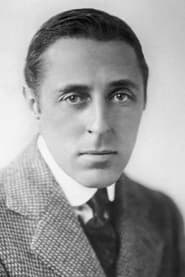
The production of 'The Adventures of Dollie' marked a pivotal moment in film history, as it represented D.W. Griffith's transition from actor to director. Griffith had been dissatisfied with the direction he was receiving from other Biograph directors and convinced studio head Harry Marvin to give him a chance behind the camera. The film was shot in a single day with a minimal crew, using a hand-cranked camera that could only film for about one minute before needing to be reloaded. Linda Arvidson, Griffith's wife at the time, recalled in her memoirs that Griffith was extremely nervous during filming, constantly checking the camera gate and obsessing over every detail. The river scenes proved particularly challenging, as the camera equipment had to be protected from water while maintaining a steady position. The young actress Gladys Egan reportedly cried during the kidnapping scenes, requiring her mother to be present on set to comfort her between takes. The film's success surprised Biograph executives, who had been hesitant to let an actor direct, leading to Griffith's rapid promotion to the position of Biograph's principal director.
What critics said
Contemporary reviews of The Adventures of Dollie are sparse in open sources; later catalog entries chiefly summarize plot and credits.
Did you know?
- This was D.W. Griffith's very first film as a director, marking the beginning of one of cinema's most influential careers
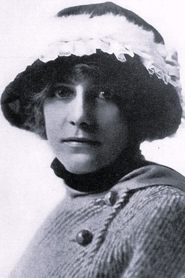
- Linda Arvidson, who played the mother, was actually married to D.W. Griffith at the time of filming
- The film was shot on the grounds of the Biograph studio in Fort Lee, New Jersey, which was the center of American film production before the industry moved to Hollywood
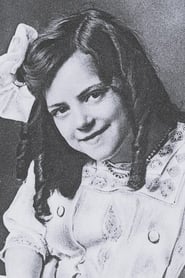
- Gladys Egan, who played Dollie, was one of the first professional child actors in American cinema and appeared in over 100 films between 1908 and 1914
- The Roma characters in the film were played by white actors in makeup, reflecting the problematic racial stereotypes common in early cinema
- The film was originally titled 'Dollie's Adventure' but was changed before release
- Only one print of the film is known to survive today, preserved in the Library of Congress
- The film's success convinced Biograph executives to give Griffith more directing opportunities
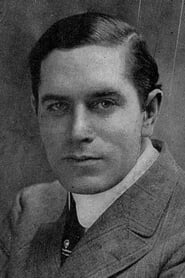
- Arthur V. Johnson, who played the father, became one of Griffith's most frequently used actors in his early films
- The rescue sequence involved actual dangerous stunts performed by the actors without stunt doubles
Visual style
The cinematography in 'The Adventures of Dollie' reflects the technical limitations and emerging practices of 1908 filmmaking. Shot by Biograph's chief cinematographer G.W. Bitzer, the film utilizes a stationary camera for most sequences, which was standard practice for the period. The outdoor scenes benefit from natural sunlight, creating a bright, clear image quality that was superior to many studio-bound films of the era. Bitzer employed long takes that captured entire scenes in a single shot, reflecting the influence of theatrical staging on early cinema. The camera positioning varies between medium shots and longer shots, with no close-ups, as the extreme close-up was not yet a widely accepted technique. The river sequences demonstrate Bitzer's skill in composing moving images within the frame, capturing both the action and the natural environment effectively. The film's visual style emphasizes clarity and readability, ensuring that the narrative could be easily followed without intertitles, which were used sparingly in this period.
Innovations
While 'The Adventures of Dollie' may appear technically simple by modern standards, it incorporated several notable technical achievements for its time. The film was shot on 35mm film using Biograph's unique 68mm format that was then optically reduced to 35mm, resulting in unusually sharp image quality for the period. The outdoor location shooting demonstrated the increasing mobility of film equipment and the industry's move away from studio-bound productions. The film's editing, while basic by later standards, shows early use of continuity editing to maintain narrative clarity across different locations. The successful integration of multiple locations - the picnic area, the river, and the Roma camp - within a single six-minute narrative represented an advancement in spatial storytelling. The film also demonstrates the growing sophistication of narrative structure in early cinema, moving beyond the simple single-scene films that dominated the early 1900s. The preservation of the film itself is technically significant, as many films from this period have been lost due to the unstable nature of early film stock.
Music
As a silent film from 1908, 'The Adventures of Dollie' had no synchronized soundtrack. During its original theatrical run, the film would have been accompanied by live music, typically provided by a pianist or small theater orchestra. The musical accompaniment would have been selected from standard repertoire pieces that matched the mood of each scene, with dramatic music for the kidnapping and rescue sequences, and lighter melodies for the family scenes. Some theaters might have used compiled cue sheets that suggested appropriate music for different types of scenes. The film's emotional structure, moving from domestic tranquility to danger and back to safety, would have been emphasized through the musical accompaniment. No specific musical score was composed for this film, as individualized film scores did not become common practice until the 1910s. Modern screenings of the film typically feature newly composed scores or period-appropriate classical music selections.
Famous quotes
(Intertitle) 'A beautiful summer day. A happy family.'
(Intertitle) 'The child is stolen!'
(Intertitle) 'Desperate search begins.'
(Intertitle) 'Father's love conquers all.'
Memorable scenes
- The kidnapping sequence where Dollie is taken by the Roma travelers while her parents are distracted, featuring dramatic gestures and clear visual storytelling without dialogue
- The tense rescue scene where the father confronts the kidnappers at their camp, utilizing the natural river setting to enhance the drama
- The emotional reunion scene where the family is restored to safety, emphasizing the restoration of domestic order
What audiences thought
Audiences in 1908 responded positively to 'The Adventures of Dollie,' finding its story of child endangerment and rescue emotionally engaging and relatable. The film was popular enough to justify Biograph's continued investment in Griffith's directing career. Contemporary audience reactions, as reported in trade papers, indicated that viewers were particularly moved by the scenes involving the child actress Gladys Egan, whose performance they found natural and convincing. The film's straightforward narrative and clear emotional stakes made it accessible to audiences of the period, who were still becoming accustomed to cinematic storytelling. The rescue sequence was especially effective with early audiences, demonstrating the power of cinema to create suspense and emotional catharsis. The film's success at the box office helped establish the commercial viability of longer narrative films and contributed to the growing popularity of motion pictures as a form of family entertainment.
Film connections
Influenced by
- Stage melodramas of the late 19th century
- Contemporary literary adventure stories
- Earlier Biograph narrative shorts
- French narrative films by Pathé and Gaumont
- The theatrical tradition of clear moral storytelling
This film influenced
- Subsequent D.W. Griffith films at Biograph
- Other child-in-peril films of the 1900s and 1910s
- Early American narrative cinema
- The development of the chase film genre
- Later films featuring Roma characters
Film restoration
The film is preserved in the Library of Congress collection as part of the Paper Print Collection. Early American films were often submitted for copyright protection as paper prints, and these have proven invaluable for film preservation. The surviving print has been transferred to modern film stock and digital formats. While the film shows some signs of deterioration typical of nitrate-based film stock from this period, it remains largely intact and viewable. The preservation status is considered good for a film of this vintage, and it has been made available through various archival and educational channels.
Where to watch
- Library of Congress National Screening Room
- YouTube (through archival channels)
- Various film history educational platforms
- Museum of Modern Art film collection
- UCLA Film & Television Archive