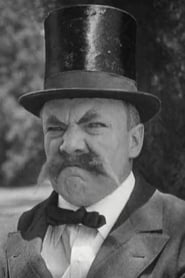
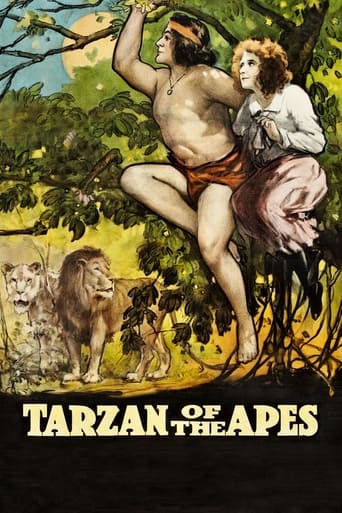
The Adventures of Tarzan
"Greystoke against Opar"
Keys: Space play/pause · ←/→ 10s · F fullscreen · M mute · </> speed
About this film
Tarzan rejects Queen La of Opar while foiling Rokoff and Clayton's schemes through jungle perils, lion attacks, and volcanic traps. Stellan Windrow's silent serial condenses Burroughs into chapter-play adventure.
Cast & crew
More films like this
More Adventure films
View all →

More from Scott Sidney
View all →
More about this film
About the production
Release dateDecember 1, 1921
BudgetApproximately $75,000 for the complete 15-chapter serial
Box officeExact figures not documented, but was considered commercially successful for a serial of its era
ProductionNuma Pictures Corporation, Weiss Brothers Artclass Pictures
Filmed inLos Angeles, California, Universal City Studios backlot, Various California locations for jungle scenes
This was especially ambitious serial productions of its time, featuring elaborate sets for the lost city of Opar and extensive location shooting. The production faced challenges creating convincing African jungle environments in California, using painted backdrops and creative landscaping. The volcanic eruption sequence was achieved through clever use of smoke, lighting effects, and camera tricks. Elmo Lincoln performed many of his own stunts, including the famous lion fighting scenes, though trained animals and safety precautions were employed.
Themes
Civilization versus NatureIdentity and BelongingColonialism and ExoticismGood versus EvilNoble Savage Archetype
Themes & topics
Historical background
The Adventures of Tarzan (1921) capitalized on Burroughs fever and Weissmann-era appetite for jungle serials.
Why this film matters
Elmo Lincoln's Tarzan persona and Opar imagery fed decades of ape-man screen adaptations.
Making of
The production of 'The Adventures of Tarzan' was a massive undertaking for the Weiss Brothers' Numa Pictures Corporation. Director Scott Sidney had to coordinate multiple units working simultaneously on different chapters to meet the demanding release schedule. The jungle scenes were particularly challenging, as the production team had to transform California landscapes into convincing African settings through clever photography and set dressing. Elmo Lincoln, weighing over 250 pounds, had to maintain his physical condition throughout the lengthy shoot, performing many of his own stunts including tree climbing and animal encounters. The volcanic eruption sequence required innovative use of miniatures, smoke machines, and forced perspective photography. The cast and crew worked long hours in often uncomfortable conditions, with the heavy costumes and makeup adding to the difficulty of the jungle scenes. The serial format meant that each chapter had to end with a cliffhanger, requiring careful planning of the narrative structure throughout production.
What critics said
Juvenile audiences cheered chapter endings; historians compare it with later MGM and Weissmuller versions.
Did you know?
- Elmo Lincoln was the first actor to play Tarzan on screen in the 1918 film 'Tarzan of the Apes', making this his return to the role that made him famous
- The film was based on Edgar Rice Burroughs' novels 'The Return of Tarzan' and 'Tarzan and the Jewels of Opar'
- This was a 15-chapter serial, released weekly to theaters to encourage repeat attendance
- Louise Lorraine was only 17 years old when she played Jane, making her one of the youngest actresses to portray the character
- The character of Rokoff was changed from a Russian aristocrat in the novel to a Bolshevik to reflect contemporary political fears
- The lost city of Opar set was among the costliest and elaborate constructions for a serial at that time
- Real lions were used in the filming, though they were heavily restrained and trained for safety
- The film's success led to several more Tarzan serials throughout the 1920s and 1930s
- Scott Pembroke, who played Rokoff, was also a comedy writer and director who worked with Harold Lloyd
- The volcanic eruption sequence was considered groundbreaking for its special effects in 1921
Visual style
The cinematography of 'The Adventures of Tarzan' was ambitious for its time, utilizing location photography and innovative techniques to create convincing jungle environments. The camera work employed dramatic angles and movement to enhance the action sequences, particularly during the lion fights and chase scenes. The volcanic eruption sequence featured pioneering special effects photography, using multiple exposures and careful lighting to create the illusion of flowing lava and seismic activity. The cinematographers made extensive use of natural lighting for the outdoor scenes, creating a sense of authenticity despite the California locations. Close-up shots were used strategically to emphasize the emotional moments between Tarzan and Jane, while wide shots established the scale of the jungle settings and the grandeur of the Opar sets. The film also utilized tinting techniques, with amber tones for daylight scenes and blue tints for night sequences, enhancing the visual storytelling in the absence of color film.
Innovations
The Adventures of Tarzan featured several technical innovations for its time, particularly in the realm of special effects and action photography. The volcanic eruption sequence was particularly noteworthy, using a combination of miniatures, forced perspective, and clever editing to create a convincing disaster scene. The production employed early forms of process photography for some of the more dangerous animal encounters, allowing for greater dramatic effect while ensuring actor safety. The jungle sets incorporated moving elements and mechanical devices to create dynamic environments, including collapsing platforms and hidden trapdoors. The film's action sequences featured some of the earliest examples of sustained chase cinematography, with the camera following actors through complex environments. The lighting design for the Opar sequences used colored gels and filters to create an otherworldly atmosphere, a technique that was still relatively new in 1921. The serial format itself required technical innovations in continuity and editing to maintain narrative coherence across fifteen separate chapters.
Music
As a silent film, 'The Adventures of Tarzan' would have been accompanied by live musical performances in theaters during its original release. The typical score would have been compiled from classical pieces and popular music of the era, with theater organists or small orchestras providing accompaniment. The music would have been synchronized to enhance the dramatic moments, with frantic tempos during action sequences, romantic themes for scenes between Tarzan and Jane, and exotic-sounding motifs for the Opar sequences. Some larger theaters may have used compiled cue sheets specifically created for the film, suggesting appropriate musical selections for each scene. The soundtrack would have included sound effects created by the musicians or theater staff, such as drum beats for tribal scenes and crash cymbals for the volcanic eruption sequence. No original composed score survives from the film's initial release, though modern screenings often feature newly commissioned scores that attempt to recreate the musical style of the early 1920s.
Famous quotes
I am Tarzan! This is my jungle!" (Tarzan asserting his dominance over intruders)
La, Queen of Opar, you cannot have what is not yours to claim!" (Tarzan rejecting La's advances)
Rokoff, your Bolshevik treachery ends here in the heart of Africa!" (Tarzan confronting the villain)
Jane, my love, the jungle calls but my heart belongs to you!" (Tarzan declaring his loyalty to Jane)
The secrets of Opar will remain safe with me, lord of this domain!" (Tarzan protecting the lost city)
Memorable scenes
- The spectacular volcanic eruption sequence where the ground splits beneath Tarzan's feet, forcing him to leap across chasms while dodging falling debris
- The intense lion fight where Tarzan battles two lions simultaneously, using his strength and jungle cunning to survive the deadly encounter
- The throne room confrontation in Opar where Queen La declares her desire for Tarzan while he remains faithful to Jane
- The dramatic cliffhanger where Tarzan is captured by sun-worshippers and placed on an altar for sacrifice as the chapter ends
- The final battle where Tarzan confronts Rokoff and Clayton amidst the treasures of Opar, with the ancient city crumbling around them
What audiences thought
The Adventures of Tarzan was a commercial success upon its release, drawing large audiences to theaters week after week to follow the continuing adventures. Contemporary reports indicate that children and adults alike were captivated by the thrilling cliffhangers and exotic settings. The serial format proved particularly effective in building audience loyalty, with many fans reportedly discussing each week's developments and speculating about future plot twists. Elmo Lincoln's return to the role was well-received by audiences who had enjoyed his 1918 performance, and his physical presence in the role was a major draw. The film's success at the box office helped establish the viability of the Tarzan franchise for future productions and demonstrated that audiences had an insatiable appetite for jungle adventures. Theater owners reported strong attendance throughout the serial's run, with many venues holding over performances to accommodate demand.
Film connections
Influenced by
- Tarzan of the Apes (1918 film)
- The Return of Tarzan (novel by Edgar Rice Burroughs)
- Tarzan and the Jewels of Opar (novel by Edgar Rice Burroughs)
- The Perils of Pauline (1914 serial)
- The Exploits of Elaine (1914 serial)
- Contemporary jungle adventure films
This film influenced
- Tarzan the Tiger (1929)
- The New Adventures of Tarzan (1935)
- Tarzan's Revenge (1938)
- Numerous later Tarzan films and serials
- Jungle adventure serials of the 1930s
- Adventure film cliffhanger conventions
Film restoration
The Adventures of Tarzan is considered partially lost, with only some chapters surviving in various archives. The Library of Congress holds several reels, and fragments exist in other collections including the UCLA Film and Television Archive. Some chapters exist only in incomplete form or as poor-quality duplicates. The George Eastman Museum has preserved portions of the serial. Efforts have been made to reconstruct what remains of the film, but it is unlikely that a complete version will ever be assembled. The surviving elements have been digitized by various archives for preservation purposes, though public access remains limited. The film stands as an example of the significant losses suffered by silent cinema, with serials being particularly vulnerable to deterioration and destruction.
Where to watch
- Available on DVD from specialty silent film distributors
- Some chapters viewable on YouTube and Internet Archive
- Occasionally screened at silent film festivals and special events
- Available through the Library of Congress's digital collections (for researchers)
- Included in some Tarzan film collection box sets