

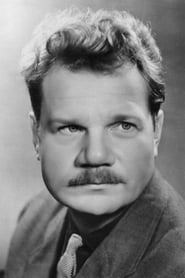
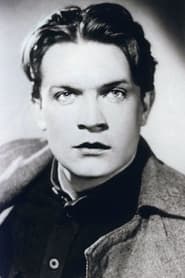
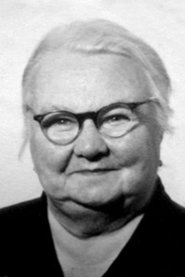

The Artamonov Case
"Three generations of Artamonov iron"
Keys: Space play/pause · ←/→ 10s · F fullscreen · M mute · </> speed
About this film
Three generations of the Artamonov family build and betray an industrial dynasty from serf roots to Soviet reality. A 1941 adaptation of Gorky's novel.
Cast & crew
More Drama films
View all →






More from Grigoriy Roshal
View all →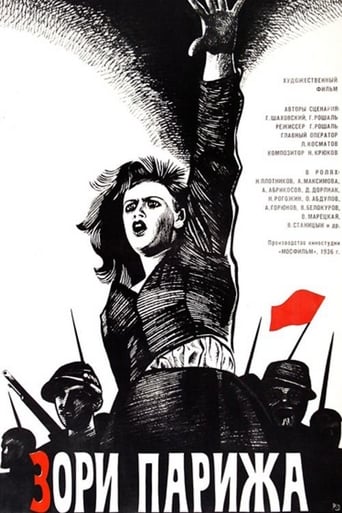
More about this film
About the production
Release date1941
ProductionGoskino, Mosfilm Studio
Filmed inMoscow, Soviet Union
The film was based on Maxim Gorky's acclaimed 1925 novel 'The Artamonov Business' (Дело Артамоновых). Production began in 1940 but was significantly impacted by the German invasion of the Soviet Union in June 1941. The film was completed under wartime conditions, with many cast and crew members contributing to the war effort simultaneously. Director Grigoriy Roshal was known for his adaptations of literary classics and brought particular attention to the social themes in Gorky's work.
Themes
Class struggle and social transformationGenerational conflict and changeIndustrialization and modernizationBourgeois decline and proletarian riseRevolutionary consciousness
Themes & topics
factory ownerclass strugglemulti-generational sagaindustrial revolutionworking classfamily businesspolitical awakeningsocial changeproletariatSoviet Union
Historical background
Archival records place The Artamonov Case in 1941, a year when the early sound era shaped what theaters booked.
Why this film matters
Retrospectives include The Artamonov Case when mapping craft and subject matter from the early sound era.
Making of
The production of 'The Artamonov Case' took place during a tumultuous period in Soviet history. Director Grigoriy Roshal approached the adaptation with deep respect for Gorky's source material, working closely with screenwriters to ensure the film captured the novel's complex social themes. The casting of Vera Maretskaya, Roshal's wife, in a leading role was notable, as she brought both personal chemistry and professional gravitas to the production. Filming occurred at Mosfilm Studios, the Soviet Union's premier film production facility, utilizing their extensive resources for period-accurate sets depicting late 19th and early 20th century Russia. The production team faced challenges in recreating the industrial scenes, particularly the factory sequences that were central to the story. With the outbreak of war in June 1941, the cast and crew had to balance their work on the film with contributions to the war effort, creating a tense but focused atmosphere on set. Despite these wartime pressures, the film was completed and released, serving as both artistic achievement and propaganda piece during the critical early months of the Great Patriotic War.
What critics said
Critics revisiting The Artamonov Case emphasize performative and technical choices visible in surviving prints.
Did you know?
- The film is an adaptation of Maxim Gorky's last major novel, which was considered among the pivotal works of Soviet literature
- Director Grigoriy Roshal was married to Vera Maretskaya, who starred in the film, making this a family production
- The film was released just months before Nazi Germany's invasion of the Soviet Union, making it one of the last major pre-war Soviet productions
- Vera Maretskaya, who played a leading role, would later become widely praised actresses in Soviet cinema and was named a People's Artist of the USSR
- The novel's themes of class struggle and industrialization were particularly relevant to Soviet cinema of the 1930s-40s, which often emphasized socialist realism
- The film's production coincided with the 20th anniversary of the Soviet Union, making its themes of generational change especially significant
- Sergei Romodanov, who played the elder Ilya Artamonov, was known for his portrayals of working-class characters in Soviet cinema
- The film was part of a series of Gorky adaptations made during this period, reflecting the author's elevated status in Soviet culture
Awards & recognition
- Stalin Prize, Second Class (1942) - for outstanding achievement in cinema
Visual style
The film's cinematography, while typical of Soviet productions of the era, employed careful composition and lighting to emphasize the social themes of the narrative. The camera work contrasted the cramped, intimate spaces of the workers' lives with the grand, imposing architecture of the factory and Artamonov mansion, visually representing class divisions. Industrial sequences were shot with dynamic angles that emphasized both the power and the dehumanizing aspects of mechanized labor. Period detail was meticulously captured in the costume and production design, with particular attention to the evolution of Russian society from the 19th to early 20th century. The cinematographer used lighting techniques that evolved with the story's timeline, moving from the warmer tones of the early scenes to the harsher, more dramatic lighting of the revolutionary period. Close-ups were strategically employed to highlight the emotional and psychological transformations of the characters, particularly the younger Artamonov's ideological awakening.
Innovations
For its time, 'The Artamonov Case' demonstrated notable technical achievements in Soviet filmmaking, particularly in its recreation of historical industrial settings. The production team constructed elaborate factory sets that were both visually impressive and historically accurate, allowing for complex tracking shots that followed workers through their daily routines. The film's sound recording techniques were advanced for the period, successfully capturing both intimate dialogue and the cacophony of industrial machinery. Special effects were employed to create convincing scenes of factory operations and labor processes, using a combination of practical effects and camera tricks. The makeup and costume departments achieved remarkable transformations, showing the aging of characters across multiple decades and the changing fashions of different social classes. The film's editing techniques helped compress decades of narrative into a cohesive whole, using cross-cutting between different social strata to emphasize class divisions. These technical elements combined to create a production that matched the epic scope of its literary source material.
Music
The musical score for 'The Artamonov Case' was composed to reflect the film's epic scope and social themes, incorporating both traditional Russian musical elements and Soviet-era orchestral techniques. The soundtrack evolved with the narrative, beginning with folk-inspired melodies that represented the peasant origins of the Artamonov family, gradually transitioning to more industrial and revolutionary musical themes as the story progressed. The composer used leitmotifs to represent different characters and social classes, with the workers' themes often featuring more collective, choral elements while the bourgeois characters were accompanied by more individualistic, chamber-style music. The score included period-appropriate songs that helped establish the historical setting while also serving the film's ideological purposes. During scenes of political awakening and class consciousness, the music swelled with patriotic and revolutionary fervor, reinforcing the film's message. The soundtrack was recorded using the best available technology of the time, resulting in clear audio that supported the dramatic performances.
Famous quotes
A factory is not just bricks and machines—it is the future of our people.
When the workers awaken, no wall can hold back the tide of history.
We built this empire with our hands, and with our hands we shall determine its fate.
The old ways die hard, but die they must—for progress demands sacrifice.
Memorable scenes
- The opening sequence showing Ilya Artamonov's rise from serf to factory owner, with sweeping shots of industrial Russia
- The dramatic confrontation between Peter Artamonov and the workers' delegation, where the class divide becomes irreconcilable
- The younger Ilya's secret meeting with revolutionaries, filmed in shadowy, clandestine conditions
- The factory strike sequence, with hundreds of extras creating a powerful tableau of worker solidarity
- The final scene where the younger Artamonov chooses the side of the proletariat, symbolically turning his back on his family's legacy
What audiences thought
The Artamonov Case resonated strongly with Soviet audiences in 1941, who found its themes of social transformation and class struggle both familiar and inspiring. The film's release during the early months of the Great Patriotic War gave its message of historical progress and inevitable victory particular urgency and meaning. Audiences connected with the multi-generational saga, which reflected many families' own experiences of social mobility and change during the Soviet era. The performances, particularly those of Vera Maretskaya and Sergei Romodanov, were widely appreciated and discussed among moviegoers. The film's clear ideological message, delivered through compelling human drama, made it popular both as entertainment and as educational material. In wartime conditions, when cinema served as both distraction and morale booster, the film's optimistic vision of historical progress provided reassurance during uncertain times. The movie became part of the cultural conversation about Soviet identity and values, with its characters and situations referenced in popular discussions about the nation's past and future.
Film connections
Influenced by
- Maxim Gorky's novel 'The Artamonov Business'
- Soviet socialist realist cinema
- Epic family saga tradition
- Marxist literary theory
- Pre-war Soviet propaganda cinema
This film influenced
- Later Soviet adaptations of classic literature
- Post-war Soviet cinema dealing with class themes
- Soviet films about industrial development
Film restoration
The film is preserved in the Gosfilmofond archive, the Russian state film archive, and has been digitally restored for modern viewing. While some wartime films were lost due to damage and neglect, 'The Artamonov Case' survived and remains accessible through Russian cinema archives and special screenings. The film has been included in retrospective collections of Soviet cinema and Gorky adaptations.
Where to watch
- Available through Russian film archive screenings
- Some streaming services specializing in classic cinema
- Film studies departments at universities with Soviet cinema collections
- Specialized DVD releases from Russian cinema distributors