

The Eternal Mother
"Love, divorce, and death leave a child between two homes."
Keys: Space play/pause · ←/→ 10s · F fullscreen · M mute · </> speed
About this film
John and Mary divorce their spouses to marry each other. Mary dies after giving birth and the baby is taken in by John's first wife, Martha. She refuses all contact with John until many years later when he becomes ill and she finally forgives him for deserting her.
Cast & crew
More films like this
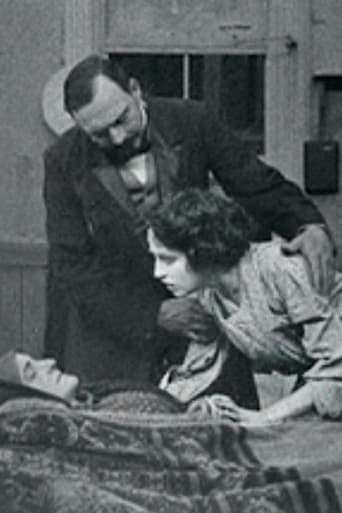
More from D.W. Griffith
View all →
More about this film
About the production
Release dateMarch 25, 1912
Box officeUnknown - Biograph films were rented to theaters rather than sold, so specific box office figures weren't tracked
ProductionBiograph Company
Filmed inBiograph Studio, New York City, Fort Lee, New Jersey
Filmed during Griffith's most prolific period at Biograph, where he was making multiple short films per week. The film was shot in just one or two days, typical of Biograph's rapid production schedule. The production utilized natural lighting and minimal sets, characteristic of Griffith's early Biograph work.
Themes
Maternal sacrificeRedemption and forgivenessThe consequences of divorceMoral responsibilityFamily bonds
Themes & topics
divorcesingle motherdeath in childbirthorphanforgivenessillnessfamily dramamelodramasacrificeredemption
Historical background
By 1912, The Eternal Mother was shaped by the silent era technology, distribution, and audience expectations.
Why this film matters
The Eternal Mother (1912) helps trace genre evolution, performer careers, and exhibition practices of its period.
Making of
The film was made during Griffith's revolutionary period at Biograph where he was essentially inventing the language of cinema. Working with a stock company of actors including Blanche Sweet, who was becoming one of his favorites, Griffith experimented with narrative techniques that would become standard in filmmaking. The casting of Edwin August as John was unusual as Griffith typically preferred other leading men, suggesting the actor brought something specific to this role. The production was rushed, as all Biograph shorts were, with Griffith often shooting multiple films simultaneously. The emotional themes of the film reflect Griffith's interest in melodrama and moral tales that would characterize much of his later work.
What critics said
Modern notes on The Eternal Mother emphasize preservation, stylistic choices, and its place within director or studio filmographies.
Did you know?
- This was one of over 400 short films D.W. Griffith directed for Biograph between 1908-1913
- The film was released just months before Griffith would begin work on his controversial masterpiece 'The Birth of a Nation'
- Blanche Sweet was only 16 years old when she appeared in this film, early in her career as one of Griffith's favorite actresses
- The film's themes of divorce and single motherhood were considered controversial for 1912 audiences
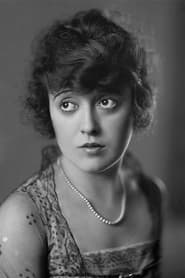
- Mabel Normand, who appears in a supporting role, would later become one of silent comedy's biggest stars at Mack Sennett's Keystone Studios
- The film was shot on 35mm film at a frame rate of 16 frames per second, standard for the era
- Edwin August was one of the few leading men Griffith worked with repeatedly during his Biograph period
- The film's original Biograph catalog number was 363
- Like many Biograph films of this era, it was likely tinted (usually amber or blue) for theatrical release
- The film was distributed through Biograph's General Film Company monopoly, which controlled film distribution at the time
Visual style
The cinematography by Billy Bitzer, Griffith's frequent collaborator, employed the naturalistic style characteristic of Biograph productions. The film utilized available light and simple compositions, with Bitzer beginning to experiment with more sophisticated techniques like soft focus for emotional moments. The camera work was relatively static, as was typical of the period, but Griffith was already using closer shots to emphasize emotional moments. The visual storytelling relied heavily on the actors' performances and carefully composed tableaux to convey the narrative without dialogue.
Innovations
While not groundbreaking technically, the film demonstrates Griffith's growing mastery of film language within the constraints of the one-reel format. The use of cross-cutting between parallel storylines and the effective use of close-ups for emotional emphasis were becoming more refined in this period. The film also shows Griffith's developing understanding of pacing and rhythm in narrative storytelling, techniques that would become more pronounced in his later feature films.
Music
As a silent film, 'The Eternal Mother' would have been accompanied by live musical performance in theaters. Typical accompaniment would have included a pianist or small ensemble playing popular songs of the era and classical pieces appropriate to the mood of each scene. Theaters often used cue sheets provided by Biograph that suggested specific musical selections for different emotional moments in the film. No original composed score existed for the film, as custom film scoring would not become common until later in the decade.
Famous quotes
'Time heals all wounds, but some scars remain forever'
'A mother's love knows no bounds, not even the grave'
'In forgiveness, we find our true humanity'
Memorable scenes
- The deathbed scene where Mary dies after childbirth, conveying tragedy through minimal action and maximum emotional impact
- The confrontation scene where Martha initially refuses John's contact, emphasizing her moral stance
- The final reconciliation scene where Martha brings the child to see the dying John, providing emotional closure
What audiences thought
The film was well-received by audiences of 1912, who were drawn to its emotional storyline and relatable themes of love, loss, and redemption. Audience members particularly responded to the sacrificial nature of Martha's character and the film's ultimate message of forgiveness. The film's treatment of family values and maternal sacrifice resonated strongly with contemporary viewers, reflecting the social mores of the Progressive Era. Like most Biograph releases, it circulated widely through the General Film Company's distribution network, reaching audiences across the United States.
Film connections
Influenced by
- Victorian melodrama literature
- Stage plays of the early 20th century
- Contemporary social reform movements
- Biblical stories of sacrifice and redemption
This film influenced
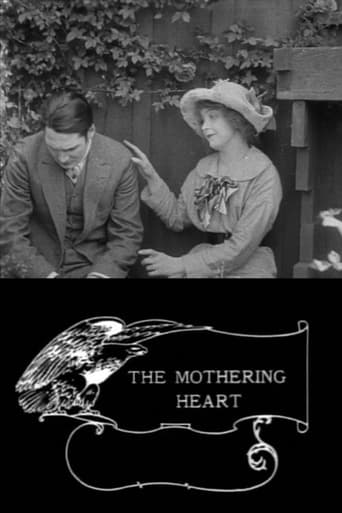
- Later Griffith melodramas like 'The Mothering Heart' (1913)
- 1920s family melodramas
- Cecil B. DeMille's moral tales
- John Ford's early family dramas
Film restoration
The film is preserved in the Library of Congress collection and has been archived by several film institutions. While not widely available, it exists in 35mm and digital formats and is considered to be in good preservation condition for a film of its age. The Museum of Modern Art also holds a copy in their film archive.
Where to watch
- Available through specialized film archives and libraries
- Occasionally screened at silent film festivals and retrospectives
- Accessible through academic film collections and cinema studies programs
- May be available through select streaming services specializing in classic cinema