


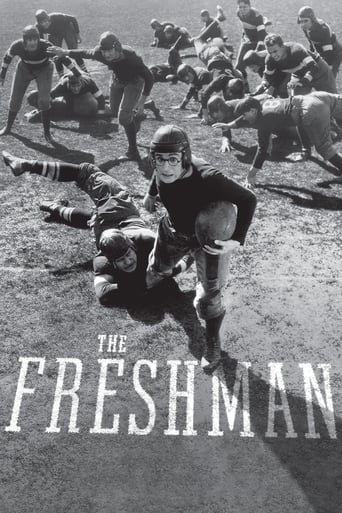
The Fighting American
"Jazz Age nights, on days"
Keys: Space play/pause · ←/→ 10s · F fullscreen · M mute · </> speed
About this film
While Jazz Age life, on the wager that he will propose marriage to any girl selected by his fraternity brothers, Bill finds himself making love to Mary, an old-fashioned girl who is secretly in love with him…
Cast & crew
More films like this
More Adventure films
View all →

More from Tom Forman
View all →
More about this film
About the production
Release date1924
As a silent film from 1924, this production would have utilized the filmmaking techniques of the era, including intertitles for dialogue and a live musical accompaniment during theatrical screenings. The film was directed by Tom Forman, who transitioned from acting to directing in the early 1920s.
Themes
College lifeFraternity cultureRomantic deceptionAuthentic loveHonor and integrity
Themes & topics
Historical background
Viewers who saw The Fighting American in 1924 experienced it within the conventions of Jazz Age filmmaking. The young Mary Astor plays a young college student who is the object of desire in the eyes of the hero.
Why this film matters
Film clubs and archives revisit The Fighting American as part of broader Jazz Age programming. The Fighting American (also known as The Fighting Adventurer) is a surviving 1924 American silent romantic drama film produced and distributed by Universal Pictures and directed by Tom Forman.
Making of
The production of this 1924 silent film would have taken place during the golden age of Hollywood's studio system. Director Tom Forman, who had been an actor in films like D.W. Griffith's 'Intolerance' (1916), brought his understanding of performance to his directorial work. The young Mary Astor, who would later win an Academy Award for 'The Great Lie' (1941), was establishing herself as a leading lady in silent cinema. The film would have been shot on black and white film stock, with careful attention to lighting and composition to convey emotion without dialogue. The fraternity setting would have required period-appropriate costumes and sets reflecting 1920s college life. As with most silent films, a musical score would have been composed to accompany theatrical screenings, with live musicians performing during showings.
What critics said
Surviving reviews and later retrospectives treat The Fighting American as representative Jazz Age fare—valued for craft even when not hailed as a masterpiece.
Did you know?
- Director Tom Forman began his career as an actor before transitioning to directing in the early 1920s
- Mary Astor was only 18 years old when she appeared in this film, early in her long career that would span decades
- The film represents the college genre popular in the 1920s, focusing on fraternity life and young romance
- 1924 was during the silent film era, meaning the film would have relied on visual storytelling and intertitles
- Pat O'Malley was a prolific character actor who appeared in over 300 films during his career
- Raymond Hatton would become known for his distinctive mustache and frequent appearances in westerns
- The film's themes of college life and fraternity culture reflected the growing popularity of higher education in 1920s America
Visual style
As a 1924 silent film, the cinematography would have utilized the techniques and technology of the era. The film was likely shot on black and white film stock with careful attention to lighting to create mood and emphasize emotional moments. Camera movements would have been somewhat limited by the bulky equipment of the time, though innovative directors were beginning to use more dynamic camera work. The visual storytelling would have relied on composition, framing, and actor performances to convey narrative and emotion. Close-ups would have been used to highlight emotional moments, particularly in romantic scenes. The college setting would have provided opportunities for both interior and exterior shots, with careful attention to period-appropriate set design and costumes to establish the 1920s atmosphere.
Innovations
The film represents the technical standards of mid-1920s Hollywood production. By 1924, the film industry had standardized on 35mm film with four perforations per frame, creating the familiar aspect ratio of approximately 1.33:1. Lighting technology had advanced from the early days of cinema, allowing for more sophisticated visual effects and mood creation. The use of intertitles for dialogue and exposition had become refined, with careful attention to typography and timing. Camera technology, while still bulky, allowed for some movement including pans and tilts. The editing techniques of the era emphasized continuity and clear storytelling, with shot lengths generally longer than in modern cinema. The film would have been distributed on multiple reels, requiring projectionists to carefully manage reel changes during screenings.
Music
As a silent film, 'The Fighting American' would not have had a recorded soundtrack but would have been accompanied by live musical performances during theatrical screenings. Theaters typically employed organists or small orchestras to provide musical accompaniment that enhanced the emotional content of the film. The musical score would have been compiled from classical pieces, popular songs of the era, and specially composed cues. Romantic scenes would have been underscored with lush, emotional music, while moments of conflict or tension would have been accompanied by more dramatic or discordant selections. The quality and appropriateness of the musical accompaniment could significantly affect the audience's experience of the film. Some theaters might have used cue sheets provided by the film's distributor to ensure consistent musical accompaniment across different venues.
Famous quotes
(Intertitle) 'A wager is a gentleman's agreement - but love is a gentleman's surrender.'
(Intertitle) 'In the game of hearts, the greatest risk is playing with genuine affection.'
Memorable scenes
- The pivotal fraternity meeting where Bill accepts the wager, establishing the central conflict of the film. This scene would have conveyed the casual cruelty of the bet through the actors' expressions and intertitles, setting up the moral dilemma that drives the narrative.
What audiences thought
Audiences in 1924 would have attended this film as part of a theatrical program that might include newsreels, comedy shorts, and possibly another feature film. The college setting and romantic storyline would have appealed to the growing youth audience of the 1920s, while also resonating with older viewers' nostalgia for their younger days. The film's themes of honor, love, and personal growth aligned with the moral values expected in entertainment of the period. The presence of popular actors like Mary Astor would have drawn audiences, as film stars were becoming major cultural icons. The silent nature of the film meant that audiences were accustomed to reading intertitles and interpreting visual cues, making the viewing experience a more active and participatory form of entertainment than modern film viewing.
Film connections
Influenced by
- College films of the early 1920s
- Silent era romantic dramas
- Fraternity culture narratives
- Traditional courtship stories
Film restoration
As a 1924 silent film, 'The Fighting American' falls into a category where many films have been lost due to the deterioration of nitrate film stock and lack of preservation efforts in the early decades of cinema. The survival rate for American silent films is estimated at around 25%, with many existing only in incomplete or damaged copies. Without specific records of this film's preservation status, its current availability remains uncertain. Film archives like the Library of Congress, the Museum of Modern Art, and the UCLA Film & Television Archive may hold copies if the film survived.
Where to watch
- Due to its age and uncertain preservation status, 'The Fighting American' would likely be unavailable through conventional streaming services or home video formats. If the film survives, it might be accessible through specialized film archives, silent film festivals, or academic institutions with film collections. Some archives offer on-site viewing appointments for researchers and film enthusiasts. Occasionally, lost or rarely seen silent films surface through private collector screenings or special restoration projects. Organizations like the Silent Film Society or local film societies might occasionally program obscure silent films if prints are available.