



The Final Days
"Oval Office exit farce"
Keys: Space play/pause · ←/→ 10s · F fullscreen · M mute · </> speed
About this film
Mockumentary-style satire imagines Bill Clinton's frantic last days in office in this 2000 comedy short skewering presidential scandal culture.
Cast & crew
More Comedy films
View all →






More about this film
About the production
Release date2000
Budget12,000
ProductionHBO
Filmed inUnited States
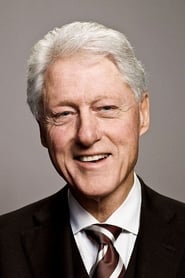
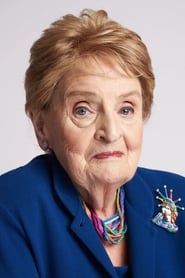
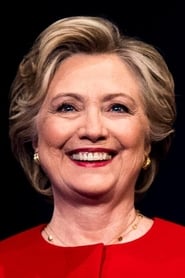
This title is best understood as a made-for-television political comedy special associated with HBO rather than a conventional theatrical feature, which helps explain why detailed box-office data is not generally applicable. It was produced as a topical, end-of-administration satire timed to the closing days of the Clinton White House, making its humor highly dependent on contemporary political context. The project is notable for featuring Bill Clinton portraying himself in a comic, self-aware screen appearance, alongside Hillary Clinton and Madeleine Albright, giving the special an unusual mix of political figures and scripted parody. Because it aired as a television event, standard theatrical production details such as a wide release pattern or large-scale location work are not typically documented in the way they would be for a cinema feature.
Themes
Farewell and transition of powerPolitical image and self-parodyThe relationship between public office and celebrityLegacy, memory, and retrospective judgmentSatire of Washington ritual and political theater
Themes & topics
Bill ClintonWhite Housepolitical satirefarewellpresidencyself-parody
Historical background
The Final Days appeared after impeachment era; indie satire circulated on cable and festivals.
Why this film matters
The film’s cultural significance lies less in box-office impact and more in the rarity of its premise: a president and senior political figures participating directly in a comedic portrayal of their own departure from office. That makes it an interesting artifact of late-20th-century American political culture, when the Clinton brand had become deeply intertwined with media performance, public charisma, and satirical self-awareness. It also demonstrates how premium television could function as a venue for timely political humor that would have been difficult to stage in a conventional theatrical setting. For historians of political media, it stands as a quirky example of how politics, celebrity, and television comedy increasingly overlapped in the Clinton era.
Making of
The most notable behind-the-scenes aspect of The Final Days is its premise: it brought real political figures into a comedy framework at the end of a major presidential administration, which is inherently unusual for screen entertainment. Phil Rosenthal’s involvement signals a television-comedy sensibility rather than a newsy or journalistic approach, suggesting the piece was designed to be playful, lightly absurd, and audience-friendly. The participation of Bill Clinton, Hillary Clinton, and Madeleine Albright made the project especially distinctive, because it blurred the line between parody and self-presentation. As a topical special tied to a very specific moment in American politics, its production was shaped by timeliness; once the administration ended, much of its immediate cultural relevance became historical rather than current.
What critics said
Niche political humor; timely but dated for post-2000 audiences.
Did you know?
- The film is a political comedy special centered on the final days of Bill Clinton’s presidency rather than a traditional narrative feature film.
- Bill Clinton appears as himself, making this one of the more unusual screen appearances by a sitting or recently serving U.S. president.
- Hillary Clinton and Madeleine Albright also appear, reinforcing the satirical, quasi-documentary feeling of the special.
- The project was directed by Phil Rosenthal, who is best known for his work in comedy television.
- Because it was made for television, it is often grouped with HBO comedy programming rather than theatrical releases.
- Its humor depends heavily on contemporary late-1990s and early-2000s political culture, especially the public fascination with the Clinton White House.
- The title echoes the phrase commonly associated with political retrospectives and end-of-administration commentary, but the work itself is comedic rather than investigative.
- It is easy to confuse this title with other works called The Final Days, including documentary and dramatic productions about political figures, but this 2000 version is specifically a comedy special about Clinton’s final days in office.
Visual style
Because this was produced for television as a comedy special, its visual approach is likely straightforward and performance-centered rather than cinematic in the elaborate sense of a theatrical feature. The style would have emphasized clear framing, studio or controlled-environment staging, and the immediacy of the comic interactions over expressive camera movement or dramatic lighting. The visual presentation likely served to keep the focus on the recognizable personalities involved and on the satirical tone of the material. In productions of this kind, the cinematography typically aims for clarity, timing, and accessibility rather than visual flourish.
Innovations
The film’s main notable achievement is conceptual rather than technical: it successfully uses the presence of actual political figures to create a hybrid of satire, performance, and topical television. That kind of casting requires a production that can balance authenticity, comedic timing, and the sensitivities of public image. In a broader sense, it is part of a television trend that leveraged cable’s flexibility to create event programming around real-world politics. There are no widely recognized technical innovations such as new visual effects or sound techniques associated with the title.
Music
Specific soundtrack and score information is not widely documented in readily available sources for this title. As a television comedy special, its music would likely have functioned as supportive underscore and transitional material rather than as a major standalone musical component. If original music was used, it would probably have been modest in scale and designed to reinforce the satirical, light comic tone. No widely cited soundtrack album or signature theme is generally associated with the production.
Famous quotes
null
Memorable scenes
- Bill Clinton’s comic, self-aware appearance as himself in a satirical treatment of his final days in office.
- The interplay between Clinton, Hillary Clinton, and Madeleine Albright, which turns real political relationships into the basis for light comedy.
- The closing-offices-and-moving-on premise, which uses the rituals of departure from the White House as a source of humor.
What audiences thought
Audience reception was likely strongest among viewers interested in political humor, the Clinton presidency, and HBO’s event programming. As a topical special, it would have appealed most to people who could appreciate the inside-baseball references and the novelty of seeing major political figures in a comedic setting. Its audience impact is probably more immediate than enduring, since its jokes were tied to a particular historical moment and public mood. Over time, it has remained more of a niche curiosity than a broadly revisited comedy favorite.
Film connections
Influenced by
- American political satire
- Television sketch comedy traditions
- End-of-presidency media retrospectives
- Late-night comedy commentary on the Clinton administration
This film influenced
- No widely documented direct influences
Film restoration
As a relatively recent television special, it is not considered lost and is assumed to survive in HBO’s archival holdings or broadcast masters. It is not generally known as a restored archival film in the manner of older nitrate-era productions, but it remains a preserved modern television work. Availability may be limited by licensing and platform rotation rather than by physical loss.
Where to watch
- HBO archive or HBO-affiliated library access
- Select premium-cable or on-demand catalog rotations, depending on current licensing
- Physical or digital archival copies in library or private collections, where available