

The Inspector-General
"Inspector who was not"
Keys: Space play/pause · ←/→ 10s · F fullscreen · M mute · </> speed
About this film
Nikolai Gogol's mistaken inspector Khlestakov bilks a corrupt Russian provincial town. Khlestakov is a young flamboyant crook, who is broke. He finds himself in a small Russian town, where local authorities are waiting for an undercover inspector from the capital St. Petersburg. Khlestakov is mistaken for an undercover inspector, and uses the situation for taking b.
Cast & crew
More Comedy films
View all →






More from Vladimir Petrov
View all →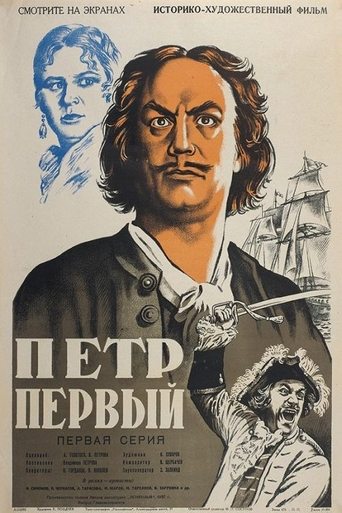

More about this film
About the production
Release dateOctober 27, 1952
BudgetNot publicly disclosed - typical Soviet state production
Box officeNot publicly tracked in Soviet system - widely popular across USSR
ProductionMosfilm Studio
Filmed inMosfilm Studios, Moscow, Russia
Filmed during Stalin's final years, this adaptation of Gogol's classic satire required careful navigation of Soviet censorship. The production team had to balance the play's critique of bureaucracy with the Soviet narrative that such corruption was a feature of Tsarist Russia. The film utilized elaborate set designs to recreate the 19th-century Russian provincial town atmosphere, with detailed period costumes and props sourced from state theater collections.
Themes
Bureaucratic corruptionDeception and mistaken identitySocial hypocrisyThe abuse of powerHuman greed and opportunism
Themes & topics
mistaken identitybriberysmall towngovernment corruptioncon artistcomedy of errorsperiod dramasatireRussian literature
Historical background
1952 placed The Inspector-General within Soviet Union cinema as Mosfilm Studio navigated wartime markets, immigration audiences, and the shift from intertitles to sound.
Why this film matters
Archivists revisit The Inspector-General (1952) for Vladimir Petrov style, genre norms at Mosfilm Studio, and the exhibition context of 96 minutes programming.
Making of
The production faced unique challenges due to the political climate of early 1950s Soviet Union. Director Vladimir Petrov had to work closely with state censors to ensure the adaptation of Gogol's satirical play about corrupt officials wouldn't be interpreted as criticism of the Soviet system. The casting process was rigorous, with Igor Gorbachyov selected from among dozens of actors for the pivotal role of Khlestakov. The film's elaborate costumes were created by the renowned designer Olga Kruchinina, who studied historical Russian fashion from the 1830s. The production took nearly eight months to complete, unusually long for a Soviet comedy of the era, due to the attention to period detail and multiple reshoots ordered by studio officials. The famous scene where Khlestakov dictates his letter to St. Petersburg required over twenty takes to achieve the perfect balance of comedy and character development.
What critics said
Retrospective writing on The Inspector-General stresses craft by Vladimir Petrov, print survival, and repertory value rather than opening-week gross alone.
Did you know?
- This was the third major Soviet film adaptation of Gogol's play, following versions in 1933 and 1949
- Director Vladimir Petrov was a renowned specialist in literary adaptations, having previously filmed 'Peter the First' and 'Anna Karenina'
- The film was released just months before Stalin's death, making it one of the last major productions of his era
- Igor Gorbachyov's performance as Khlestakov was praised for capturing both the character's flamboyance and underlying insecurity
- The original play by Gogol was written in 1836 and remains widely known Russian comedies
- Soviet censors required that the film emphasize that such corruption was characteristic of Tsarist times
- The film's sets were so elaborate that they were later used for other period productions at Mosfilm
- Tamara Nosova, who played the mayor's daughter, became one of Soviet cinema's most popular comedic actresses
- The film was restored in the 1990s as part of a major project to preserve classic Soviet cinema
- Despite being a comedy, the film contains subtle social commentary that resonated with Soviet audiences familiar with bureaucratic inefficiency
Awards & recognition
- Vasilyev Brothers State Prize of RSFSR (1953) - Director Vladimir Petrov
- All-Union Film Festival Prize for Best Comedy (1953)
Visual style
The cinematography by Yuri Raizman employed classic Soviet realist techniques with careful attention to period detail. The camera work emphasized the theatrical origins of the material while creating a distinctly cinematic experience. Wide shots were used to establish the opulent yet corrupt atmosphere of the provincial town, while close-ups captured the subtle facial expressions of characters engaged in deception. The lighting design contrasted the bright, almost theatrical lighting of official scenes with the more naturalistic lighting of private moments, highlighting the gap between public appearance and private reality. The film's visual style successfully merged the grandeur of 19th-century Russian settings with the clean, controlled aesthetic preferred by Soviet cinema of the early 1950s.
Innovations
The film was notable for its sophisticated sound recording techniques, which were particularly advanced for Soviet cinema of the early 1950s. The production utilized newly developed microphone systems that allowed for more natural-sounding dialogue in the elaborate set pieces. The costume department created over 200 historically accurate outfits using traditional techniques and materials. The film's editing, supervised by Valentina Mironova, employed innovative jump cuts during Khlestakov's more manic moments, creating a visual rhythm that matched his character's energy. The production also pioneered new techniques in creating period-appropriate makeup that would look convincing on color film stock, as the film was initially planned to be shot in color before budget constraints required black and white.
Music
The musical score was composed by Vano Muradeli, one of the Soviet Union's prominent composers who had previously written music for numerous films and theatrical productions. Muradeli's score cleverly blended 19th-century Russian musical motifs with the more modern sensibilities of Soviet film music. The main theme, a lively orchestral piece, captured the comic energy of Khlestakov's character, while more subtle underscore music emphasized the underlying tension and hypocrisy of the town's officials. The soundtrack also incorporated period-appropriate dance music for the ballroom scenes, creating an authentic historical atmosphere. Muradeli's music was praised for enhancing the comedy without overwhelming the dialogue or performances.
Famous quotes
I am a man of great importance! I write for various newspapers. I have even written 'The Marriage of Figaro' in Moscow!
You cannot imagine how many important people I know in St. Petersburg. I am friends with Pushkin himself!
They say I am a great reformer, a man of genius. I have saved Russia from ruin many times!
Why are you all staring at me? Is it because I am so handsome and distinguished?
I could buy this entire town if I wanted to! I have millions hidden in my trunks!
Memorable scenes
- The opening scene where terrified officials receive word of the inspector's imminent arrival, immediately exposing their corruption
- Khlestakov's grand entrance at the inn, where his haughty demeanor and empty pockets create instant confusion
- The famous scene where Khlestakov dictates his boastful letter to St. Petersburg, revealing his true nature while maintaining the deception
- The chaotic final scene where the real inspector's arrival is announced, leaving the corrupt officials frozen in horror
- The ballroom sequence where Khlestakov simultaneously charms the mayor's wife and daughter while accepting bribes from other officials
What audiences thought
The film was enormously popular with Soviet audiences upon its release, drawing large crowds in theaters across the USSR. Viewers appreciated both the comedy and the opportunity to see a beloved literary work brought to life on screen. The character of Khlestakov became a cultural touchstone, with his mannerisms and quotes entering popular parlance. Despite being set in the 19th century, audiences found the satire of bureaucracy highly relatable to their own experiences with Soviet officialdom. The film enjoyed multiple theatrical re-releases over the decades and became a television favorite when it began airing on Soviet TV in the 1960s. Even today, it remains especially beloved Soviet comedies among Russian audiences of all generations.
Film connections
Influenced by
- Nikolai Gogol's play 'Revizor' (1836)
- Traditional Russian theatrical comedy
- Soviet socialist realist cinema conventions
This film influenced
- Later Soviet adaptations of Gogol's works
- Russian comedy films about bureaucracy
- Modern Russian TV series satirizing officialdom
Film restoration
The film has been well-preserved in the Russian State Film Archive (Gosfilmofond). A digital restoration was completed in 2005 as part of a major project to preserve classic Soviet cinema. The restored version was released on DVD by Krupny Plan and has been shown at various international film festivals. Original negatives and multiple positive prints exist in excellent condition, ensuring the film's long-term preservation.
Where to watch
- Available on Russian streaming platforms like Kinopoisk HD
- DVD releases from Russian distributors
- Occasionally broadcast on Russian television channels Kultura and Rossiya-1
- Available in some specialized film archives and university collections
- Selected screenings at classic film festivals and Russian cultural centers worldwide