The Narrow Road
"two beyond confinement"
Keys: Space play/pause · ←/→ 10s · F fullscreen · M mute · </> speed
About this film
Behind closed doors, silent era life, two men are released from prison after having served their sentences. One is determined to go straight and stay out of trouble, but his fellow ex-con has other ideas, and his plans wind up spelling trouble for both of them.
Cast & crew
More films like this
More Crime films
View all →


More from D.W. Griffith
View all →
More about this film
About the production
Release dateMarch 25, 1912
ProductionBiograph Company
Filmed inNew York City, Fort Lee, New Jersey
This was one of many short films D.W. Griffith directed for the Biograph Company during their most productive period. The film was shot on location in New York and at Biograph's studio in Fort Lee, New Jersey, which was the center of American film production before the industry moved to Hollywood. Like many Biograph productions of this era, it was filmed quickly on a tight schedule, with Griffith often directing multiple films simultaneously.
Themes
Redemption and second chancesThe difficulty of escaping one's pastMoral choice and temptationUrban crime and povertyLoyalty and betrayal
Themes & topics
ex-convictprison releasereformationcrimebetrayalmoral dilemmaurban settingrevengefriendshiptemptation
Historical background
The 1912 premiere of The Narrow Road coincided with broader shifts in silent era culture, from technology to social norms. W. Griffith and produced and distributed by the Biograph Company.
Why this film matters
The Narrow Road has outlived its original run as a document of silent era popular entertainment and craft.
Making of
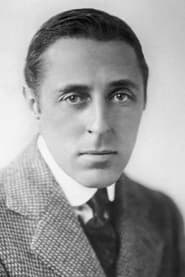
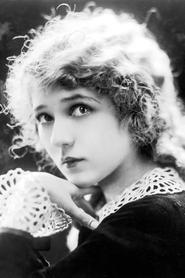
D.W. Griffith was known for his demanding directing style during his Biograph period, often pushing actors to deliver naturalistic performances that were revolutionary for the time. For 'The Narrow Road,' Griffith likely employed his innovative techniques of cross-cutting and close-ups to build emotional tension, though these techniques were still in their early development. The film was probably shot in just a few days, as was typical for Biograph productions. Mary Pickford, even at this early stage of her career, was known to be meticulous about her performances and would often work closely with Griffith to develop her character's motivations. The urban setting allowed Griffith to incorporate real locations, adding authenticity to the story of urban crime and redemption that was becoming increasingly popular in American cinema.
What critics said
Re-evaluation in film journals has kept The Narrow Road in circulation among enthusiasts who track silent era releases. The film is preserved in the Library of Congress paperprint collection.
Did you know?
- This film was released during D.W. Griffith's most prolific period at Biograph, where he directed over 450 short films between 1908 and 1913.
- Mary Pickford was already becoming a major star by 1912, though she would soon leave Biograph for better pay and more creative control.
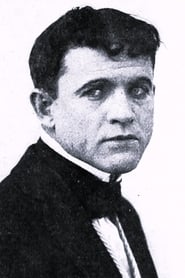
- Elmer Booth was a regular collaborator with Griffith and appeared in many of his Biograph films before his tragic death in a car accident in 1915 at age 32.
- The film's themes of redemption and the difficulty of reforming criminals were recurring motifs in Griffith's work.
- Like most films of this era, 'The Narrow Road' was shot on 35mm film at approximately 16 frames per second.
- The Biograph Company insisted on keeping their films under 20 minutes to maximize the number of showings per day in theaters.
- This film was released just months before Griffith would begin work on his controversial masterpiece 'The Birth of a Nation'.
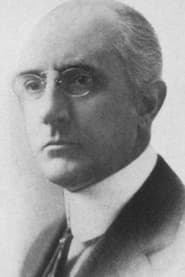
- Charles Hill Mailes was a prolific character actor who appeared in over 300 films between 1909 and 1935.
- The film's title refers to the difficult path of righteousness, a common metaphor in early moralistic cinema.
- No original screenplay exists for this film, as was common practice; actors often improvised from detailed scenarios written by Griffith.
Visual style
The cinematography for 'The Narrow Road' was typical of Biograph productions of 1912, featuring static camera positions with occasional movement to follow action. The film was shot by Billy Bitzer or G.W. Bitzer, Griffith's regular cinematographer, who was pioneering techniques such as soft focus and selective lighting. The urban exteriors would have been filmed in natural light, while interior scenes used artificial lighting that was still relatively primitive. The film likely employed medium shots more than close-ups, as the latter was still considered somewhat experimental, though Griffith was among the directors helping to establish close-ups as a legitimate cinematic tool.
Innovations
While 'The Narrow Road' does not represent a major technical breakthrough, it showcases D.W. Griffith's growing sophistication in film grammar. The film likely employed cross-cutting to build tension between parallel actions, a technique Griffith was helping to perfect. The use of location shooting in urban settings was still relatively innovative for 1912, adding authenticity to the production. The film's narrative structure, with its clear character development and moral complexity, represented an advancement beyond the simpler plots common in earlier cinema. These elements, while individually modest, collectively contributed to the evolution of cinematic storytelling.
Music
As a silent film, 'The Narrow Road' would have been accompanied by live musical performance during theatrical exhibition. Theaters typically employed pianists or small ensembles to provide appropriate music for each film. For a crime drama like this, the musical accompaniment would have included dramatic, suspenseful pieces during tense moments and more melancholic themes during scenes of moral struggle. The exact musical selections would have varied by theater and musician, with popular classical pieces and original compositions often used to enhance the emotional impact of the narrative.
Famous quotes
I'm going straight this time, no more trouble for me.
Once a crook, always a crook - that's what they say, but I'll prove them wrong.
The straight and narrow path is harder to walk than they tell you.
Memorable scenes
- The prison release scene where the two men part ways with different intentions
- The confrontation scene where the reformed ex-convict refuses to participate in the planned crime
- The dramatic climax where loyalty and morality are tested
What audiences thought
Audiences in 1912 typically consumed short films as part of varied programs that included newsreels, comedies, and other one-reelers. Crime films like 'The Narrow Road' were popular with urban audiences who could relate to the settings and themes. The presence of Mary Pickford, already a rising star, would have been a significant draw. While specific audience reactions to this particular film are not documented, Biograph productions generally enjoyed strong attendance during this period, particularly in larger cities where the themes of urban crime and redemption resonated with recent immigrants and working-class viewers.
Film connections
Influenced by
- Contemporary social reform movements
- Progressive Era literature
- Earlier Biograph crime dramas
- Stage melodramas of the period
- Realist fiction about urban life
This film influenced
- Later gangster films of the 1920s and 1930s
- Social problem films of the 1930s
- Film noir themes of the 1940s
- Prison drama genre
- Redemption narratives in cinema
Film restoration
The preservation status of 'The Narrow Road' is unclear, as is common with many Biograph films from this period. Some Biograph shorts survive in archives like the Library of Congress and the Museum of Modern Art, while others are lost or exist only in fragmentary form. Given the film's historical significance as a D.W. Griffith work starring Mary Pickford, it is likely that at least one copy survives in film archives, though it may not be readily available for public viewing.
Where to watch
- Library of Congress (if preserved)
- Museum of Modern Art film collection
- UCLA Film & Television Archive
- George Eastman Museum
- Potential inclusion in D.W. Griffith or Mary Pickford retrospective collections