The New Gulliver
"Gulliver among Soviet Lilliputians"
Keys: Space play/pause · ←/→ 10s · F fullscreen · M mute · </> speed
About this film
Soviet puppet animation retells Gulliver among Lilliputians as class-struggle allegory with young dreamer as Gulliver. The New Gulliver (1935) is early feature puppet film from USSR.
Cast & crew
More films like this
More Family films
View all →


More from Aleksandr Ptushko
View all →

More about this film
About the production
Release dateApril 24, 1935
BudgetExact budget figures are not documented in available sources, but it was among the costliest Soviet productions of its time due to its technical complexity
Box officeSpecific box office numbers are not available, but the film was a major commercial success in the USSR and performed well in international markets
ProductionMosfilm
Filmed inMoscow, Soviet Union
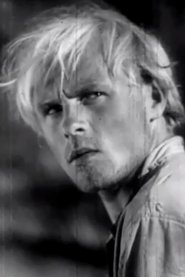
The production took nearly two years to complete, with the animation team working under extremely challenging conditions. Over 3,000 individual puppets were created for the Lilliputian characters, each with fully articulated joints and interchangeable facial expressions. The live-action sequences featuring Vladimir Konstantinov as Petya/Gulliver were filmed separately on specially constructed sets, then carefully composited with the stop-motion animation. The team developed innovative techniques for creating realistic scale differences, including forced perspective and custom-built camera rigs. The puppet faces were made from a special rubber compound that allowed for subtle expression changes, a significant technical advancement for stop-motion animation of the era.
Themes
Class struggle and exploitationRevolution and social changeInternational proletarian solidarityThe triumph of socialism over capitalismThe power of collective action
Themes & topics
Gulliver's Travels adaptationStop-motion animationPolitical propagandaRevolutionClass warfareSocialist realismDream sequenceGiant vs. small peopleWorkers' uprisingSoviet cinemaChildren's film with political message
Historical background
The New Gulliver used stop-motion on ambitious scale for Stalin-era children's propaganda cinema.
Why this film matters
Pioneered combination puppet feature and political fairy-tale in Soviet animation history.
Making of
The production of 'The New Gulliver' was an enormous undertaking that pushed the boundaries of what was technically possible in 1930s cinema. Ptushko and his team worked in secret at Mosfilm studios, developing revolutionary techniques for combining live-action footage with stop-motion animation. The biggest challenge was creating believable interactions between the human actor and the puppet characters. The team solved this by filming the live-action sequences first, then projecting them frame by frame onto a screen where animators could precisely match the puppet movements. The puppets themselves were engineering marvels, with ball-and-socket joints that allowed for fluid, realistic movement. The facial expressions were achieved through interchangeable parts and subtle manipulation of the rubber faces. The political content required careful negotiation with Soviet cultural authorities, who wanted to ensure the film properly promoted communist values while still being entertaining for children. Despite these pressures, Ptushko managed to create a film that was both technically brilliant and artistically compelling, establishing him as one of the Soviet Union's most important filmmakers.
What critics said
Moscow critics celebrated technique; animation historians cite its scale and politics.
Did you know?
- It was the first feature-length animated film produced in the Soviet Union and one of the first in the world to combine live-action with stop-motion animation
- Director Aleksandr Ptushko was nicknamed the 'Soviet Walt Disney' for his innovative work in fantasy and animation
- The film used over 3,000 different puppets, with each main character having multiple versions for different emotions and actions
- The Lilliputian puppets were approximately 3-4 inches tall and required incredibly precise frame-by-frame manipulation
- The film was exported to over 20 countries, including the United States where it was released in 1936
- The puppet faces were made from a special formula developed by Ptushko's team that allowed for subtle changes in expression
- The film won the Stalin Prize, one of the Soviet Union's highest honors for artistic achievement
- The production team invented new camera equipment to properly integrate the live-action and animated elements
- The film's success led to Ptushko directing more ambitious fantasy films, including 'The Tale of the Fisherman and the Fish' and 'Ilya Muromets'
- Despite being a children's film, it contained sophisticated political messaging that was carefully vetted by Soviet cultural authorities
Awards & recognition
- Stalin Prize (Second Degree) - 1935
- All-Union Film Festival Award for Technical Achievement - 1935
Visual style
The cinematography of 'The New Gulliver' was revolutionary for its time, employing innovative techniques to seamlessly blend live-action with stop-motion animation. The camera work had to solve the complex problem of making a human actor appear giant compared to three-inch puppets. This was achieved through careful use of forced perspective, custom-built sets with exaggerated dimensions, and precise camera placement. The lighting had to be meticulously matched between the live-action and animated elements to create a unified visual world. The cinematographers developed new methods for composite photography that allowed for realistic interaction between the human and puppet characters. The camera movements were particularly challenging, as they had to be perfectly synchronized between the different filming processes. The result was a visual style that, while dated by modern standards, was groundbreaking in 1935 and created a believable fantasy world that audiences found immersive and magical.
Innovations
'The New Gulliver' was a technical marvel that pushed the boundaries of 1930s filmmaking. The most significant achievement was the seamless integration of live-action with stop-motion animation, which required developing entirely new techniques for composite photography. The puppet technology was groundbreaking, featuring fully articulated joints and rubber faces that could show subtle expressions. The production team invented specialized camera equipment that could maintain precise alignment between different filming processes. The film also pioneered techniques for creating realistic scale relationships, including innovative set design and perspective tricks. The method of projecting live-action footage frame by frame to guide the animators was a revolutionary approach that would influence future animation studios worldwide. The film's technical achievements were so impressive that they were studied by filmmakers internationally, including at Disney studios, where Ptushko's work was analyzed for its innovative approaches to animation and special effects.
Music
The musical score was composed by Mikhail Ziv, who created a dynamic soundtrack that balanced revolutionary fervor with whimsical fantasy elements. The music incorporated both traditional orchestral arrangements and Soviet revolutionary songs, reinforcing the film's political themes while providing appropriate accompaniment for the various scenes. The sound design was particularly innovative for its time, as it had to match audio with stop-motion animation, a process that required careful synchronization. The film featured several musical numbers where the Lilliputian characters sang revolutionary songs, with the puppet mouths carefully animated to match the vocals. The sound effects were created using imaginative methods to match the miniature world of Lilliput, with everyday objects manipulated to create appropriately scaled sounds. The soundtrack helped establish the emotional tone of each scene, from the oppressive atmosphere of the king's palace to the triumphant climax of the revolution.
Famous quotes
In Lilliput, as in our world, the rich grow richer while the poor grow poorer. But unlike our world, here the workers have learned to fight back!
Workers of Lilliput, unite! You have nothing to lose but your chains and your tiny oppressors!
Size doesn't matter when you have right on your side. Even the smallest person can help build a better world.
This isn't just a dream, Petya. This is what happens when good people stand together against evil.
In our country, we don't have kings who oppress workers. We have workers who build a country for everyone!
Memorable scenes
- The opening sequence where Petya falls asleep reading Gulliver's Travels and seamlessly transitions into the dream world of Lilliput, with the camera pulling back to reveal thousands of tiny puppet figures surrounding him
- The revolutionary march of Lilliputian workers, where hundreds of tiny puppets carry red flags and chant slogans as they storm the king's palace, creating an impressive spectacle of miniature political action
- The scene where Gulliver helps the workers build their new socialist society, with the giant hands carefully constructing miniature buildings while the Lilliputians organize their new government
What audiences thought
The film was enormously popular with Soviet audiences, particularly children and families who were captivated by its technical marvels and engaging story. It played to packed theaters across the USSR for months and became one of the highest-grossing Soviet films of 1935. Children especially loved the imaginative world of Lilliput and the charismatic performance of young Petya. When exported internationally, the film found appreciative audiences fascinated by its animation techniques, though the political message resonated differently in capitalist countries. In the United States, audiences were more interested in the technical achievements than the revolutionary themes. The film developed a cult following among animation enthusiasts and was regularly screened at film schools as an example of early stop-motion innovation. Even today, it maintains a dedicated following among classic film fans and historians of animation.
Film connections
Influenced by
- Jonathan Swift's 'Gulliver's Travels'
- Soviet socialist realist art and literature
- Early Disney animations and techniques
- European stop-motion animation traditions
- Soviet propaganda films of the 1920s and 1930s
- The political theories of Marx and Lenin
This film influenced
- The Tale of the Fisherman and the Fish (1939) - also by Ptushko
- Sadko (1952) - Ptushko's color fantasy film
- Ilya Muromets (1956) - Ptushko's epic fantasy
- Later Soviet animated features
- International stop-motion films including Ray Harryhausen's work
- Modern films that combine live-action with stop-motion
Film restoration
The film has been preserved in the Russian State Film Archive (Gosfilmofond) and has undergone digital restoration. While some elements show signs of age due to the nitrate film stock originally used, the film is largely intact and viewable. A restored version was released on DVD as part of a collection of classic Soviet films, and it has been screened at various film festivals and cinematheques. The original camera negatives are believed to be stored in the Russian archives, though some sequences exist only in duplicate prints. The film is considered culturally significant by Russian film authorities and receives regular preservation attention.
Where to watch
- Available on streaming platforms specializing in classic cinema such as Kanopy and The Criterion Channel
- Released on DVD/Blu-ray by specialty distributors like Flicker Alley and Criterion Collection
- Occasionally screened at film festivals and cinematheques specializing in classic and Soviet cinema
- Available in some online archives of Soviet cinema including Mosfilm's official YouTube channel
- Can be found in university film libraries and educational collections