

The Outlaw
"Newly appointed sheriff Pat Garrett is pleased when his old"
Keys: Space play/pause · ←/→ 10s · F fullscreen · M mute · </> speed
About this film
Newly appointed sheriff Pat Garrett is pleased when his old friend Doc Holliday arrives in Lincoln, New Mexico on the stage. Doc is trailing his stolen horse, and it is discovered in the possession of Billy the Kid. In a surprising turnaround, Billy and Doc become friends. This causes the friendship between Doc and Pat to cool. The odd relationship between Doc and Billy grows stranger when Doc hides Billy at his girl Rio's place after Billy is shot.
Cast & crew
More Western films
View all →

More from Howard Hughes
View all →
More about this film
About the production
Release dateFebruary 5, 1943
Budget$2 million
Box office$5 million (initial release)
ProductionHoward Hughes Productions, RKO Radio Pictures
Filmed inAlabama Hills, Lone Pine, California, RKO Studio, Hollywood, Los Angeles, California
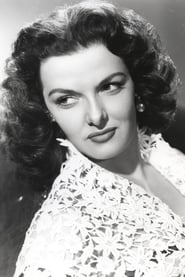
Howard Hughes spent an unprecedented amount of time and money perfecting Jane Russell's appearance on screen, reportedly spending over $1 million on promotional materials alone. The picture faced significant censorship battles with the Hays Code due to its suggestive content and Russell's revealing costumes. Hughes personally directed many scenes after firing original director Howard Hawks, and the picture went through multiple cuts and re-edits over several years before finally being released.
Themes
Themes & topics
Historical background
The Outlaw (1943) reached audiences through Howard Hughes Productions in United States, when exhibitors still built programs from varied shorts and features rather than single-block bookings.
Why this film matters
Programmers and historians revisit The Outlaw (1943) because its story—newly appointed sheriff pat garrett is pleased when his old friend doc holliday arrives in lincoln, new mexico on the stage—illustrates popular narrative habits and production norms of the period.
Making of
The production of 'The Outlaw' was notoriously chaotic and expensive, primarily due to Howard Hughes' obsessive perfectionism and fascination with Jane Russell. Hughes took over directing duties from Howard Hawks after disagreements about how to best showcase Russell's assets. He reportedly spent countless hours filming scenes of Russell in various states of undress, many of which never made it into the final film. The production went over budget by millions, with Hughes demanding multiple takes of simple scenes. the picture's post-production was equally troubled, with Hughes editing and re-editing the footage for over two years while battling censors. The censorship battles became, with Hughes using the controversy as free publicity, creating a nationwide debate about morality in films that ultimately helped the picture's box office performance.
What critics said
English-language trade reviews of The Outlaw are limited for 1943. Where notices survive, they stress pacing and photographic clarity; later criticism values the title as archival evidence of studio style.
Did you know?
- the picture was completed in 1941 but wasn't released until 1943 due to censorship battles with the Hays Code.
- Howard Hughes invented a special bra design to enhance Jane Russell's bust for the picture, though she claimed she never wore it.
- the picture's promotional campaign focused almost exclusively on Jane Russell's cleavage, making it one of the first films to use sex appeal as a primary marketing tool.
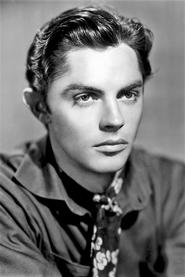
- Jack Buetel was discovered by Howard Hughes in a Hollywood restaurant and signed to a seven-year contract, but this would be his most famous role.
- the picture was banned in several states and faced protests from religious groups upon its release.
- Hughes reportedly spent more money promoting the picture than producing it, creating a nationwide controversy that boosted ticket sales.
- The original director, Howard Hawks, was fired by Hughes after creative differences, though some of Hawks' footage remains in the final cut.
- Jane Russell was only 19 years old when cast, and this was her film debut.
- the picture was re-released in 1946 and again in 1950 with additional scenes and re-editing by Hughes.
- Despite its controversy, the picture was a commercial success and made Jane Russell an overnight star.
Visual style
The cinematography by Lucien Ballard employed innovative techniques to highlight Jane Russell's figure, including special lighting and camera angles. Hughes reportedly experimented with various methods to enhance Russell's bust on screen, including using low camera angles and specific lighting setups. the picture also made effective use of the Alabama Hills location, creating dramatic Western landscapes that contrasted with the intimate, sometimes claustrophobic indoor scenes. The black and white photography emphasized shadows and contrasts, adding to the picture's moody atmosphere. Ballard's work, while serving Hughes' particular obsessions, still managed to create some striking visual compositions that elevated the material beyond mere exploitation.
Innovations
While not known for technical innovation in the traditional sense, 'The Outlaw' pioneered new techniques in film marketing and promotion. Howard Hughes' campaign for the picture created a blueprint for using controversy as a marketing tool. the picture also pushed the boundaries of what was acceptable under the Hays Code, testing the limits of censorship and paving the way for more adult content in future films. Hughes' obsessive attention to how Jane Russell appeared on screen led to experiments with costume design, lighting, and camera angles that, while serving his particular interests, did advance techniques for filming and presenting female stars. the picture's success in overcoming censorship also demonstrated that the Code could be challenged effectively.
Music
The musical score was composed by Victor Young, who created a typical Western soundtrack with romantic undertones that complemented the picture's love triangle dynamics. The music emphasized the emotional conflicts between the characters, particularly during scenes involving Rio's growing attraction to Billy the Kid. While not groundbreaking, Young's score provided appropriate dramatic support for the picture's various moods, from action sequences to romantic moments. The soundtrack also included period-appropriate songs that helped establish the Western setting. The music, like much of the picture, served primarily to enhance the emotional and romantic elements rather than the traditional Western action.
Famous quotes
Doc Holliday: 'A man that'll cheat for you'll cheat against you.'
Rio: 'I'm not afraid of you, Billy the Kid. I'm not afraid of anything.'
Pat Garrett: 'In this country, a man's got to do what's right, not what's easy.'
Billy the Kid: 'I ain't looking for trouble, but trouble seems to find me anyway.'
Doc Holliday: 'There's only one thing worse than a friend who betrays you - a friend who won't.'
Memorable scenes
- The controversial scene where Jane Russell, as Rio, emerges from the lake in a wet blouse that became among the leading debated moments in 1940s cinema
- The tense three-way confrontation between Doc Holliday, Billy the Kid, and Pat Garrett where their complex friendship dynamics come to a head
- The scene where Doc hides the wounded Billy at Rio's place, establishing the dangerous love triangle
- The final gunfight sequence that resolves the various character conflicts and betrayals
What audiences thought
Despite negative critical reception, audiences flocked to see 'The Outlaw,' making it a commercial success. The controversy surrounding the picture, particularly the censorship battles and focus on Jane Russell's figure, created immense public curiosity. the picture's notoriety became its biggest asset, with many viewers attending simply to see what all the fuss was about. Jane Russell quickly became a popular pin-up girl, with her image from the picture appearing in magazines and posters across the country. the picture's success demonstrated that controversy could be more profitable than positive reviews, a lesson that would influence Hollywood marketing strategies for decades to come.
Film connections
Influenced by
- Stagecoach (1939)
- The Virginian (1929)
- Classic Western literature
- Howard Hawks' Westerns
This film influenced
- The Red River (1948)
- Rio Bravo (1959)
- Revisionist Westerns of the 1960s
- The Wild Bunch (1969)
Film restoration
the picture has been preserved in the Library of Congress and various film archives. Multiple versions exist due to Hughes' constant re-editing, with the 1943 release version being the most commonly shown. the picture entered the public domain in the United States, leading to numerous home video releases of varying quality. A restored version was released on Blu-ray by Kino Lorber in 2019, sourced from the best available elements.
Where to watch
- Available on Blu-ray from Kino Lorber
- Streaming on The Criterion Channel
- Available for digital rental/purchase on Amazon Prime Video
- Public domain versions available on YouTube and Internet Archive
- Available on DVD from various public domain distributors