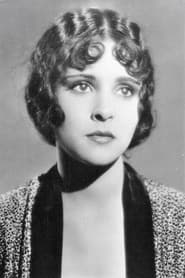

The Pagan
"Henry, the pagan son of a white father and native mother, has inherited land and a store."
Keys: Space play/pause · ←/→ 10s · F fullscreen · M mute · </> speed
About this film
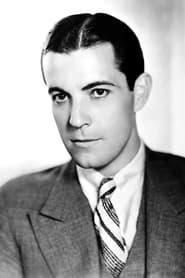
When he falls in love with a native girl, her guardian, who is trying to bring her up as a 'proper' Christian, but who also lusts after her himself, plots to Van Dyke and cinematographer Clyde De Vinna had previously visited Tahiti in 1928 to film White Shadows in the South Seas. The Pagan stars Ramon Novarro. Henry, the pagan son of a white father and native mother, has inherited land and a store, but he prefers the simple life.
Cast & crew
More films like this
More Drama films
View all →







More from W.S. Van Dyke
View all →
More about this film
About the production
Release dateSeptember 7, 1929
BudgetApproximately $400,000 (typical for an MGM prestige production of this era)
Box officeModest commercial success, though not a blockbuster by MGM standards
ProductionMetro-Goldwyn-Mayer (MGM)
Filmed inTahiti (extensive on-location filming), MGM Studios, Culver City, California (studio work)
One of the last major silent films from MGM, featuring synchronized music and sound effects but no spoken dialogue. The production was ambitious for its time, with MGM investing heavily in location shooting in Tahiti. The cast and crew faced numerous challenges including tropical diseases, unpredictable weather, and difficulties transporting equipment to remote locations. Director W.S. Van Dyke, known as 'One-Take Woody' for his efficiency, managed to complete the complex production on schedule and within budget.
Themes
Cultural conflict and assimilationThe tension between 'civilized' and 'primitive' lifestylesReligious hypocrisyColonialismInterracial romance
Themes & topics
South Pacificinterracial romancecultural conflictmissionarynativetropical islandinheritanceforbidden lovereligious hypocrisyparadise lostcolonialismmixed heritagepaganism vs. Christianityexotic location
Historical background
Made in 1929, in United States, under W. S. Van Dyke, The Pagan belongs to silent filmmaking amid the silent era's rapid stylistic experiments. The Pagan is a 1929 synchronized sound romantic drama filmed in Tahiti and produced and distributed by Metro-Goldwyn-Mayer.
Why this film matters
Within silent history, W. S. Van Dyke's name attaches to the work; surviving prints help researchers study silent-era craft; 1929 film by W. S. Van Dyke.
Making of
The production was ambitious for its time, with MGM investing heavily in location shooting in Tahiti. The cast and crew faced numerous challenges including tropical diseases, unpredictable weather, and difficulties transporting equipment to remote locations. Novarro, who was one of MGM's biggest stars, was initially hesitant about the extensive location work but became enthusiastic about the authenticity it would bring to the film. The film was made during the critical transition period when Hollywood was converting to sound, so while it was essentially a silent film with intertitles, MGM added a synchronized musical score and sound effects to make it more competitive with new talking pictures. Director W.S. Van Dyke, known for his efficiency, managed to complete the complex production on schedule and within budget, though the studio was concerned about the film's commercial prospects given the public's growing preference for sound films.
What critics said
Contemporary reviews of The Pagan are sparse in open sources; later catalog entries chiefly summarize plot and credits.
Did you know?
- The film was shot partially on location in Tahiti, making it one of the first Hollywood productions to film extensively in the South Pacific
- Ramon Novarro performed many of his own stunts, including swimming scenes in the ocean
- The film was released during the transition to sound, so it had a synchronized musical score but no spoken dialogue
- Director W.S. Van Dyke was known as 'One-Take Woody' for his efficient shooting style
- Renée Adorée and Ramon Novarro had previously starred together in 'The Merry Widow' (1925)
- The film's themes of cultural clash and interracial romance were controversial for its time
- The production faced challenges with tropical weather and insects during the Tahiti filming
- The synchronized score was composed by William Axt and included native-inspired musical elements
- MGM marketed the film heavily on Novarro's sex appeal, featuring him in minimal clothing in many scenes
- The film was released just weeks before the Wall Street Crash of 1929, which dramatically impacted the film industry
Visual style
The film's cinematography, handled by Clyde De Vinna, was one of its strongest assets, particularly the location footage shot in Tahiti. De Vinna, who had extensive experience with location photography, captured the lush tropical landscapes and ocean vistas with remarkable clarity and beauty. The film made effective use of natural lighting in the exterior scenes, creating a sense of authenticity that studio-bound films of the era often lacked. The cinematography employed a mix of wide shots to establish the exotic setting and medium close-ups to capture the emotional drama between characters. The camera work was relatively straightforward by late silent film standards, avoiding the more experimental techniques that some directors were employing by 1929. The synchronized score allowed for more fluid editing without the need to accommodate intertitles as frequently as in earlier silent films.
Innovations
While not groundbreaking in technical terms, 'The Pagan' demonstrated MGM's proficiency with synchronized sound technology during the transitional period. The film's use of location shooting in Tahiti was technically ambitious for 1929, requiring the transportation of heavy camera equipment to remote tropical locations. The synchronization of music and sound effects with the film was accomplished using the Movietone system, which was one of the competing sound technologies of the era alongside Vitaphone. The production team had to overcome numerous technical challenges related to filming in tropical conditions, including protecting the equipment from humidity and salt air. The film's preservation of location footage from 1920s Tahiti also represents an important technical and historical achievement, documenting locations that have since changed dramatically.
Music
'The Pagan' featured a synchronized musical score and sound effects but no spoken dialogue, making it a hybrid between traditional silent films and full talkies. The score was composed by William Axt, one of MGM's house composers, who incorporated elements of Pacific Island music alongside traditional orchestral arrangements to enhance the film's exotic atmosphere. The synchronization technology used was the Movietone system, which allowed the musical accompaniment and sound effects to be recorded on phonograph records that played in sync with the film projector. The soundtrack included ambient sounds like ocean waves, tropical birds, and native music to create an immersive experience. The musical themes varied between 'civilized' European-style music for the missionary characters and more percussive, rhythmic motifs for the native characters and scenes, reflecting the film's cultural dichotomy.
Famous quotes
In the South Seas, where life is as free as the wind...
He was a pagan - happy in his paganism...
Civilization came to him with a cross in one hand and a chain in the other...
Memorable scenes
- The opening scenes establishing Henry's connection to nature and his simple lifestyle
- Henry and Tito's first meeting on the beach
- The confrontation between Henry and Reverend Cable
- The storm sequence that tests Henry's character
- The final reconciliation scene between Henry and Tito
What audiences thought
'The Pagan' achieved moderate success at the box office, though it was overshadowed by the growing popularity of sound films. Audiences responded positively to Novarro's charismatic performance and the film's exotic settings, but the timing of its release during the transition to talkies limited its commercial potential. The film's relatively brief theatrical run reflected the rapid decline in audience interest in silent films by late 1929. Despite these challenges, the film developed a following among Novarro's fans and those who appreciated the visual beauty of silent cinema. Modern audiences encountering the film often appreciate its historical value and the authenticity of its location photography, while recognizing its dated cultural attitudes and narrative conventions.
Film connections
Influenced by
- The tradition of exotic romance films popular in the 1920s
- Literary works about the South Pacific like those by Jack London and W. Somerset Maugham
- Hollywood's established tropes about 'noble savages' and the romanticization of primitive cultures
This film influenced
- Contributed to the genre of exotic location romances that would continue through the 1930s and beyond
- Its approach to interracial themes and cultural conflict influenced later films dealing with similar subjects
Film restoration
The film survives in its complete form and has been preserved by film archives. A 35mm print exists in the MGM/UA film collection at the Turner Entertainment Company. The film has been made available on home video through Warner Archive Collection, indicating that good quality elements exist. The synchronized score has been preserved along with the visual elements, allowing modern viewers to experience the film as originally intended.
Where to watch
- Available through the Warner Archive Collection on DVD
- Sometimes found on streaming services specializing in classic films
- May be available through film archive screenings or classic film festivals
- Some public domain versions may exist online, though quality varies significantly