

The Phantom in the House
"A wife's crime pins murder on her husband."
Keys: Space play/pause · ←/→ 10s · F fullscreen · M mute · </> speed
About this film
A man is blamed for a murder that was actually committed by his wife.
Cast & crew
More films like this
More Crime films
View all →


More from Phil Rosen
View all →
More about this film
About the production
Release dateApril 15, 1929
Box officeUnknown
ProductionColumbia Pictures
Filmed inHollywood, California
the production was produced during the critical transition period from silent films to talkies, representing Columbia Pictures' early efforts in sound production. The production likely faced the technical challenges common to early sound films, including cumbersome recording equipment and limited camera mobility. As an early sound production, it may have been filmed as a part-talkie or full sound feature, reflecting the industry's experimentation with the new technology.
Themes
Themes & topics
murderframe-upspousal betrayaldetective investigationwrongful accusationmysterycrime drama
Historical background
The Phantom in the House (1929) reached screens through Columbia Pictures. Exhibitors of the time built early sound programs that mixed shorts, features, and live acts, so a clear premise helped The Phantom in the House travel between cities and exchange markets.
Why this film matters
Archivists and revival programmers still cite The Phantom in the House (1929) when tracing studio habits, casting pools, and the visual rhetoric audiences once took for granted. Even modest surviving prints help map how The Phantom in the House fit beside competing releases of its day.
Making of
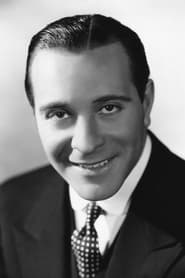
The production of 'The Phantom in the House' took place during a revolutionary period in Hollywood history when studios were scrambling to convert to sound technology. Director Phil Rosen, who had begun his career in the silent era, had to adapt his directing style to accommodate the limitations of early sound recording equipment, which often required actors to remain stationary near microphones. The film was likely shot using the Vitaphone sound-on-disc system or an early sound-on-film process, both of which had technical limitations that influenced the visual style. The cast, particularly Ricardo Cortez, had to prove they could make the transition from silent to sound films, as many stars of the era saw their careers end due to unsuitable voices or poor acting in talkies.
What critics said
Trade coverage around 1929 discussed The Phantom in the House for pacing, clarity, and program fit rather than blockbuster grosses. Later writers value it as evidence of period style and as a reference point beside other films from the same era.
Did you know?
- the production represents one of director Phil Rosen's early sound productions during his prolific career spanning over 140 films
- Ricardo Cortez, born Jacob Krantz, was originally marketed as a rival to Rudolph Valentino before transitioning to character roles
- The film was released just months before the stock market crash of 1929, making it one of the last films of the roaring twenties
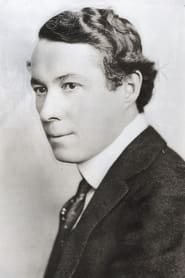
- Henry B. Walthall was a veteran of silent cinema, having starred in D.W. Griffith's 'The Birth of a Nation' (1915)
- The title 'Phantom in the House' refers to the wife's unseen, ghost-like manipulation of events
- Columbia Pictures was still a relatively new studio in 1929, having been established in 1924
- The film was likely shot on the new soundstages Columbia built to accommodate their transition to talkies
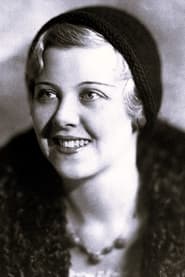
- Nancy Welford was the daughter of actress Ada Duvall, continuing a family tradition in film
Visual style
The cinematography in 'The Phantom in the House' would have been constrained by the technical limitations of early sound recording, which often required cameras to be enclosed in soundproof booths. This typically resulted in more static camera work compared to the fluid cinematography of late silent films. The lighting would have been designed to accommodate both the needs of film stock and the requirements of sound recording, possibly creating dramatic shadow effects that enhanced the film's mysterious atmosphere. The visual style likely represents a hybrid approach, maintaining some of the artistic sensibilities of silent cinema while adapting to the new demands of sound production.
Innovations
As an early sound production, 'The Phantom in the House' represents the technical achievements and challenges of cinema's transition to sound. The film would have utilized either sound-on-disc (Vitaphone) or sound-on-film technology, both of which were still being refined in 1929. The production team had to solve problems related to microphone placement, soundproofing, and synchronization that were cutting-edge issues for the era. The film's successful completion demonstrated Columbia Pictures' ability to compete in the new sound era, contributing to the studio's growth into a major Hollywood player in subsequent decades.
Music
The film's soundtrack would have consisted of synchronized dialogue, sound effects, and possibly a musical score, all recorded using the primitive sound technology available in 1929. Early sound films often featured live musical accompaniment in theaters alongside recorded elements. The sound quality would have been limited by the technology of the period, with potential issues including background noise, limited frequency range, and uneven recording levels. The dialogue recording would have been particularly challenging, requiring actors to project clearly while maintaining naturalistic performances - a skill many silent film stars struggled to master.
Famous quotes
The phantom walks among us, unseen but always present.
Justice is blind, but sometimes it's also deaf to the truth.
In this house, the walls don't just have ears - they have secrets.
Memorable scenes
- The climactic courtroom scene where the wife's guilt is finally revealed through a series of dramatic testimonies and evidence
- The tense domestic scenes where the wife manipulates events while maintaining a facade of innocence
- The detective's methodical investigation that slowly unravels the conspiracy
What audiences thought
Audience reception in 1929 would have been influenced primarily by the novelty of hearing dialogue and sound effects in a motion picture. Moviegoers of this era were still fascinated by the technical achievement of talkies, often forgiving narrative shortcomings in favor of the new sensory experience. The crime and mystery elements would have appealed to the sophisticated urban audiences who frequented theaters during this period. However, as a relatively minor production from a studio still building its reputation, the film likely didn't achieve the same popular success as major releases from established studios like MGM or Paramount.
Film connections
Influenced by
- Early German Expressionist crime films
- Broadway melodramas
- Contemporary crime fiction
This film influenced
- Later film noir conventions
- Domestic thriller genre
- Wrongful man narrative films
Film restoration
The preservation status of 'The Phantom in the House' (1929) is uncertain, as is the case with many early sound films from this transitional period. Many films from 1929 have been lost due to the unstable nature of early film stock and the lack of systematic preservation efforts in the early sound era. If copies exist, they may be held in film archives such as the Library of Congress or the UCLA Film & Television Archive, possibly in incomplete or deteriorated condition. The film's survival status would be of significant interest to film historians studying the transition from silent to sound cinema.
Where to watch
- Due to its age and rarity, 'The Phantom in the House' is not currently available on mainstream streaming platforms. Potential viewing options might include film archive screenings, specialized classic film channels, or private collector screenings. Film enthusiasts should check with institutions like the Library of Congress, the Museum of Modern Art's film department, or the UCLA Film & Television Archive for potential access to preserved copies or screenings.