

The Star Packer
"John Travers and Yak"
Keys: Space play/pause · ←/→ 10s · F fullscreen · M mute · </> speed
About this film
John Travers and Yak, his faithful Indian sidekick, pick up where a murdered sheriff leaves off, and try to nab the mysterious Shadow.
Cast & crew
More films like this
More Action films
View all →
More from Robert N. Bradbury
View all →
More about this film
About the production
Release dateDecember 10, 1934
BudgetApproximately $12,000 (typical budget for Lone Star Productions B-Westerns of this era)
Box officeModest regional earnings, exact figures not preserved but typical of the genre's performance in 1934
ProductionLone Star Productions, Monogram Pictures (distributor)
Filmed inLone Pine, California, Alabama Hills, California, Lone Star Ranch, Newhall, California
Filmed in just 6 days on an extremely tight schedule, this was one of eight films John Wayne made for Lone Star Productions in 1934 alone. The production utilized stock footage from earlier Westerns to save costs, a common practice for B-movie productions. The film was shot with a single camera unit and minimal crew, with many scenes completed in only one or two takes due to budget constraints.
Themes
Justice vs. LawlessnessIdentity and DeceptionCommunity and OrderHeroism and ResponsibilityFrontier Justice
Themes & topics
Historical background
Contemporary records classify The Star Packer (1934) as 1934 film, placing it within the studio-system peak and early sound decades.
Why this film matters
The Star Packer (1934) helps trace genre evolution, performer careers, and the material conditions of sound exhibition.
Making of
The production was a whirlwind affair typical of Poverty Row Westerns of the 1930s. Director Robert N. Bradbury was a veteran of silent Westerns and could complete scenes with remarkable efficiency. John Wayne, still early in his career, was paid only $2,500 for the film but gained valuable experience in leading roles. The cast and crew often worked 12-14 hour days to complete filming within the tight budget and schedule. George 'Gabby' Hayes developed his famous grumpy sidekick persona during these Lone Star productions, though his character was more serious in this early film. Many of the outdoor scenes were filmed at Alabama Hills, California, which became a classic Western filming location due to its distinctive rock formations and proximity to Hollywood.
What critics said
Retrospective notes on The Star Packer emphasize its value as a period production rather than blockbuster reception.
Did you know?
- This was one of sixteen films John Wayne made for Lone Star Productions between 1933-1935, establishing his screen persona before his breakthrough with 'Stagecoach' in 1939
- George 'Gabby' Hayes wasn't originally credited as 'Gabby' in this film - the nickname would become his trademark in later Westerns
- The film's villain 'The Shadow' was inspired by the popular radio character of the same name, though the connection was unofficial
- John Wayne performed his own stunts in the film, including the horse-riding sequences and fight scenes
- The movie was originally titled 'The Shadow' but was changed to 'The Star Packer' to avoid confusion with the radio program
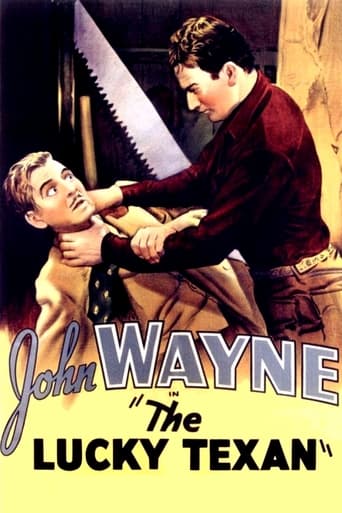
- This film was part of a double feature with 'The Lucky Texan' (1934), another Wayne Western
- The production company, Lone Star Productions, was created specifically to produce low-budget Westerns starring John Wayne
- Only one print of the original negative is known to survive in complete form, held by the Library of Congress
- The film's running time of 54 minutes was standard for second-feature Westerns of the 1930s
- Verna Hillie, the female lead, was a former Broadway actress making one of her first film appearances
Visual style
The cinematography by Archie Stout was efficient and functional, typical of B-Western productions. Stout utilized natural lighting for outdoor scenes and made effective use of the dramatic landscapes of Alabama Hills. The camera work was straightforward, focusing on clarity of action and readability of scenes rather than artistic experimentation. Close-ups were used strategically to emphasize emotional moments, while wider shots established the Western setting. The film's visual style emphasized the contrast between the open spaces of the West and the confined spaces of the town controlled by the villain.
Innovations
The film employed no significant technical innovations but demonstrated efficient production techniques typical of Poverty Row filmmaking. The use of stock footage and minimal sets allowed the production to maintain visual variety while keeping costs low. The editing by Carl Pierson was brisk and maintained good pacing despite the limited resources. The film's sound recording was clear and effective, an achievement given the budget constraints and outdoor filming locations. The stunt coordination, while not elaborate, was safely executed and convincing for the era.
Music
The musical score was typical of low-budget Westerns of the era, featuring stock music and original compositions by Abe Meyer. The soundtrack included traditional Western motifs, with prominent use of strings and brass to accentuate action sequences. Musical cues were reused from other Lone Star productions to save costs. The film featured diegetic music in saloon scenes, with period-appropriate songs that enhanced the Western atmosphere. Sound design was functional rather than innovative, with clear dialogue recording and exaggerated sound effects for gunshots and horse hooves.
Famous quotes
A man's got to do what's right, even when it's dangerous.
The Shadow may think he's smart, but justice has a way of finding the light.
In this country, we don't hide behind masks - we face our enemies like men.
Memorable scenes
- The final showdown where John Travers confronts The Shadow and reveals his identity to the town
- The opening scene where Travers and Yak discover the murdered sheriff
- The saloon fight sequence showcasing Wayne's stunt work
- The tracking sequence where Yak uses his Indian skills to follow the villain's trail
What audiences thought
The film was well-received by its target audience of Saturday matinee moviegoers and Western fans. John Wayne was developing a following among regular patrons of B-Westerns, and these films consistently drew modest but reliable audiences. The film's straightforward plot, clear-cut morality, and action sequences appealed to viewers looking for uncomplicated entertainment during the difficult economic times of the Depression. While it didn't achieve the popularity of A-list Westerns of the era, it satisfied its audience and contributed to the growing recognition of John Wayne as a Western star.
Film connections
Influenced by
- The Shadow (radio program)
- Classic Western literature
- Silent film Westerns
- Zane Grey novels
This film influenced
- Later John Wayne Westerns
- B-Westerns of the late 1930s
- Television Westerns of the 1950s
Film restoration
The film is preserved in the Library of Congress collection, with a complete 35mm print available. It has been digitally restored and is part of several public domain Western collections. The film entered the public domain due to copyright renewal issues, which has contributed to its survival through multiple home video releases.
Where to watch
- Public domain streaming sites
- YouTube (full versions available)
- DVD collections of public domain Westerns
- Classic movie streaming services specializing in public domain films