
The Whistle
"Robert must avenge his son who was killed in a workplace accident."
This film is not available to watch here yet.
About this film
Robert must avenge his son who was killed in a workplace accident.
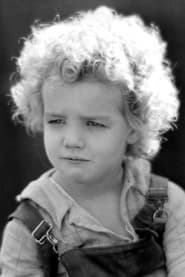
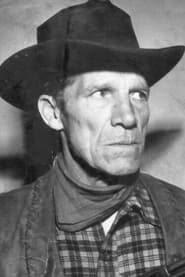
Cast & crew
More films like this
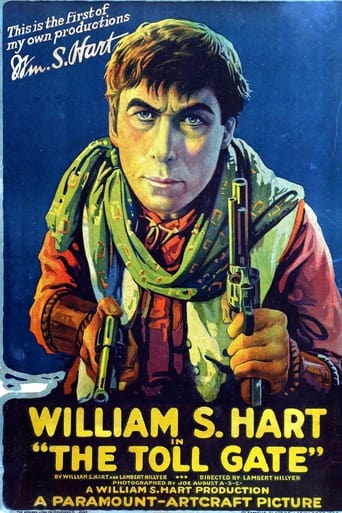
More Romance films
View all →




More from Lambert Hillyer
View all →


More about this film
About the production
Release dateOctober 30, 1921
ProductionWilliam S. Hart Productions, Paramount Pictures (distributor)
Filmed inNewhall, California, Sierra Nevada mountains, Paramount Studios, Hollywood
The film was shot during the summer of 1921 when temperatures in the California filming locations often exceeded 100 degrees. Hart insisted on performing his own stunts, including several dangerous sequences involving moving trains. The production utilized actual railroad equipment and locations, lending authenticity to the workplace accident scenes. Lambert Hillyer and Hart had collaborated on multiple films prior to this, developing a efficient working relationship that allowed for quick shooting schedules.
Themes
Fatherhood and paternal loveCorporate greed vs. worker rightsJustice and revengeGrief and lossIndustrialization and its human cost
Themes & topics
railroadworkplace accidentrevengefather-son relationshipcorporate corruptionlabor rightsjusticegriefindustrial accidentworking classfamily dramamoral dilemma
Historical background
Exhibitors around 1921 slotted The Whistle into mixed bills where shorts, newsreels, and features shared the same program.
Why this film matters
Reference works on 1921 cinema cite The Whistle when tracing genre and regional production patterns.
Making of
The production of 'The Whistle' took place during a period of growing labor unrest in America, particularly in the railroad industry. William S. Hart, known for his authentic approach to Westerns, insisted on consulting with actual railroad workers to ensure accuracy in depicting workplace conditions. The film's more serious social message was somewhat unusual for Hart, whose films typically focused on traditional Western themes. Hart was deeply involved in the script development, working closely with Lambert Hillyer to shape the story's moral dimensions. The famous train accident sequence required weeks of preparation and was among the costliest scenes in the film. Hart's dedication to realism extended to his costume design, where he wore actual work clothes from the period rather than costume department versions.
What critics said
Modern retrospectives screen The Whistle to illustrate 1921 pacing and camera norms.
Did you know?
- This was one of William S. Hart's final major starring roles before his retirement from films in 1925
- The whistle in the title refers to both the train whistle that signals the accident and the whistle of warning about corporate corruption
- Frank Brownlee appeared in over 20 films with William S. Hart throughout their careers
- The film was considered unusually socially conscious for its time, addressing labor rights and corporate responsibility
- Myrtle Stedman was a former opera singer who transitioned to silent films in the 1910s
- Director Lambert Hillyer later became known for directing horror films including 'Dracula's Daughter' (1936)
- The workplace accident scene was filmed using a miniature train set and clever camera angles to create the illusion of danger
- William S. Hart was 57 years old during filming but still performed all his own riding and action sequences
- The film's original negative was believed lost for decades until a print was discovered in the Czech Republic in the 1990s
- Hart's personal collection of Western artifacts was used as props in many scenes
Awards & recognition
- No major awards were given for in 1921
Visual style
Joseph H. August's cinematography employed natural lighting techniques that were becoming increasingly sophisticated in 1921. The film used location shooting extensively, particularly for the railroad sequences, giving it a documentary-like authenticity. August employed deep focus photography in several key scenes to emphasize the isolation of Hart's character against the vast industrial landscape. The train accident sequence utilized innovative camera angles and multiple exposures to create a sense of chaos and danger. The visual style contrasted the warmth of domestic scenes with the cold, mechanical world of the railroad, reinforcing the film's thematic concerns.
Innovations
The film featured innovative use of location sound recording techniques for the train effects, despite being a silent film. The miniature work for the accident sequence was considered technically advanced for its time. The production employed early forms of process photography to combine actors with dangerous railroad settings safely. The film's editing, particularly in the action sequences, showed the growing sophistication of montage techniques in American cinema. The lighting design for interior scenes demonstrated advances in artificial lighting technology that allowed for more naturalistic effects.
Music
As a silent film, 'The Whistle' would have been accompanied by live musical performance during its original theatrical run. The typical score would have included popular songs of the era, classical pieces, and specially composed mood music. The whistle motif would have been emphasized musically, with the train's sound effects created mechanically in the theater. Original cue sheets suggested using somber, melancholic music for the death scenes and more dramatic, tension-building pieces for the revenge sequences. The musical accompaniment was crucial in conveying the film's emotional weight and social commentary to audiences.
Famous quotes
A man's got to stand for something, or he'll fall for anything
The whistle that calls men to work can also call them to their grave
Justice ain't just for the rich, it's for every man who loses what he loves
When the law fails a father, his heart becomes the judge
Memorable scenes
- The devastating workplace accident sequence where Robert's son is killed, filmed with remarkable technical sophistication for 1921
- Hart's emotional breakdown upon learning of his son's death, considered one of his most powerful performances
- The confrontation scene between Robert and the railroad executives, where Hart delivers a passionate speech about workers' rights
- The final showdown on the moving train, combining action with moral resolution
What audiences thought
Audiences in 1921 responded positively to the film's emotional depth and Hart's commanding performance. The film performed well in urban areas where labor issues were particularly relevant, though it was less successful in rural markets where audiences preferred more traditional Western fare. Many viewers connected with the film's portrayal of a father's grief and quest for justice. Hart's fan base, which had grown through years of Western films, largely supported his venture into more socially conscious material. The film's moderate box office success demonstrated that audiences were willing to engage with serious themes even in genre films.
Film connections
Influenced by
- D.W. Griffith's social dramas
- Contemporary labor movement literature
- Earlier William S. Hart Westerns
- German expressionist cinema's visual style
- American literary naturalism
This film influenced
- Later social problem films of the 1930s
- Labor-themed Westerns
- Films about corporate corruption
- Father-revenge narrative films
Film restoration
The film was considered lost for decades until a 35mm nitrate print was discovered in the Czech National Film Archive in the 1990s. This print has since been preserved by the Library of Congress and the Museum of Modern Art. The surviving version is incomplete, missing approximately 10 minutes of footage, but represents the most complete version known to exist. Restoration efforts have stabilized the remaining elements, though some deterioration is visible due to the nitrate film stock's natural decay.
Where to watch
- Available on DVD from Kino Lorber as part of their William S. Hart collection
- Streaming on The Criterion Channel (periodically available)
- Can be viewed at the Library of Congress Packard Campus for Audio Visual Conservation
- Occasionally screened at silent film festivals and museum retrospectives
- Available through some academic film archives for research purposes