The Worldly Madonna
"A novitiate trades places with her sister after a killing"
Keys: Space play/pause · ←/→ 10s · F fullscreen · M mute · </> speed
About this film
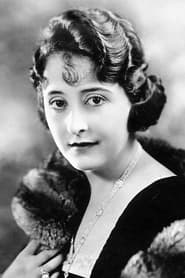
Clara Kimball Young plays twin roles: Janet, a novitiate who agrees to swap places with her cabaret-dancer sister Lucy after Lucy believes she has killed a man. Janet enters the nightlife world to shield Lucy while confronting temptations that test her vows and her sense of identity.
Cast & crew
More about this film
About the production
The short was produced during Clara Kimball Young's partnership with her husband Harry Garson, who had become her primary director and producer. The dual role was specifically written to showcase Young's versatility as an actress, capitalizing on her ability to portray both innocent and worldly characters. The production faced typical challenges of early 1920s filmmaking, including the need for elaborate costume changes and careful scheduling to accommodate the dual role requirements.
Themes
Themes & topics
Historical background
The 1922 First National release typified the 'diva film' cycle in which major stars carried melodramas about doubled identities and moral peril.
Why this film matters
Young's dual performance exemplifies how silent-era marketing leaned on star personas to sell stories of virtue threatened by urban vice.
Making of
The production of 'The Worldly Madonna' took place during a challenging period in Clara Kimball Young's career. Her marriage to Harry Garson, who had become her exclusive director and producer, was beginning to show signs of strain both personally and professionally. Garson, who had no previous film experience before working with Young, was criticized by some industry insiders for his lack of technical expertise, though he understood how to showcase his wife's talents. The dual role required extensive preparation from Young, who had to quickly transform between the pious Janet and the worldly Lucy during filming. Contemporary accounts suggest that the cabaret sequences were particularly challenging, requiring Young to learn period-appropriate dance movements and maintain the energetic persona of a performer. the picture's modest budget meant that the production relied heavily on Young's star power rather than elaborate sets or effects, focusing instead on the dramatic potential of the dual role narrative.
What critics said
Trade press focused on Young's wardrobe and close-ups; modern viewers read the plot as a melodramatic variant of convent-and-cabaret contrasts common in 1920s women's pictures.
Did you know?
- Clara Kimball Young was one of the highest-paid actresses of the 1910s, but by 1922 her star power was beginning to wane, making dual roles like this one important for maintaining her marketability
- Director Harry Garson was Clara Kimball Young's husband and former real estate broker who entered the picture industry primarily to work with his wife
- the picture's title 'The Worldly Madonna' was considered provocative for its time, playing on the contrast between sacred and secular themes
- This was one of the last films Young made with Garson before their professional and personal relationship deteriorated
- The dual role required Young to master both the demure mannerisms of a novitiate and the flamboyant movements of a cabaret performer
- the picture was released during the transition period when Hollywood was establishing itself as the center of American film production
- Cabaret scenes in the picture were considered risqué for 1922, though relatively tame by later standards
- The sister exchange plot was a common trope in silent cinema, allowing actresses to demonstrate their range
- William P. Carleton, who played the male lead, was a veteran stage actor who successfully transitioned to films
- the picture's promotional materials heavily emphasized Young's dual performance, a major selling point for audiences of the time
Visual style
The cinematography of 'The Worldly Madonna' was handled by a typical studio cameraman of the era, utilizing standard techniques for 1922 productions. the picture employed visual contrast to distinguish between the two worlds inhabited by Young's characters - soft, diffused lighting for the convent scenes versus more dramatic, high-contrast lighting for the cabaret sequences. The camera work was primarily static, as was common in early 1920s films, with occasional tracking shots during the more dynamic cabaret performances. Close-ups were strategically used to emphasize Young's facial expressions and help audiences distinguish between the two sisters. the picture made use of the then-popular technique of iris shots to frame important moments and transitions. While not groundbreaking technically, the cinematography effectively served the narrative needs of the dual role story, creating visual clarity between the sacred and secular environments.
Innovations
The Worldly Madonna did not introduce any major technical innovations to cinema, instead utilizing established techniques of early 1920s filmmaking. The primary technical challenge was the effective execution of Clara Kimball Young's dual role, which required careful planning in terms of costume changes, makeup, and shot sequencing. the picture employed standard double exposure techniques for scenes requiring both sisters to appear together, though these were limited due to the complexity and cost of such effects in 1922. The production made use of the relatively new technology of electric lighting, which allowed for more sophisticated lighting designs than earlier gas-lit productions. The cabaret sequences featured some of the more elaborate set designs and lighting effects in the picture, attempting to recreate the atmosphere of 1920s nightlife. While not technically groundbreaking, the picture demonstrated competent use of contemporary filmmaking technology and techniques.
Music
As a silent film, 'The Worldly Madonna' would have been accompanied by live musical performance during its original theatrical run. The typical score would have been compiled from classical pieces and popular songs of the era, with specific musical themes assigned to each character. The convent scenes would have featured somber, religious-themed music, possibly using works by composers like Bach or Gregorian chants. The cabaret sequences would have been accompanied by lively jazz-influenced music, reflecting the popular sounds of 1922. Theater organists or small orchestras would have improvised much of the accompaniment, following cue sheets provided by the studio. The emotional climax scenes would have featured dramatic, swelling music to enhance the melodramatic elements of the story. No original composed score by a specific composer exists for, as was common for productions of this budget and status level.
Famous quotes
I must take your place, sister - for your sake and for mine." - Janet
The convent walls cannot protect me from the sins of the world." - Janet
In the dance of life, we sometimes lose our way." - Lucy
Memorable scenes
- The dramatic moment when Janet first agrees to exchange places with Lucy, showing her internal conflict between religious duty and sisterly love
- The cabaret performance sequence where Janet, disguised as Lucy, must dance and entertain the crowd while maintaining her cover
- The emotional confrontation scene where the two sisters finally meet again, with their true identities revealed to key characters
- The climax in the convent chapel where Janet must choose between her religious vows and helping her sister
What audiences thought
Audience reception to 'The Worldly Madonna' was generally positive among Clara Kimball Young's fanbase, though the picture didn't achieve the blockbuster status of her earlier work from the 1910s. The dual role concept proved to be a strong marketing angle, attracting viewers curious to see Young handle such contrasting characters. Contemporary box office reports suggested the picture performed adequately in major urban markets but struggled in smaller venues, indicating that Young's star power was beginning to wane outside major cities. The cabaret sequences were particularly popular with audiences, offering a glimpse into the glamorous but dangerous world of nightlife that fascinated 1920s moviegoers. Some audience members found the religious themes somewhat heavy-handed, though this was common in films of the era. the picture's moderate success demonstrated that while Young remained a bankable star, she was facing increasing competition from newer actresses like Mary Pickford and Gloria Swanson who were better adapted to changing audience tastes.
Film connections
Influenced by
- Earlier dual role films like 'Stolen Kisses' (1920)
- Stage melodramas of the 19th century
- Literary traditions of the 'double life' narrative
- Religious morality plays
- Contemporary cabaret culture
This film influenced
- Later dual role vehicles for silent era actresses
- Melodramas featuring religious themes in the 1920s
- Films exploring contrast between sacred and secular worlds
Film restoration
The preservation status of 'The Worldly Madonna' is uncertain, with most film archivists considering it likely lost or partially lost. Many films from this period, particularly those produced by smaller companies like the Clara Kimball Young Film Corporation, did not survive due to the unstable nature of early film stock and lack of systematic preservation efforts. No complete prints are known to exist in major film archives such as the Library of Congress, UCLA Film & Television Archive, or the Museum of Modern Art. Some fragments or still photographs may exist in private collections, but the complete film appears to be lost, as is unfortunately the case with approximately 75% of American silent films.
Where to watch
- Currently unavailable for viewing due to lost/partially lost status
- No known commercial releases exist
- Film archives may contain fragments for research purposes
- Still photographs and promotional materials may be found in specialized silent film collections