
The Wrath of the Gods
"The Wrath of the Gods (1914)"
Keys: Space play/pause · ←/→ 10s · F fullscreen · M mute · </> speed
About this film
An American sailor falls in love with a fisherman's daughter and convinces her that Jesus is more powerful than the gods who have cursed her.
Cast & crew
More films like this
More Romance films
View all →




More from Reginald Barker
View all →

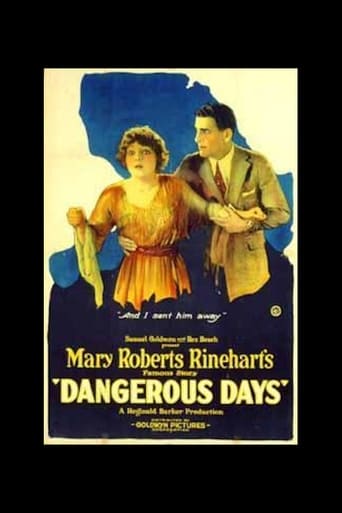
More about this film
About the production
Release dateMarch 1914
Box officeUnknown - box office records from 1914 are incomplete
ProductionNew York Motion Picture Company, Kay-Bee Pictures
Filmed inInceville Studios, Santa Monica, California
The film was produced as part of Thomas H. Ince's prestigious production unit at Inceville, one of Hollywood's first major studio complexes. The volcanic eruption sequence was created using innovative special effects for 1914, including miniature models, controlled fires, smoke machines, and multiple camera angles. The production employed Japanese-American consultants and actors to achieve cultural authenticity, though the narrative was still filtered through a Western perspective. The elaborate Japanese village set was constructed on the Inceville backlot, complete with authentic props and architecture. The film was shot during the height of the 'Japonisme' craze in America, capitalizing on Western fascination with Japanese culture following Japan's victory in the Russo-Japanese War.
Themes
Cultural conflictReligious conversionEast meets WestLove transcending boundariesNature's power
Themes & topics
Historical background
Contemporary records classify The Wrath of the Gods (1914) as 1914 american film, placing it within the silent era before feature-length dominance.
Why this film matters
The Wrath of the Gods (1914) helps trace genre evolution, performer careers, and the material conditions of silent exhibition.
Making of
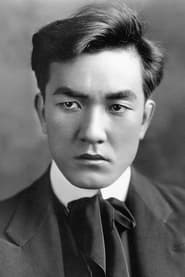
The production took place at Inceville, Thomas H. Ince's revolutionary studio complex in the Santa Monica Mountains, which was one of the first modern film studios. The elaborate Japanese village set was constructed with attention to architectural detail, incorporating authentic Japanese props and design elements. Sessue Hayakawa, already gaining fame from his breakthrough role in 'The Typhoon' (1914), brought significant star power to the production and likely had input into cultural aspects of the film. The volcanic eruption sequence required weeks of preparation and coordination between multiple departments, using techniques that were cutting-edge for 1914. The film's themes reflected real contemporary tensions between traditional Japanese culture and Western influence during the Meiji period. The collaboration between Japanese-American performers and Hollywood filmmakers was relatively progressive for its time, though the narrative still ultimately favored Western religious perspectives. The production schedule was tight, as was typical for Ince's efficient studio system, with the entire film completed in just a few weeks.
What critics said
Trade and revival screenings have kept The Wrath of the Gods (1914) on the map for collectors and scholars rather than mass first-run promotion.
Did you know?
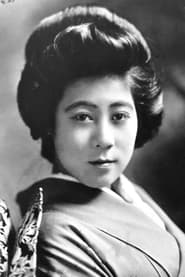
- Sessue Hayakawa and Tsuru Aoki were married in real life, having wed in 1914, the same year this film was released
- This was one of the earliest American films to feature Asian actors in leading roles rather than white actors in yellowface
- The film was part of a wave of 'Japonisme' in early Hollywood, with over 20 Japanese-themed films produced between 1910-1915
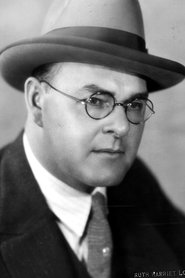
- Director Reginald Barker was one of Thomas H. Ince's most trusted protégés and would go on to direct over 100 films
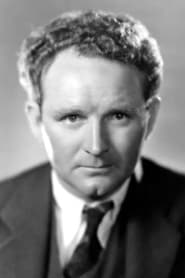
- Frank Borzage, who plays the American sailor, would later win the first Academy Award for Best Director for '7th Heaven' (1927)
- The volcanic eruption effects were so impressive they were mentioned specifically in contemporary reviews as a highlight of the film
- The film was one of the first to directly address religious conversion and cultural assimilation themes in American cinema
- Thomas H. Ince, the uncredited producer, was known as the 'Father of the Western' but diversified into various genres including this Japanese drama
- The film's title refers to both the literal volcanic eruption and the metaphorical wrath of traditional Japanese deities
- Only fragments of this film are known to survive today, making it a partially lost film from the silent era
- The production coincided with the rise of feature-length films in America, marking the transition away from one-reel shorts
Visual style
The film's cinematography, executed by Joseph H. August and other uncredited cameramen from Ince's regular crew, showcased the techniques common to the transitional period between early cinema and classical Hollywood style. The volcanic eruption sequence employed multiple camera angles and dynamic movement that was innovative for 1914, creating a sense of chaos and danger that enhanced the spectacle. The cinematography effectively balanced intimate character moments with grand set pieces, a hallmark of Thomas H. Ince's production philosophy. The lighting techniques, particularly in the dramatic religious and romantic scenes, used chiaroscuro effects to create emotional depth and visual interest. The film made effective use of the Inceville location, combining natural California landscapes with elaborate studio sets to create a convincing Japanese environment. The camera work during the action sequences demonstrated growing sophistication in motion picture photography, with smooth pans and tracking shots that added to the film's visual appeal.
Innovations
The film's most significant technical achievement was its volcanic eruption sequence, which combined multiple special effects techniques including miniature models, controlled fires, smoke machines, and innovative editing to create a convincing disaster sequence. The production utilized the then-cutting-edge technique of cross-cutting between different storylines and locations to build tension and create dramatic irony. The film's set design at Inceville included elaborate recreations of Japanese architecture, demonstrating the studio's growing capabilities in large-scale production design. The use of location shooting combined with studio work showed the increasing sophistication of film production methods in the early 1910s. The film also employed early forms of color tinting, particularly using amber and red tones for the fire scenes, which was common in prestige productions of the era to enhance mood and visual interest. The underwater sequences, though brief, demonstrated advances in underwater photography techniques that were still in their infancy.
Music
As a silent film, 'The Wrath of the Gods' would have been accompanied by live musical performances in theaters, with scores varying by venue size and resources. Large picture palaces would have employed full orchestras playing arrangements of classical pieces alongside original compositions, while smaller theaters might have had only a pianist or organist. The Japanese setting would have inspired the use of exotic-sounding music, possibly incorporating pentatonic scales or Japanese-inspired themes that were popular in Western classical music during this period. The volcanic eruption scenes would have been accompanied by dramatic, thunderous music using percussion and brass to enhance the spectacle and danger. Romantic moments between the leads would have featured lush, melodic themes, while religious scenes might have included hymn-like melodies or solemn organ music. The musical accompaniment was crucial in conveying emotion and narrative flow in the absence of dialogue, with skilled musicians improvising to match the on-screen action and emotional tone.
Famous quotes
The gods of my ancestors are angry, but the God you speak of is more powerful than any mountain's fire.
Love knows no country, no race, no religion - it only knows the heart.
When the mountain speaks fire, all must listen - gods and men alike tremble before its wrath.
In the shadow of the volcano, we are all children of the same earth, seeking the same light.
Your Jesus may be powerful in your country, but here the old gods still rule the sea and sky.
Memorable scenes
- The spectacular volcanic eruption sequence that threatens the entire village, combining impressive special effects with high emotional stakes as characters face their mortality and question their deepest beliefs about divine power and salvation.
What audiences thought
Audiences in 1914 responded enthusiastically to the film's blend of romance, spectacle, and moral drama. The volcanic eruption scenes were particularly popular with viewers who were still experiencing the novelty of cinematic special effects, often drawing gasps and applause in theaters. The cross-cultural romance between the American sailor and Japanese woman resonated with contemporary audiences' taste for exotic love stories. The film's religious themes aligned with the moral sensibilities of many American moviegoers of the period, particularly those influenced by the Protestant missionary movement. However, some Japanese-American audience members likely found the portrayal of their culture stereotypical, though such perspectives were rarely documented in mainstream press of the era. The film's success contributed to Sessue Hayakawa's growing popularity and helped establish him as one of the first Asian-American movie stars.
Film connections
Influenced by
- The Typhoon (1914) - another Hayakawa film exploring similar themes
- D.W. Griffith's films with cross-cultural themes
- Contemporary missionary literature and conversion narratives
- Popular novels about East-West encounters
- Stage melodramas with exotic settings
This film influenced
- Later films featuring Asian-American leads in mainstream cinema
- Disaster films of the silent era
- Cross-cultural romance narratives in Hollywood
- Films dealing with religious conversion and cultural assimilation
Film restoration
The film is considered partially lost, with only fragments and possibly one incomplete reel known to survive in film archives. This makes it one of the many casualties of film preservation challenges from the silent era, when an estimated 75-90% of silent films have been lost due to neglect, decay, or destruction. Some still photographs, promotional materials, and written reviews survive, providing valuable documentation of the film's content and production. Surviving fragments may be held by archives such as the Library of Congress, the Museum of Modern Art's film department, or specialized silent film collections.
Where to watch
- Due to its partially lost status, the film is not commercially available for viewing. Surviving fragments may be accessible through film archives such as the Library of Congress, the Museum of Modern Art's film department, the UCLA Film & Television Archive, or specialized silent film archives. Film historians, researchers, and students may be able to view surviving material through academic channels or special screenings at film preservation events. Some still photographs and promotional materials can be found in digital archives and film history books.