


Tih Minh
"Unbeknownst to him"
Keys: Space play/pause · ←/→ 10s · F fullscreen · M mute · </> speed
About this film
Jacques d'Athys, a French adventurer, returns to his home in Nice after an expedition to Indochina where he has picked up a Eurasian fiancée and a book that, unbeknownst to him, contains a coded message revealing the whereabouts of both secret treasures and sensitive government intelligence. This makes him the target of foreign spies, including a Marquise of mysterious Latin origin, a Hindu hypnotist and an evil German doctor, who will stop at nothing to obtain the book.
Cast & crew
More films like this
More Adventure films
View all →



More from Louis Feuillade
View all →

More about this film
About the production
Release dateDecember 6, 1918
ProductionGaumont
Filmed inNice, France, Paris, France, Gaumont Studios, Paris
Tih Minh was produced as a 12-episode serial film, each episode running approximately 20-25 minutes, totaling nearly 5 hours of content. The film was shot during the final year of World War I, which influenced its themes of international espionage and patriotism. Louis Feuillade utilized location shooting extensively, particularly in Nice, to create a sense of realism that contrasted with the more fantastical elements of the plot. The production faced challenges due to wartime resource constraints, including limitations on film stock and the mobilization of many male crew members for military service.
Themes
International espionagePatriotism and national securityHypnotism and mind controlColonialism and exoticismCoded communication and cryptography
Themes & topics
adventurespycoded messagehypnotismconspiracytreasure huntinternational intriguekidnappingserial killersecret agentespionagemysterythrillerWorld War Iexotic adventure
Historical background
Contemporary records classify Tih Minh (1918) as 1918 film, placing it within the silent era before feature-length dominance.
Why this film matters
Tih Minh (1918) helps trace genre evolution, performer careers, and the material conditions of silent exhibition.
Making of
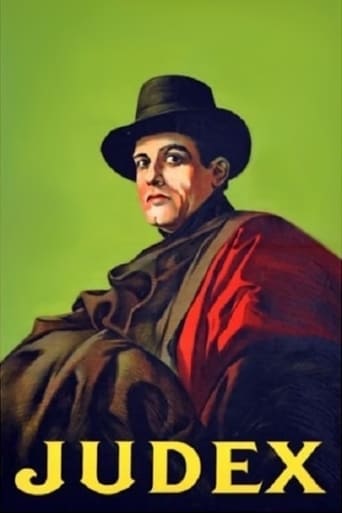
Louis Feuillade directed Tih Minh during a particularly prolific period in his career, while simultaneously overseeing other productions at Gaumont. The film was conceived as a follow-up to his successful Judex serial, aiming to capitalize on the public's appetite for episodic adventure stories. Feuillade worked closely with his regular team of technicians and actors, many of whom had appeared in his previous serials. The production faced unique challenges due to wartime conditions, including restricted movement between filming locations and the need to work around military activities in the Nice area. Mary Harald, who played Tih Minh, was reportedly discovered by Feuillade while she was performing in a Parisian cabaret, and he was struck by her exotic appearance that perfectly matched the character's Eurasian background. The hypnotism sequences required special camera techniques and careful editing to create the illusion of mind control, which were innovative for the time. Feuillade's direction emphasized naturalistic performances from his actors, a departure from the more theatrical style common in many French films of the period. The serial's complex narrative structure required careful planning to maintain continuity across twelve episodes, with Feuillade reportedly creating detailed storyboards and narrative maps to track the various plot threads and character developments.
What critics said
Retrospective notes on Tih Minh emphasize its value as a silent-era document rather than blockbuster reception.
Did you know?
- Tih Minh is one of Louis Feuillade's lesser-known serial films, overshadowed by his more famous works like Fantômas and Les Vampires, but is considered by film scholars to be among his most technically accomplished works.
- The film's title character Tih Minh was played by Mary Harald, an actress of mixed Asian and European heritage, which was relatively rare for leading roles in French cinema of the period.
- The serial was produced and released during the final months of World War I, with some episodes premiering just weeks before the Armistice, making its themes of international espionage particularly resonant with contemporary audiences.
- Louis Feuillade reportedly drew inspiration for the hypnotism sequences from real-life cases he had read about in contemporary newspapers and medical journals of the period.
- The film's elaborate network of spies and conspirators reflected the real-life espionage networks that operated throughout Europe during WWI, including the famous Mata Hari case.
- Unlike many serials of the era, Tih Minh was shot almost entirely on location rather than in studio settings, giving it a more realistic and documentary-like quality.
- The original French title included an accent (Tih-Minh), which was often dropped in international releases and references.
- The film's complex plot involving coded messages and secret intelligence prefigured many elements of later spy fiction, including early James Bond stories.
- Some of the film's negative materials were damaged during World War II, making complete preservation of all twelve episodes challenging for film archivists.
- The character of the Hindu hypnotist Kistna was one of the earliest depictions of hypnotism as a plot device in cinema, influencing countless later films in the thriller and spy genres.
Visual style
The cinematography in Tih Minh was handled by Léonce-Henri Burel and other Gaumont cameramen, showcasing the studio's technical expertise and Feuillade's preference for location shooting. The film makes extensive use of natural lighting and real locations in Nice and surrounding areas, creating a sense of authenticity that contrasted with the more studio-bound productions common in the period. The camera work is relatively dynamic for its time, with movement and framing choices that enhance the suspense and action sequences. The hypnotism scenes feature innovative techniques including double exposure and creative editing to convey the altered states of consciousness. The cinematography effectively captures the contrast between the sun-drenched Mediterranean settings and the shadowy interiors where conspiracies unfold. The film's visual style maintains Feuillade's characteristic documentary-like approach while incorporating more dramatic lighting and composition techniques than his earlier works. The restoration of surviving elements has revealed the sophistication of the original cinematography, particularly in the handling of exterior scenes and the creation of atmospheric tension through visual means.
Innovations
Tih Minh demonstrated several technical innovations for its time, particularly in its approach to location shooting and complex narrative construction. The film's use of multiple real locations across the French Riviera represented a significant undertaking in 1918, requiring portable cameras and equipment that could function outside studio environments. The hypnotism sequences featured pioneering special effects techniques including double exposure, dissolves, and creative editing to convey altered mental states. The film's complex narrative structure across twelve episodes required careful continuity management and sophisticated editing to maintain coherence and suspense across the extended runtime. The production team developed efficient methods for managing the logistics of location shooting during wartime conditions, with limited resources and transportation challenges. The cinematography employed advanced techniques for capturing natural light in exterior scenes while maintaining consistent exposure and image quality. The film's action sequences, including chases and fight scenes, demonstrated evolving approaches to staging and filming dynamic movement that would influence later action cinema. The preservation challenges faced by the film have also led to advances in restoration techniques for damaged nitrate film materials from this period.
Music
As a silent film, Tih Minh would have been accompanied by live musical performance during its original theatrical run. The specific musical scores used for each episode are not documented in surviving records, but it was common practice for theaters to provide appropriate musical accompaniment ranging from solo piano to small orchestras. The music would have been selected to match the mood of each scene, with dramatic themes for the action sequences, romantic motifs for scenes between Jacques and Tih Minh, and mysterious, dissonant passages for the hypnotism and conspiracy elements. Some larger theaters in Paris may have used compiled scores featuring classical pieces or popular songs of the period, while smaller venues likely relied on improvisation by house musicians. Modern screenings of restored versions typically feature newly composed scores or carefully selected period-appropriate music. The rhythmic structure of the editing suggests that Feuillade composed with musical accompaniment in mind, with scene lengths and transitions that would have worked well with typical silent film scoring practices of the era.
Famous quotes
The book holds secrets that could change the fate of nations." (intertitle)
Beware the eyes that can see into your soul." (intertitle regarding the hypnotist)
In this time of war, every secret is a weapon." (intertitle)
Love knows no borders, but spies do." (intertitle)
The code is the key, but the key is also the trap." (intertitle)
Memorable scenes
- The opening sequence where Jacques d'Athys returns to Nice with Tih Minh, establishing the exotic atmosphere and introducing the mysterious book that drives the plot
- The hypnotism scene where Kistna attempts to extract information from a victim using mesmerizing techniques, featuring innovative special effects for the period
- The chase sequence through the streets of Nice, demonstrating Feuillade's skill at action cinematography and location shooting
- The climactic confrontation in the villa where all the conspirators are revealed and the code is finally deciphered
- The scene where Tih Minh uses her knowledge of Eastern customs to outwit the spies, showcasing her character's agency and cultural background
What audiences thought
Contemporary audiences in 1918 responded enthusiastically to Tih Minh, with each new episode drawing crowds to cinemas across France. The serialized format proved particularly effective at building audience investment in the characters and plot developments, with viewers eagerly awaiting each installment to discover the fate of Jacques d'Athys and Tih Minh. The film's themes of patriotism and the defeat of foreign spies resonated strongly with French audiences during the final months of World War I, providing both entertainment and reassurance. The exotic elements of the story, including the Asian characters and hypnotism sequences, added to the film's popular appeal. While precise box office figures are not available, contemporary reports indicate that Tih Minh was a commercial success for Gaumont, though it did not achieve the same level of popular phenomenon status as Feuillade's earlier Les Vampires serial. Modern audiences who have discovered the film through restorations and special screenings have generally responded positively to its historical significance and entertainment value, though some find the pacing and narrative conventions of silent serial cinema challenging by contemporary standards.
Film connections
Influenced by
- Fantômas (1913-1914) by Louis Feuillade
- Les Vampires (1915) by Louis Feuillade
- Judex (1916) by Louis Feuillade
- The Adventures of Prince Achmed (1926) by Lotte Reiniger
- The Mystery of the Yellow Cat (1916) by William Worthington
This film influenced
- The Spiders (1919) by Fritz Lang
- Dr. Mabuse series (1922-1933) by Fritz Lang
- The 39 Steps (1935) by Alfred Hitchcock
- North by Northwest (1959) by Alfred Hitchcock
- James Bond film series
- The Manchurian Candidate (1962) by John Frankenheimer
Film restoration
Tih Minh has survived in a partially complete state, with most but not all of the twelve episodes preserved in various film archives around the world. The Cinémathèque Française holds the most complete collection of elements, though some episodes are missing portions or exist only in fragmented form. The film suffered damage over the decades, particularly during World War II when some nitrate elements were destroyed or deteriorated. Restoration efforts have been undertaken by several archives, with the most comprehensive restoration completed by the Cinémathèque Française in collaboration with Gaumont and other European archives. The restored version combines elements from different sources to create the most complete version possible, though some gaps remain where footage has been lost forever. The film exists in both 35mm and digital formats, with the digital restoration making it more accessible for modern screenings and home video release. While not as complete as some of Feuillade's other works, the surviving portions provide a substantial representation of the original serial and allow for appreciation of its narrative and technical achievements.
Where to watch
- The Criterion Collection streaming service
- Gaumont DVD/Blu-ray releases (Region 2)
- Various film archive streaming platforms including Cinémathèque Française's online collection
- Special screenings at film festivals and cinematheques worldwide
- University library collections specializing in classic cinema
- Mubi streaming platform during special programming
- Kino Classics DVD releases