
Undercover: How to Operate Behind Enemy Lines
"OSS trainees learn how to survive behind enemy lines."
Keys: Space play/pause · ←/→ 10s · F fullscreen · M mute · </> speed
About this film
A training film for OSS agents who are to be dropped behind enemy lines.
Cast & crew
More films like this
More Documentary films
View all →
More from John Ford
View all →

More about this film
About the production
Release date1943
ProductionOffice of Strategic Services (OSS), U.S. Navy
Filmed inUnited States (training facilities), Hollywood studio sets
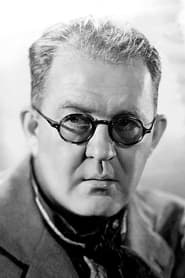
This film was produced as part of John Ford's service as a commander in the U.S. Navy's Field Photo Unit during WWII. The production was classified at the time of its creation and intended solely for internal OSS training purposes. Ford utilized his Hollywood expertise to create what was considered among the leading effective training films of the war. The film combined actual OSS training footage with dramatized scenarios performed by actors and real OSS personnel.
Themes
Themes & topics
OSStraining filmbehind enemy linesespionagedisguisecode communicationevasioninterrogationdead dropssafe housesescape routesunderground operations
Historical background
Undercover: How to Operate Behind Enemy Lines (1943) survives in catalogs and archives as a record of wartime and postwar filmmaking.
Why this film matters
Scholars and collectors reference Undercover: How to Operate Behind Enemy Lines when discussing how wartime and postwar filmmaking filmmakers addressed popular themes.
Making of
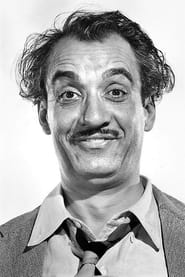
John Ford brought his distinctive directorial style to this government training film, treating it with the same professionalism as his Hollywood productions. The film was shot quickly and efficiently, as was typical of wartime productions, with Ford often working directly with OSS officials to ensure accuracy. Many of the scenarios were based on real intelligence operations conducted by OSS agents in Europe. The cast included a mix of professional actors like Eddie Foster and Martín Garralaga alongside actual OSS personnel who demonstrated authentic techniques. Ford's military rank gave him unprecedented access to classified information and training facilities, allowing him to create an unusually realistic training film. The production was part of a broader government effort to utilize Hollywood talent for wartime propaganda and training purposes.
What critics said
Later retrospectives treat Undercover: How to Operate Behind Enemy Lines (1943) as representative wartime and postwar filmmaking fare valued by archivists and genre historians.
Did you know?
- John Ford made this film while serving as a commander in the U.S. Navy, demonstrating his commitment to the war effort despite his established Hollywood career.
- The film was classified and not available to the public until decades after WWII ended.
- Many of the techniques demonstrated in the film were based on actual OSS training methods developed by William 'Wild Bill' Donovan.
- The film was so effective that it remained in use for CIA training well into the 1950s after the OSS was disbanded.
- Ford used his Hollywood connections to secure top talent for what was essentially a government training film.
- The production utilized both professional actors and actual OSS trainees to create realistic scenarios.
- This was one of several war-related films Ford made during his military service, including the Academy Award-winning 'December 7th'.
- The film's techniques were so accurate that it was reportedly used by other Allied intelligence services.
- Some scenes were shot at actual OSS training facilities, though specific locations remain classified.
- The film demonstrates Ford's ability to adapt his cinematic skills to practical military applications.
Visual style
The film employs Ford's characteristic visual style adapted for instructional purposes. The cinematography combines documentary-style footage of actual training exercises with carefully composed dramatic sequences demonstrating specific techniques. Ford uses close-ups effectively to show important details of disguise and equipment handling, while wider shots establish context for various scenarios. The black and white photography enhances the film's serious, instructional tone while maintaining visual clarity essential for training purposes. The camera work is notably steady and professional, reflecting Ford's Hollywood background even in this government production.
Innovations
The film pioneered several techniques in instructional filmmaking that would influence military training films for decades. Ford's use of dramatized scenarios combined with documentary footage created an effective hybrid approach that maintained viewer engagement while conveying practical information. The film's clear visual demonstration of complex techniques set a new standard for training materials. Its efficient production methods, developed under wartime constraints, demonstrated how professional filmmaking techniques could be adapted to practical military applications. The film's structure, breaking down complex operations into clear, sequential steps, became a model for future instructional films.
Famous quotes
In the world of espionage, your greatest weapon is not a gun, but your ability to become invisible in plain sight.
Every face in the crowd is a potential enemy, but also a potential shield if you learn to blend correctly.
The difference between life and death behind enemy lines often comes down to the smallest detail you might overlook.
Memorable scenes
- The dramatic sequence demonstrating how to create and use dead drops for passing intelligence, showing agents practicing the exchange of information in seemingly innocent public settings like parks and cafes.
What audiences thought
The original audience consisted exclusively of OSS trainees and personnel, who reportedly found the film highly effective and practical for their training needs. Many agents who went through OSS training cited this film as especially memorable and useful components of their preparation. After being declassified, the film has been viewed by military historians, film scholars, and WWII enthusiasts, who generally regard it as a fascinating glimpse into wartime intelligence operations. Modern audiences often express surprise at the sophisticated nature of the training and the professional quality of the production.
Film connections
Influenced by
- OSS training manuals
- William Donovan's intelligence methods
- Military training films of the era
This film influenced
- Post-war CIA training films
- Modern military instructional videos
- Cold War espionage documentaries
Film restoration
The film is preserved in the National Archives and Records Administration as part of the OSS/CIA historical film collection. Several copies exist in various government archives and military history collections. While not commercially available on home media, it has been screened at film festivals and military history events.
Where to watch
- National Archives website (occasionally available for public viewing)
- Military history museums and special screenings
- Academic film archives and libraries
- CIA Museum (by special arrangement)
- U.S. Navy archives (research access)