



Voyage to the Prehistoric Planet
"In 2020, after the colonization of the moon, the spaceships Vega, Sirius and…"
Keys: Space play/pause · ←/→ 10s · F fullscreen · M mute · </> speed
About this film
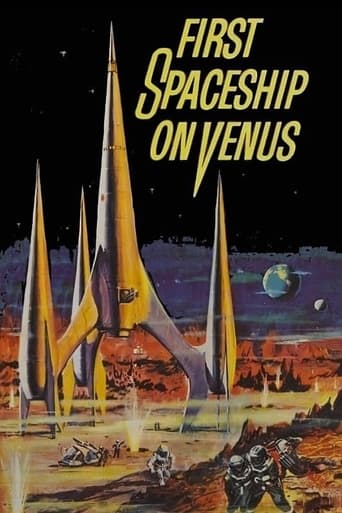
In 2020, after the colonization of the moon, the spaceships Vega, Sirius and Capella are launched from Lunar Station 7. They are to explore Venus under the command of Professor Hartman, but an asteroid collides and explodes Capella. The leader ship Vega stays orbiting and sends t
Cast & crew
More films like this
More Science Fiction films
View all →

More from Curtis Harrington
View all →
More about this film
About the production
Release dateDecember 22, 1965
Budget$200,000
Box officeUnknown, but modest for AIP standards
ProductionAmerican International Pictures, Mosfilm
Filmed inMoscow, Soviet Union (original footage), Los Angeles, California (additional scenes)
This film was created by extensively re-editing and adding new footage to the Soviet film 'Planeta Bur' (1962). Curtis Harrington was hired to direct approximately 30 minutes of new American footage featuring Basil Rathbone and Faith Domergue, which was then seamlessly integrated with the Soviet material. The production faced significant challenges in matching the visual style and film stock between the two productions, and the American scenes were carefully choreographed to appear as if they were part of the original Soviet expedition. The robot character 'John' was a new addition for the American version, created to provide a narrative bridge between the disparate footage.
Themes
Space explorationSurvival against hostile environmentsHuman adaptabilityScientific discoveryMan versus nature
Themes & topics
VenusSpace travelPrehistoric creaturesRobotAstronautsExplorationDangerSurvivalAlien planetSpace stationRescue missionScientific expedition
Historical background
Released in 1965 during the New Hollywood transition, Voyage to the Prehistoric Planet reached audiences when exhibitors were still defining programming conventions. The narrative hook—In 2020, after the colonization of the moon, the spaceships Vega, Sirius and…—reflects what contemporary producers thought would draw viewers.
Why this film matters
Voyage to the Prehistoric Planet remains discussed by archivists tracing how screen stories of its period represented work, desire, conflict, and social order. Its central situation—In 2020, after the colonization of the moon, the spaceships Vega, Sirius and…—still prompts questions about genre conventions and audience expectations.
Making of
The making of 'Voyage to the Prehistoric Planet' represents a fascinating example of Cold War-era cinematic collaboration. American International Pictures, known for their low-budget genre films, acquired the rights to the Soviet science fiction epic 'Planeta Bur' for a fraction of what it would cost to produce a similar film in America. Director Curtis Harrington was tasked with creating a marketable American version by adding new scenes featuring established stars Basil Rathbone and Faith Domergue. The production team faced the considerable challenge of matching the visual style between the Soviet footage and the new American scenes, carefully selecting costumes, props, and set designs that would seamlessly blend with the existing material. The robot character John was introduced as a narrative device to help bridge gaps between the original Soviet footage and the new American sequences. The entire process took approximately three months, with Harrington working closely with editors to create a cohesive narrative that would satisfy American audiences while maintaining the spectacular visual effects from the Soviet production.
What critics said
Trade and newspaper notices for Voyage to the Prehistoric Planet generally emphasized casting, spectacle, and program fit rather than extended aesthetic argument. Retrospective screenings and archival notes continue to shape how viewers evaluate Voyage to the Prehistoric Planet today.
Did you know?
- This film is actually an American adaptation of the Soviet science fiction film 'Planeta Bur' (Planet of Storms) from 1962, directed by Pavel Klushantsev
- Director Curtis Harrington was hired specifically to add American footage and re-edit the Soviet film for U.S. audiences
- Basil Rathbone and Faith Domergue only appear in the newly filmed American sequences and never interact with the Soviet actors
- The film was released in some markets under the alternative title 'Voyage to the Planet of Prehistoric Women'
- The robot character 'John' was created specifically for the American version and does not appear in the original Soviet film
- American International Pictures (AIP) would later use a similar approach with 'Queen of Blood' (1966), another Soviet film adaptation
- The Venus sequences were filmed using innovative Soviet special effects techniques that were ahead of their time
- The film's success led to a sequel 'Voyage to the Planet of Prehistoric Women' (1968), which reused even more footage from the same Soviet source
- The original Soviet film was considered scientifically more accurate, with the American version adding more sensational elements
- Curtis Harrington later expressed mixed feelings about the project, considering it more of a salvage operation than a creative endeavor
Visual style
The cinematography is notably uneven due to its dual origins, with the Soviet footage displaying impressive scope and technical sophistication while the American scenes appear more conventional and studio-bound. The Venus sequences feature sweeping landscape shots and elaborate miniature work that was cutting-edge for its time, utilizing techniques developed by Soviet cinematographers for their ambitious space productions. The color palette emphasizes otherworldly oranges and reds to create an alien atmosphere, while the American footage maintains more naturalistic lighting. The film makes effective use of split-screen and composite shots to integrate the various elements, though the differences in film stock and lighting techniques are sometimes apparent to discerning viewers.
Innovations
The film's primary technical achievements stem from the original Soviet production, which featured groundbreaking special effects for its time. The elaborate Venus landscapes were created using sophisticated miniature photography and matte painting techniques that were ahead of most American efforts in 1962. The creature effects, while somewhat dated by modern standards, were innovative in their use of animatronics and costume design. The film's most significant technical achievement was the seamless integration of footage from two different productions shot years apart, a remarkable editing accomplishment given the limitations of the era. The space sequences featured convincing model work and optical effects that contributed to the film's visual appeal.
Music
The musical score combines elements from the original Soviet film's soundtrack with new American compositions, creating an eclectic auditory experience. The Soviet portions feature dramatic orchestral pieces typical of 1960s science fiction, while the newly scored American scenes incorporate more conventional thriller and adventure motifs. The sound design effectively creates an alien atmosphere through the use of unusual creature vocalizations and atmospheric effects. Notably, the robot John's characteristic electronic beeps and whirs became one of the film's most memorable audio elements, though they were added in post-production for the American release.
Famous quotes
Professor Hartman: 'We are about to embark on the greatest adventure in the history of mankind - the exploration of Venus!'
Dr. Marsha Evans: 'The readings are impossible! Life forms that shouldn't exist, atmospheric conditions that defy all our theories!'
Commander Lockhart: 'In space, the greatest enemy isn't what's out there - it's what we don't know.'
Robot John: [Electronic communication sounds] 'Danger. Life forms approaching. Recommend immediate defensive action.'
Memorable scenes
- The dramatic asteroid collision that destroys the Capella, featuring spectacular special effects and model work that creates genuine tension despite the film's low budget origins
- The first landing on Venus, with the astronauts emerging into a prehistoric landscape filled with giant plants and bizarre creatures, showcasing the impressive Soviet miniature photography
- The encounter with the flying pterodactyl-like creatures, a sequence that combines stop-motion animation with live-action footage to create thrilling action sequences
- The robot John's heroic efforts to save the stranded astronauts, using its mechanical strength and logical processing to overcome seemingly impossible obstacles
- The final scenes showing the diverse prehistoric life of Venus, including underwater sequences featuring elaborate creature effects and underwater photography techniques
What audiences thought
Audience reception in 1965 was generally positive among the target demographic of teenage science fiction fans, who were less concerned with the film's production origins and more interested in its spectacle of alien worlds and creatures. The film performed modestly at the box office, typical of American International Pictures' second-bill features. Many viewers were particularly impressed by the elaborate Venus landscapes and creature effects, which were superior to most American low-budget productions of the era. The film developed a cult following over the years, especially among fans of 1960s science fiction and those interested in the history of international film co-productions. Modern audiences often view it with nostalgic appreciation for its retro-futuristic vision and charming practical effects.
Film connections
Influenced by
- Planeta Bur (1962)
- Forbidden Planet (1956)
- The Day the Earth Stood Still (1951)
- First Spaceship on Venus (1959)
- Journey to the Center of the Earth (1959)
This film influenced
- Voyage to the Planet of Prehistoric Women (1968)
- Queen of Blood (1966)
- The Wizard of Mars (1965)
- They Came from Beyond Space (1967)
Film restoration
The film has been preserved through various home video releases and is currently available on DVD and streaming platforms. The original Soviet film 'Planeta Bur' has been restored and is considered an important part of Russian science fiction cinema heritage. The American version exists in multiple releases, with varying quality depending on the source material used for transfers. No known restoration efforts have been specifically undertaken for the American version, though it remains accessible through specialty labels and public domain distributors.
Where to watch
- Available on DVD from various specialty distributors
- Streaming on Amazon Prime Video
- Available on Tubi (free streaming)
- Can be rented or purchased on iTunes and Google Play
- Available on YouTube through official channels
- Included in some science fiction streaming collections