
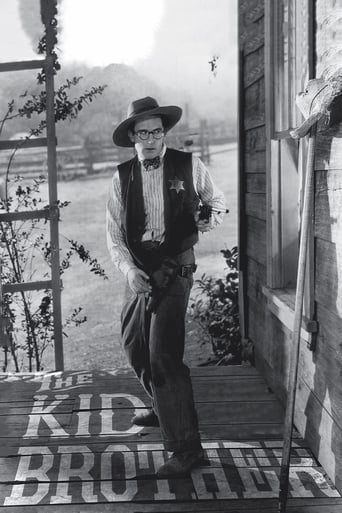
What Happened to Jones?
"Poker raid — ladies' bath night"
Keys: Space play/pause · ←/→ 10s · F fullscreen · M mute · </> speed
About this film
Groom-to-be Jones flees poker raid into Turkish bath on ladies' night, trapped in drag as explanations multiply. Reginald Denny farce exploits cross-dressing and mistaken identity.
Cast & crew
More films like this
More Comedy films
View all →







More from William A. Seiter
View all →


More about this film
About the production
Release dateOctober 10, 1926
Box officeBox office figures not specifically recorded for this film, but it was considered a moderate success for Universal Pictures
ProductionUniversal Pictures
Filmed inUniversal Studios lot, Universal City, California
The film was based on the popular 1897 stage play 'What Happened to Jones' by George Broadhurst, which had been a major Broadway hit and had already been adapted to film twice before (1915 and 1920). This 1926 version was Universal's third adaptation. The Turkish bathhouse scenes were filmed on specially constructed sets at Universal Studios, with careful attention to period-appropriate details. The drag sequences required extensive costume work and makeup to transform Reginald Denny convincingly enough for the comedy to work.
Themes
Gender disguise and identityPre-wedding anxietySocial hypocrisyThe consequences of deceptionClass and respectability
Themes & topics
Historical background
What Happened to Jones? (1926) adapts stage farce for Prohibition-era bachelor panic comedy.
Why this film matters
Bathhouse drag gags recur in silent comedy influencing later farce traditions.
Making of
The production faced several challenges during filming, particularly with the Turkish bathhouse sequences which required elaborate set construction and careful choreography to maintain the comedy while avoiding censorship issues. Reginald Denny, who was known for his athletic prowess, performed many of his own stunts during the chase sequences. The drag makeup and costume process took several hours each day, and Denny reportedly found the experience uncomfortable but hilarious. Director William A. Seiter worked closely with the studio's costume department to ensure the drag elements were comedic without being too scandalous for 1926 audiences. The poker raid scene was particularly complex to film, involving dozens of extras and carefully timed action to create the chaos of a police bust. The film was shot quickly on Universal's backlot, typical of the studio's efficient production methods during this period.
What critics said
Reviews enjoyed Denny; the film survives as stage-adaptation programmer.
Did you know?
- This was the third film adaptation of George Broadhurst's popular stage play, following versions in 1915 and 1920
- The original Broadway play ran for 159 performances in 1897-1898 and was revived multiple times
- Reginald Denny was one of Universal's most popular comedy stars of the mid-1920s, known for his athletic abilities and light comedy touch
- Director William A. Seiter would go on to direct many successful comedies, including several with Shirley Temple and the Marx Brothers
- The film's premise of a man in drag at a ladies' bathhouse was considered quite risqué for 1926, pushing the boundaries of what was acceptable in mainstream cinema
- Marian Nixon, who played the fiancée Mary, was a former Mack Sennett bathing beauty who had graduated to leading roles
- The poker game sequence was filmed in a single long take to enhance the realism of the police raid
- Universal Pictures produced this as part of their program of adapting successful stage plays for the screen
- The film's title became a popular catchphrase in the late 1920s, used in newspaper headlines and comedy routines
- Despite its modest success, this would be the last major film adaptation of the play during the silent era
Visual style
The cinematography, credited to Charles J. Stumar, utilized standard techniques of the mid-1920s with clear, well-lit compositions typical of Universal's house style. The Turkish bathhouse sequences featured more elaborate lighting setups to create the steamy, atmospheric environment. Camera movement was minimal, as was typical of the period, with most scenes filmed from static positions. The chase sequences following the poker raid employed more dynamic angles and faster editing to create excitement. The drag reveal scenes used careful framing to maximize the comedic effect of Denny's disguise.
Innovations
The film employed standard technical practices of the mid-1920s without notable innovations. The special effects were limited to basic techniques such as dissolves and irises for scene transitions. The most technically challenging aspects were the bathhouse sequences, which required careful set design to accommodate the steam effects and multiple actors in confined spaces. The drag makeup and costumes, while not technically groundbreaking, required skilled craftsmanship to achieve the desired comedic effect without crossing into caricature that might have offended censors.
Music
As a silent film, 'What Happened to Jones?' would have been accompanied by live musical scores in theaters. Universal provided cue sheets and suggested musical selections for theater orchestras. The score likely included popular songs of 1926 such as 'Bye Bye Blackbird' and 'Baby Face' along with classical pieces appropriate to the various moods of the film. The Turkish bathhouse scenes would have featured exotic-sounding music, while the chase sequences would have used faster-paced, dramatic compositions. No original composed score was created specifically for the production.
Famous quotes
A gentleman never discusses his poker losses, especially not with his future bride!
Some nights are meant for bachelor parties, some for weddings, and some for Turkish baths - but never all three!
In the game of love, as in poker, sometimes you have to know when to fold 'em!
Memorable scenes
- The chaotic police raid of the poker game where Jones makes his desperate escape
- Jones's frantic transformation into drag in the Turkish bathhouse dressing room
- The near-miss encounter where Jones, in disguise, almost speaks to his fiancée
- The final reveal scene where Jones's identity is exposed in the most compromising circumstances
- The elaborate chase sequence through the bathhouse corridors with Jones in drag being pursued
What audiences thought
The film performed moderately well at the box office, particularly in smaller cities and neighborhood theaters where Universal's programming was popular. Audiences enjoyed the familiar premise and Denny's performance, though it didn't generate the same level of enthusiasm as bigger-budget comedies from major stars like Harold Lloyd or Buster Keaton. The film's subject matter, while somewhat daring for the time, didn't generate significant controversy, suggesting audiences were becoming more accustomed to such comedic situations. The film's success was sufficient for Universal to continue producing similar comedy adaptations throughout the late 1920s.
Film connections
Influenced by
- George Broadhurst's 1897 stage play 'What Happened to Jones'
- Earlier film adaptations (1915, 1920)
- Popular comedy traditions of vaudeville and burlesque
- The gender disguise comedy genre established by earlier films
This film influenced
- Later drag comedies of the early sound era
- Universal's subsequent comedy adaptations of stage plays
- The 1936 sound remake 'What Happened to Jones?'
Film restoration
The film is believed to be preserved in the Universal Pictures archives, though it has not received a full restoration. Some sources suggest that complete prints exist in film archives, but it remains largely unavailable to modern audiences. The film has not been released on DVD or Blu-ray and rarely appears in revival screenings. As with many Universal silents, the survival status is uncertain but hopeful, as the studio maintained better preservation practices than some of its contemporaries.
Where to watch
- Currently not commercially available on home video or streaming platforms
- May be accessible through film archives or specialized silent film collectors
- Occasionally screened at silent film festivals or museum retrospectives
- Potential viewing through the Library of Congress or UCLA Film & Television Archive by special arrangement