When Love Took Wings
"Love lifts off"
Keys: Space play/pause · ←/→ 10s · F fullscreen · M mute · </> speed
About this film
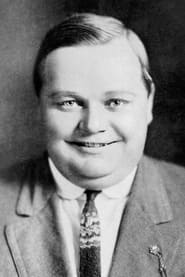
Roscoe Arbuckle's three suitors court one woman until an airplane elopement breaks the deadlock. Three men in love with the same woman contend with each other and with her father, until one of them takes her on an airplane in an attempt to elope with her.
Cast & crew
More films like this
More Comedy films
View all →







More from Roscoe 'Fatty' Arbuckle
View all →
More about this film
About the production
Release dateMarch 8, 1915
Box officeBox office records not preserved from this period
ProductionKeystone Film Company
Filmed inLos Angeles, California, Keystone Studios lot
This film was produced during the golden age of Keystone Studios, when they were churning out dozens of short comedies each month. The airplane sequences were particularly challenging to film in 1915, as aviation was still in its infancy and filming equipment was bulky. The production likely used actual aircraft from nearby airfields, making it one of the earliest films to feature significant aerial footage in a comedy context.
Themes
Rivalry and competitionTechnological progressLove and romanceFather-daughter relationshipsEscape and freedom
Themes & topics
Historical background
1915 placed When Love Took Wings within United States cinema as Keystone Film Company navigated wartime markets, immigration audiences, and the shift from intertitles to sound.
Why this film matters
Archivists revisit When Love Took Wings (1915) for Roscoe 'Fatty' Arbuckle style, genre norms at Keystone Film Company, and the exhibition context of Approximately 10-12 minutes (typical one-reeler length of the era) programming.
Making of
The production of 'When Love Took Wings' took place during Keystone Studios' most creative and productive period under Mack Sennett's leadership. Arbuckle, who had joined Keystone in 1913, had quickly become one of their most valuable performers and was given increasing creative freedom. The airplane sequences required coordination with local aviators and airfields, as Keystone did not own aircraft. The filming likely took place at the nearby airfield in Los Angeles, where early aviation pioneers were based. The stunts and physical comedy were performed without modern safety equipment, making the aerial scenes particularly hazardous. The film was shot in the typical Keystone style of rapid, almost improvisational production, with minimal rehearsal and emphasis on spontaneous humor and physical gags.
What critics said
Retrospective writing on When Love Took Wings stresses craft by Roscoe 'Fatty' Arbuckle, print survival, and repertory value rather than opening-week gross alone.
Did you know?
- This film was released just 12 years after the Wright brothers' first flight, making airplane scenes a novelty for audiences
- Roscoe 'Fatty' Arbuckle was not only the star but also the director, common practice at Keystone Studios where performers often had creative control
- The film was part of Keystone's rapid production schedule, with the studio releasing up to three new films per week during peak periods
- Aviation in 1915 was still considered extremely dangerous, making the aerial sequences genuinely risky for the performers
- This was during Arbuckle's most prolific period, where he appeared in and directed dozens of films per year
- The film's title reflects the era's fascination with flight as a metaphor for love and freedom
- Keystone Studios was known for its improvisational style, with many gags created on set during filming
- The airplane featured was likely a Curtiss or similar early model, commonly used in California during this period
Visual style
The cinematography was typical of Keystone's work in 1915, utilizing static cameras with occasional tracking shots. The aerial sequences represented technical challenges for the cinematographers, who had to either film from the ground or attempt to mount cameras on aircraft - a difficult feat with the heavy equipment of the era. The film likely used natural lighting, as was standard for outdoor shoots of the period. The visual style emphasized clear compositions to ensure the physical comedy and gags were easily readable to audiences, a hallmark of Keystone's approach to comedy filmmaking.
Innovations
The film's primary technical achievement was its incorporation of actual aviation footage into a comedy narrative. In 1915, filming with or from aircraft was extremely difficult due to the size and weight of cameras, the instability of early aircraft, and the noise of engines. The production team had to solve these challenges to create convincing aerial sequences. The film also demonstrated Keystone's efficient production system, capable of turning out quality comedies on extremely tight schedules while maintaining technical standards appropriate for the era.
Music
As a silent film, 'When Love Took Wings' would have been accompanied by live musical performance during theatrical exhibitions. Typical Keystone comedies were scored with popular songs of the era, classical pieces, and improvisational piano accompaniment. The music would have been synchronized to the on-screen action, with romantic themes during the courtship scenes and more frantic, comedic music during the chase and airplane sequences. Specific musical selections varied by theater and accompanist, as no standardized score was provided by the studio.
Famous quotes
As a silent film, dialogue was conveyed through intertitles and physical expression rather than spoken quotes
Memorable scenes
- The climactic airplane elopement sequence, where the couple attempts to escape while being pursued by the rejected suitors and angry father, combining aerial novelty with classic Keystone chase comedy
What audiences thought
Audiences of 1915 responded enthusiastically to the film's combination of slapstick comedy and the novelty of aviation. The airplane sequences were particularly popular, as most viewers had never seen aircraft up close. Arbuckle's physical comedy and likable persona made the film a success with working-class audiences who formed the core of moviegoers during this period. The film's straightforward romantic comedy structure, enhanced by the technological twist, appealed to the broad audience base that made Keystone Studios among the leading profitable production companies of the era.
Film connections
Influenced by
- Keystone comedy style
- Mack Sennett's production methods
- Early aviation films
- Slapstick comedy traditions
This film influenced
- Later aviation comedies
- Keystone-style chase films
- Romantic comedies featuring technology
Film restoration
The preservation status of 'When Love Took Wings' is uncertain. Many Keystone films from this period have been lost due to the unstable nitrate film stock used in the 1910s and poor archival practices in early Hollywood. If copies survive, they would likely be held in film archives such as the Library of Congress, the Museum of Modern Art, or the Academy Film Archive. No widely available restored version is currently known to exist.
Where to watch
- Currently, there are no known legitimate streaming or home video releases of 'When Love Took Wings'. If the film survives, it may be accessible through specialized film archives, museums, or private collectors. Silent film enthusiasts should check with institutions like the Library of Congress, the British Film Institute, or the UCLA Film & Television Archive for potential viewing opportunities.