
Wolves and Sheep
"Piety masks greed in Ostrovsky's satire"
Keys: Space play/pause · ←/→ 10s · F fullscreen · M mute · </> speed
About this film
Provincial landowner Murzavetskaya, a hypocrite hiding under the mask of piety and virtue, wants to get her hands on the fortune of the rich widow Kupavina.
Cast & crew
More Drama films
View all →






More about this film
About the production
Release dateOctober 26, 1953
ProductionMosfilm Studio
Filmed inMoscow, Soviet Union
The film was adapted from Alexander Ostrovsky's classic 1875 play of the same name. The production faced the typical challenges of Soviet cinema in the early 1950s, including strict censorship guidelines and the need to balance social satire with acceptable socialist themes. The film was shot during a transitional period in Soviet cinema, just before the cultural thaw that followed Stalin's death in 1953.
Themes
Hypocrisy and social pretenseGreed and materialismClass conflict and social hierarchyThe corruption of provincial societyThe conflict between appearance and reality
Themes & topics
satirehypocrisygreedinheritancemanipulationprovincial societysocial climbingdeceptionwealthfamily drama
Historical background
Wolves and Sheep appeared around 1953, as television reshaped how films found viewers.
Why this film matters
Wolves and Sheep reflects the range of mid-century production beyond a single national mainstream.
Making of
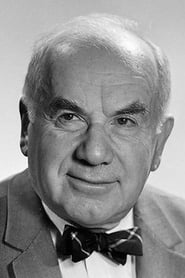
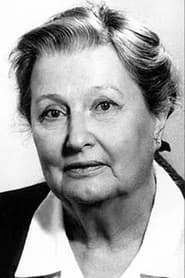
The production of 'Wolves and Sheep' was a significant undertaking for Mosfilm Studio, requiring extensive period costumes and detailed set recreations of 19th-century Russian provincial life. Director Vladimir Sukhobokov worked closely with veteran actors Vera Pashennaya and Igor Ilyinsky to adapt Ostrovsky's theatrical dialogue for the cinematic medium. The filming took place during a politically sensitive time, as Stalin had died earlier in 1953, leading to a gradual liberalization in Soviet arts. The cast reportedly spent weeks studying the social mannerisms and speech patterns of 19th-century Russian provincial society to ensure authenticity. The film's satirical elements were carefully calibrated to pass censorship while still delivering Ostrovsky's sharp social commentary.
What critics said
Press notices for Wolves and Sheep (1953) are sparse in digitized sources; interest today rests on preserved prints and comparison with related titles.
Did you know?
- The film is based on Alexander Ostrovsky's play 'Wolves and Sheep' (1875), widely praised works in Russian dramatic literature
- Vera Pashennaya, who played Murzavetskaya, was already in her 60s when she portrayed the character, bringing authentic gravitas to the role of the manipulative landowner
- Director Vladimir Sukhobokov was known for his adaptations of classical Russian literature, making one of his signature works
- The film was released in October 1953, just months after Stalin's death, during a period when Soviet cinema was beginning to explore more critical social themes
- Igor Ilyinsky, one of Soviet cinema's most beloved comic actors, brought his unique blend of humor and pathos to the production
- The title 'Wolves and Sheep' became a popular Russian idiom for describing predatory behavior disguised as innocence
- The film's costumes and set designs were meticulously researched to accurately represent 19th-century provincial Russian society
- Despite its critical tone, the film was approved by Soviet censors because it targeted the pre-revolutionary merchant class rather than contemporary Soviet society
Awards & recognition
- Vera Pashennaya received the title of People's Artist of the USSR (1954) partly for her performance in
Visual style
The cinematography by Grigory Giber employs classic Soviet realist techniques while incorporating elements of visual satire. The camera work emphasizes the contrast between the characters' outward appearances and their true natures, using lighting and composition to reveal hypocrisy. Interior scenes are framed to capture the claustrophobic atmosphere of provincial society, while exterior shots establish the social hierarchy through spatial relationships. The visual style carefully balances the theatrical origins of the material with cinematic naturalism, creating a distinctive aesthetic that honors both mediums.
Innovations
The film's primary technical achievement lies in its successful translation of theatrical comedy to cinematic form without losing the essential elements of Ostrovsky's satire. The production design team created authentic period sets and costumes that accurately represented 19th-century provincial Russian life. The sound recording techniques of the era were pushed to capture the nuanced dialogue and comic timing essential to the story. The film demonstrated how classic Russian literature could be adapted for cinema while maintaining both artistic integrity and ideological acceptability within the Soviet system.
Music
The musical score was composed by Vladimir Yurovsky, who created a soundtrack that blended 19th-century Russian musical themes with mid-20th-century Soviet orchestral traditions. The music underscores the satirical elements of the story while maintaining the dramatic tension. The soundtrack includes adaptations of popular Russian folk melodies that would have been familiar to the characters in the original setting. The score enhances the film's period atmosphere while supporting the emotional arcs of the characters, particularly in scenes where hypocrisy is revealed through musical irony.
Famous quotes
It's easy to be virtuous when you have no temptations - Murzavetskaya
In this world, the wolves dress in sheep's clothing to get closer to the flock
Piety is the best mask for greed
A woman's virtue is often proportional to her lack of opportunity
In provincial society, everyone knows everyone's secrets but pretends not to
Memorable scenes
- The opening scene where Murzavetskaya pretends to pray while actually plotting her schemes
- The confrontation scene where Murzavetskaya's hypocrisy is finally exposed
- The ballroom sequence where social hierarchies and pretensions are on full display
- The final scene where the true nature of each character is revealed
What audiences thought
The film was well-received by Soviet audiences in 1953, who appreciated the opportunity to see a classic work of Russian literature brought to life by some of the country's most respected actors. The satirical elements, while set in the 19th century, resonated with viewers who could recognize similar patterns of behavior in their own society. The performances of established stars like Vera Pashennaya and Igor Ilyinsky drew audiences to theaters. The film became part of the cultural conversation about the relationship between Russia's pre-revolutionary cultural heritage and Soviet values. In subsequent years, it has maintained a reputation as one of the more successful adaptations of Ostrovsky's work for the screen.
Film connections
Influenced by
- Alexander Ostrovsky's original 1875 play
- 19th-century Russian literary tradition
- Soviet realist cinema of the 1950s
- Classical Russian theatrical performance styles
This film influenced
- Later Soviet adaptations of Ostrovsky works
- Soviet satirical films of the Khrushchev era
- Russian television adaptations of classic plays
Film restoration
The film has been preserved in the Gosfilmofond of Russia, the state film archive. Digital restoration work was completed in the early 2000s as part of Mosfilm's classic film restoration program. The restored version is available in high quality for archival and exhibition purposes.
Where to watch
- Available on Russian streaming platforms like Kinopoisk HD
- Part of Mosfilm's official YouTube channel collection
- Available in the Russian State Film Archive collection
- Occasionally screened at classic film festivals and retrospectives