

Work
"Charlie's wallpaper job explodes into kitchen chaos."
Keys: Space play/pause · ←/→ 10s · F fullscreen · M mute · </> speed
About this film
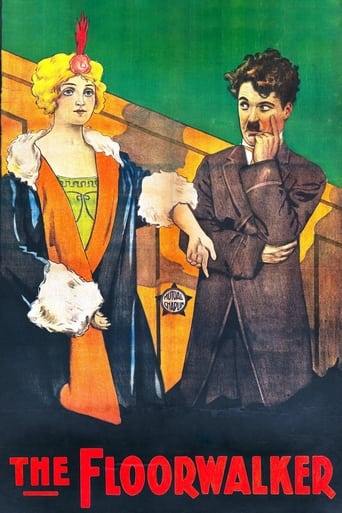
Wallpaper hanger Charlie have difficulties just getting to the house they are going to wallpaper. The householder is angry because he can't get breakfast and his wife is screaming at the maid as they arrive. The kitchen gas stove explodes, and Charlie offers to fix it. The wife's secret lover arrives and is passed off as the workers' supervisor, but the husband doesn't buy this and fires shots. The stove explodes violently, destroying the house.
Cast & crew
More films like this


More Comedy films
View all →







More from Charlie Chaplin
View all →


More about this film
About the production
Release dateJune 21, 1915
Box officeUnknown - Chaplin's films of this period were highly profitable for Essanay Studios
ProductionEssanay Film Manufacturing Company
Filmed inEssanay Studios, Niles, California, Oakland, California
This was one of Chaplin's most ambitious productions at Essanay, featuring elaborate set destruction for the finale. The film required extensive preparation for the explosion sequence, which was considered technically advanced for its time. Chaplin insisted on multiple takes to perfect the timing of the physical comedy, particularly the scenes involving the wallpaper cart. The production faced challenges with the explosion effects, requiring several attempts to achieve the desired visual impact while ensuring cast safety.
Themes
Working-class strugglesDomestic discordThe chaos of modern lifeClass tensionsThe comedy of failure
Themes & topics
wallpaperingexplosionworkplace comedydomestic chaosphysical comedyslapstickinfidelitydestructionlaborprop comedy
Historical background
Audiences around 1915 encountered Work in a market crowded with competing studios fighting for weekly program slots.
Why this film matters
Later homages and restorations keep Work circulating among silent- and classic-film communities long after its first run.
Making of
The production of 'Work' showcased Chaplin's meticulous attention to detail and his growing confidence as a filmmaker. The famous scene with the wallpaper cart was developed through Chaplin's improvisational style - he noticed how difficult it was to maneuver the prop and built an entire sequence around this real struggle. The explosion finale required extensive planning and multiple camera setups to capture the destruction effectively. Edna Purviance, who was working as a secretary when discovered by Chaplin, underwent intensive preparation for her role despite having no previous acting experience. Chaplin worked closely with her on set, providing detailed direction that helped establish her as his leading lady for the next eight years. The film's production demonstrated Chaplin's transition from merely performing to taking full creative control over his projects.
What critics said
Trade papers near 1915 treated Work as program material—noticed when exhibitors needed a reliable slot-filler, seldom debated as auteur cinema.
Did you know?
- This was the first film where Edna Purviance played a substantial role, marking the beginning of her long professional and personal relationship with Chaplin
- The explosive finale was among the leading elaborate special effects sequences in a Chaplin film up to that point
- The wallpaper cart used in the film was so difficult to maneuver that Chaplin incorporated the real struggle into the comedy
- Charles Inslee, who played the boss, was a veteran actor who had appeared in over 200 films by 1915
- The film's theme of working-class struggles reflected Chaplin's own experiences and social consciousness
- The stove explosion required careful timing and was achieved using practical effects with flash powder and controlled debris
- This was one of Chaplin's last films for Essanay before he moved to Mutual Film Corporation
- The film's success helped establish Chaplin's reputation as the world's biggest comedy star
- The wallpaper scenes were inspired by Chaplin's observations of actual construction workers in London
- The film was shot in just a few days, typical of Chaplin's efficient production methods
Visual style
The cinematography in 'Work' was handled by Harry Ensign and Roland Totheroh, who employed innovative techniques to capture the physical comedy. The use of multiple camera angles for the explosion sequence was advanced for its time. The filmmakers utilized deep focus to keep both foreground and background action visible, allowing Chaplin to incorporate background gags. The street scenes employed tracking shots to follow the movement of the wallpaper cart, creating a sense of journey and struggle. The interior scenes used careful lighting to emphasize the chaos of the household, with dramatic shadows during the confrontation scenes. The cinematography successfully balanced the need for clear visibility of physical comedy with artistic composition.
Innovations
The most significant technical achievement in 'Work' was the elaborate explosion sequence, which required careful coordination of pyrotechnics, camera placement, and actor timing. The film also featured innovative use of props, particularly the unwieldy wallpaper cart that became a character in itself. The production employed multiple camera setups for complex scenes, a practice that was becoming more common but still required significant planning. The film's editing, particularly in the rapid-fire sequence leading to the explosion, demonstrated sophisticated understanding of rhythm and pacing. The practical effects used for the stove explosion were considered state-of-the-art for 1915, involving carefully controlled debris and smoke effects.
Music
As a silent film, 'Work' was originally accompanied by live musical performance in theaters. The typical score would have included popular songs of the era, classical pieces, and specially composed themes. Musical cues would have been provided to theater accompanists, suggesting appropriate music for different scenes - frantic music for the cart-pulling scenes, romantic themes for Edna Purviance's appearances, and dramatic music for the explosion finale. Modern restorations have been scored by various composers, including Carl Davis, who created orchestral scores that capture the film's comedic and dramatic elements while remaining authentic to the period.
Famous quotes
(Intercard) 'The Boss - He never works, he only watches'
(Intercard) 'The Assistant - He does all the work'
(Intercard) 'The Home - Where happiness should dwell'
(Intercard) 'The Explosion - The end of all troubles'
Memorable scenes
- The iconic sequence where Chaplin struggles to pull the overloaded wallpaper cart through the streets, incorporating increasingly elaborate physical gags as he encounters obstacles
- The chaotic kitchen scene where multiple characters create a symphony of domestic discord
- The explosive finale where the gas stove violently erupts, destroying the entire house in a spectacular display of cinematic destruction
What audiences thought
Audiences in 1915 responded enthusiastically to 'Work', with theaters reporting packed houses and repeat viewings. The film's relatable themes of work struggles and domestic chaos resonated strongly with working-class audiences. The explosive finale became a talking point and drew audiences back for multiple viewings. The chemistry between Chaplin and the newly introduced Edna Purviance was immediately popular with moviegoers. The film's success contributed to Chaplin's growing international fame and helped establish him as the highest-paid entertainer of his time. Contemporary audience letters to film magazines frequently mentioned 'Work' as one of their favorite Chaplin comedies.
Film connections
Influenced by
- Chaplin's earlier music hall performances in England
- Mack Sennett's Keystone comedy style
- French comedies of Max Linder
- English music hall tradition
- Chaplin's own childhood experiences with poverty
This film influenced
- Chaplin's later Mutual films
- Buster Keaton's 'The General'
- Harold Lloyd's safety comedy films
- Jacques Tati's 'PlayTime'
- Modern workplace comedies
Film restoration
The film is well-preserved with complete copies held at the Library of Congress, the British Film Institute, and the Cinémathèque Française. Multiple high-quality restorations have been completed, including versions by The Criterion Collection and Flicker Alley. The film has survived in excellent condition compared to many films of its era, likely due to Chaplin's careful preservation of his work. Digital restorations have cleaned up damage while preserving the original film's texture and tonal qualities.
Where to watch
- The Criterion Channel
- Flicker Alley Blu-ray collection 'Chaplin's Essanay Comedies'
- YouTube (official uploads)
- Kino Lorber DVD collections
- The Museum of Modern Art's film archive
- BFI Player (UK)
- Various public domain collections