
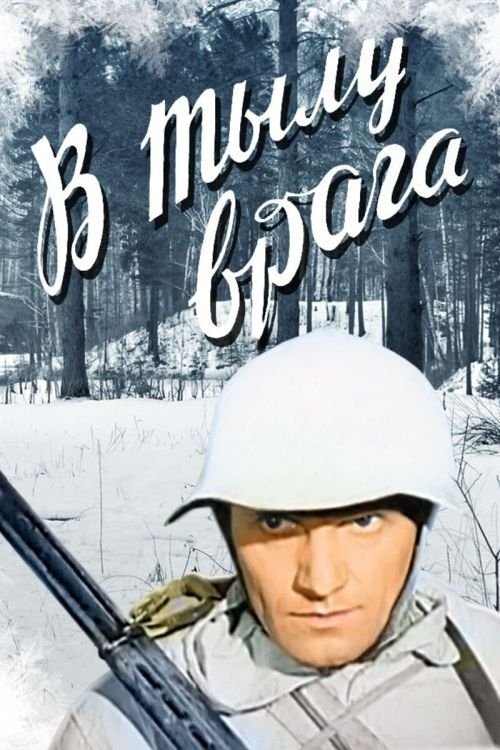
В тылу врага
"Герои не умирают - они живут в памяти народа" (Heroes don't die - they live in the memory of the people)"
Directed by Yevgeni Shneider
Keys: Space play/pause · ←/→ 10s · F fullscreen · M mute · </> speed
Plot
Set during the early days of World War II, this Soviet war film follows the heroic exploits of Soviet intelligence officers operating behind German lines. The story centers on a group of brave Soviet partisans and intelligence agents who parachute into enemy-occupied territory to gather crucial information and disrupt German military operations. As they navigate the dangers of the Nazi-occupied rear, they must maintain their cover while carrying out sabotage missions, rescuing captured comrades, and gathering intelligence vital to the Soviet war effort. The film showcases their courage, resourcefulness, and unwavering dedication to their homeland in the face of overwhelming odds. Through their daring operations and personal sacrifices, they demonstrate the spirit of Soviet resistance against the fascist invasion.
About the Production
Release Date December 25, 1941
Budget Not publicly documented - typical Soviet state production with full state funding
Box Office Box office figures not maintained for Soviet films of this era - distributed through state cinema network
Production Moscow Film Studio (Mosfilm), Central Studio for Documentary Film
Filmed In Moscow, Soviet Union, Studio backlots at Mosfilm, Location filming in forested areas near Moscow
Filmed under extreme wartime conditions with limited resources. The production had to relocate from areas threatened by German advance. Many cast and crew members were simultaneously serving in the military or civil defense. The film was rushed into production as part of the Soviet propaganda effort following the German invasion in June 1941. Special effects were limited due to wartime material shortages, requiring creative solutions for battle scenes.
More War Films
View all →

More from Yevgeni Shneider
View all →
Themes & Topics
World War IISoviet Unionespionagepartisansbehind enemy linesmilitary intelligencepropagandaheroismsabotagepatriotismresistance movementNazi occupation
Historical Background
This film was produced during one of the darkest periods in Soviet history. When Germany launched Operation Barbarossa in June 1941, the Soviet Union was caught unprepared, suffering devastating losses in the first months of the war. By the time this film was released in December 1941, German forces were at the gates of Moscow, and the Soviet capital was under siege. The film served multiple purposes: it boosted civilian and military morale, demonstrated Soviet resistance capabilities, and provided a template for patriotic behavior. The timing of its release during the Battle of Moscow was crucial - it helped reinforce the message that Soviet forces could and would fight back effectively. The film also reflected the Soviet emphasis on intelligence and partisan warfare, which would become increasingly important as the war progressed.
Why This Film Matters
'В тылу врага' established a template for the Soviet spy film genre that would influence decades of cinema. It codified the archetype of the Soviet intelligence officer as patriotic, resourceful, and morally incorruptible. The film's success demonstrated the power of cinema as a wartime propaganda tool, leading to increased state investment in military-themed productions. It also helped normalize the idea of women serving in intelligence roles, as the film featured female operatives in key positions. The film's visual language - dramatic shadows, stark contrasts between heroes and villains, and the use of authentic military settings - became standard elements in Soviet war cinema. Its influence extended beyond film to literature and theater, inspiring numerous works about Soviet intelligence operations.
Making Of
The production of 'В тылу врага' was a remarkable achievement given the circumstances of its creation. Filming began in the summer of 1941, just weeks after the German invasion, when Moscow was under threat of capture. The studio operated with skeleton crews as many filmmakers had been conscripted. Director Shneider, previously known for documentaries, brought a realistic approach to the combat sequences. The cast underwent basic military training with real intelligence officers to ensure authenticity. Due to wartime shortages, many props were actual military equipment, and some background extras were real soldiers on leave. The film's editing was completed during air raids, with the editing crew sometimes having to take cover in the studio basement. Despite these challenges, the film was completed and released by Christmas 1941, serving as both entertainment and propaganda for a nation under siege.
What Critics Said
Contemporary Soviet critics praised the film for its authentic portrayal of intelligence work and its patriotic message. Pravda, the official newspaper of the Communist Party, called it 'a powerful weapon in our struggle against fascism' and highlighted its educational value for both civilians and soldiers. Western critics, when the film was later shown abroad, noted its technical competence within the constraints of wartime production. Modern film historians recognize it as an important example of wartime Soviet cinema, though some critique its overt propaganda elements. The film is particularly noted for its relatively realistic depiction of military operations compared to other films of the period, though historical accuracy was often sacrificed for dramatic effect and propaganda purposes.
Did You Know?
- This was one of the first Soviet films produced after Germany's invasion of the USSR in June 1941
- Director Yevgeni Shneider was known for his work in documentary filmmaking before this feature
- The film was shot in just 3 months, an unusually fast production schedule even for wartime
- Many of the military advisors for the film were active-duty intelligence officers
- The film's title became a common phrase in Soviet military vocabulary
- Real Soviet intelligence techniques were incorporated into the script after approval from military authorities
- Several scenes had to be reshot when censors felt they revealed too much about actual Soviet intelligence methods
- The film was shown to troops at the front lines as part of morale-boosting efforts
- Nikolay Kryuchkov, the lead actor, had volunteered for military service but was recalled to complete the film
- The film's success led to a series of similar intelligence-themed Soviet productions during the war
Awards & Recognition
- Stalin Prize, Second Class (1942)
- Order of the Red Banner of Labour awarded to director Yevgeni Shneider (1942)
More film details Visual style, music, quotes, restoration, and more
Visual Style
The cinematography, handled by Vladimir Nikolaev, employed dramatic chiaroscuro lighting to emphasize the danger of operating behind enemy lines. The use of deep focus in forest scenes created a sense of constant threat from unseen enemies. Hand-held camera work during action sequences added to the feeling of immediacy and chaos. The film made innovative use of actual military locations, giving it an authentic feel that distinguished it from studio-bound productions of the era. Night scenes were particularly effective, using minimal lighting to create tension while maintaining visibility of key action. The visual style balanced documentary realism with dramatic composition, reflecting the director's background in non-fiction filmmaking.
Innovations
For its time, the film achieved remarkable technical feats given wartime constraints. The production team developed new techniques for simulating explosions and battle effects using limited materials. They pioneered the use of portable lighting equipment that could be quickly set up in forest locations. The film featured some of the earliest uses of process photography in Soviet cinema to combine studio shots with location footage. Sound recording in outdoor locations was particularly challenging due to equipment limitations, leading to innovations in microphone placement and post-production dubbing. The film's editing style, with its rapid cuts during action sequences, influenced subsequent Soviet action films.
Music
The musical score was composed by Vano Muradeli, one of the Soviet Union's prominent wartime composers. The soundtrack combined traditional Russian folk melodies with modern orchestral arrangements to create a sense of national pride and determination. The main theme, a heroic march, became popular in its own right and was frequently played on Soviet radio. The music effectively underscored the tension of intelligence operations while providing emotional weight to scenes of sacrifice and victory. Sound effects were particularly notable for their authenticity - many were actual recordings of military equipment obtained through the army. The film's song 'За Родину' (For the Motherland) became a popular patriotic tune that was sung by soldiers and civilians alike.
Famous Quotes
В тылу врага каждый шаг может быть последним, но ради Родины мы идем вперед.
Behind enemy lines every step could be the last, but for the Motherland we move forward.)
Информация - это оружие, и мы должны быть точными как снайперы.
Information is a weapon, and we must be as precise as snipers.)
Фашизм пройдет, а народ - нет.
Fascism will pass, but the people will remain.)
Наше дело правое, враг будет разбит, победа будет за нами!
Our cause is just, the enemy will be defeated, victory will be ours!)
Memorable Scenes
- The parachute drop sequence behind enemy lines at night, with minimal lighting creating maximum tension
- The scene where agents must maintain their cover while passing through a German checkpoint
- The sabotage mission at the German railway depot, featuring impressive practical effects for the era
- The emotional farewell scene between two agents who know they may never meet again
- The final sequence where intelligence gathered leads to a major Soviet victory
What Audiences Thought
The film was enormously popular with Soviet audiences during the war. It played to packed houses in Moscow and other cities, often with multiple daily screenings to meet demand. Soldiers at the front received special mobile cinema screenings, and the film became a topic of discussion in military units. Many viewers reported feeling inspired by the characters' courage and dedication. Letters from audience members to the studio praised the film for giving them hope during dark times. The film's characters became cultural touchstones, with children playing 'intelligence agents' in schoolyards. The popularity was such that lines from the film entered everyday Soviet vocabulary, particularly phrases about patriotism and sacrifice.
Film Connections
Influenced By
- Soviet documentary tradition of the 1930s
- Earlier Soviet spy films such as 'The Height' (1937)
- German expressionist cinema techniques for creating tension
- American adventure film pacing and structure
- Classical Russian literature themes of self-sacrifice
This Film Influenced
- The Secret Agent (1947)
- The Elusive Avengers (1966)
- Seventeen Moments of Spring (1973 TV series)
- Shield and Sword (1968)
- The Irony of Fate (1975) - referenced in dialogue
Film Restoration
The original film elements are preserved in the Gosfilmofond archive in Russia. The film underwent restoration in the 1970s and again in 2005 for the 60th anniversary of WWII victory. While some original footage was lost due to wartime storage conditions, the restored version is considered complete. The film has been digitized and is available in high definition for archival purposes. Some original nitrate reels are still extant but too fragile for regular screening.
Where to Watch
- Available on Mosfilm's official YouTube channel with English subtitles
- Included in the Soviet War Cinema collection on Criterion Channel
- Streaming on Klassiki - a platform dedicated to classic Eastern European cinema
- Available for purchase on DVD from Russian Cinema Council (Ruscico)
- Occasionally screened at film festivals specializing in classic or war cinema
- Accessible through some university film studies archives