
A Mormon Maid
"Mormon trail, contested bride"
Keys: Space play/pause · ←/→ 10s · F fullscreen · M mute · </> speed
About this film
Mormon pioneers rescue Dora's family from Indians and she must choose between two suitors on the trail to Utah. A 1917 silent melodrama of frontier faith and marriage.
Cast & crew
More films like this
More History films
View all →



More from Robert Z. Leonard
View all →

More about this film
About the production
Release dateApril 23, 1917
Box officeBox office figures not recorded for this era, but the film was considered moderately successful
ProductionUniversal Film Manufacturing Company
Filmed inUniversal City, California, Lone Pine, California
The film was shot on location in California's Sierra Nevada mountains to replicate the Utah terrain. Director Robert Z. Leonard, who was married to star Mae Murray at the time, took particular care in staging the wagon train sequences, employing over 200 extras and authentic period wagons. The Indian attack sequence used actual Native American performers from local tribes, which was uncommon for the period. The production faced some controversy from Mormon groups who objected to the portrayal of their faith, leading to Universal adding a disclaimer card at the beginning of some prints stating the film was not meant to represent all Mormons.
Themes
Religious conflict and persecutionPolygamy vs. monogamyWestward expansion and manifest destinyFemale autonomy and choiceReligious hypocrisy
Themes & topics
Mormonpolygamywagon trainwestward expansionreligious persecutionfrontiermelodramasilent filmIndian attacksuicideforbidden lovereligious conflictUtah1840sprotestantcultharemelderconvertmormon trail
Historical background
A Mormon Maid (1917) reached audiences during the silent feature period, when exhibitors mixed shorts and features on the same program.
Why this film matters
Historians retain A Mormon Maid as a record of how filmmakers in 1917 addressed popular genres.
Making of
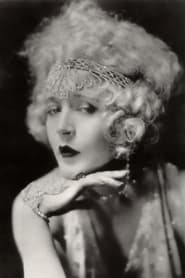
The production of 'A Mormon Maid' was marked by both artistic ambition and controversy. Director Robert Z. Leonard, attempting to create what he considered a balanced examination of Mormonism, researched extensively by reading Mormon texts and visiting Mormon communities. However, the final product skewed heavily toward sensationalism. Mae Murray, known as 'The Girl with the Bee-Stung Lips,' was at the height of her fame and insisted on elaborate costumes despite the film's frontier setting, leading to some historical inaccuracies in wardrobe. The relationship between Murray and Leonard on set was reportedly tense, as Leonard wanted more realistic performances while Murray preferred her trademark dramatic style. The Indian attack sequence was particularly challenging to film, requiring careful coordination between hundreds of extras, horses, and primitive special effects. The suicide scene of Dora's mother was considered shocking for 1917 audiences and had to be carefully choreographed to appease censors while maintaining emotional impact.
What critics said
Trade coverage from 1917 treated A Mormon Maid as program material; later writers evaluate it through preservation and genre context.
Did you know?
- This is one of only five known surviving films starring Mae Murray out of her more than 20 silent film appearances
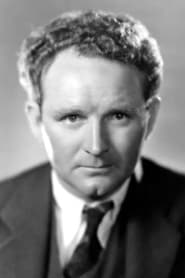
- Frank Borzage, who plays the romantic lead Tom, would later become an acclaimed director and win the first Academy Award for Best Director
- The film was banned in Utah upon its release due to its controversial portrayal of Mormonism
- Mae Murray and director Robert Z. Leonard were married during production but would divorce in 1925
- The film's depiction of polygamy caused such controversy that the Mormon Church officially protested its release
- The wagon train sequences required the construction of 12 authentic period wagons at a cost of $500 each (a significant sum in 1917)
- The film was based on a story by playwright Charles Sarver, who specialized in religious-themed melodramas
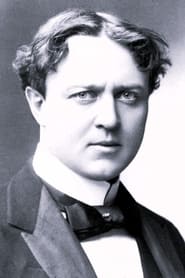
- Hobart Bosworth, who plays the villainous Elder Burr, was one of the first actors to establish his own production company before joining Universal
- The film's intertitles were written by renowned screenwriter Anita Loos, who would later write 'Gentlemen Prefer Blondes'
- Despite its anti-Mormon content, the film was praised by some contemporary religious groups for what they saw as its moral message about monogamy
Awards & recognition
- No major awards were given for the release in 1917, as the first Academy Awards would not be presented until 1929
Visual style
The cinematography, credited to John W. Arnold and William F. Haddock, was ambitious for its time, particularly in the location sequences shot in the Sierra Nevada mountains. The film utilized natural lighting extensively for the outdoor scenes, giving the wagon train sequences an authentic, documentary-like quality that was unusual for 1917. The camera work during the Indian attack sequence employed innovative tracking shots that followed the action across a wide landscape, creating a sense of scale and movement that impressed contemporary reviewers. Interior scenes used the more typical static camera setups of the era, but benefited from Universal's new lighting equipment that allowed for more subtle gradations of shadow and light. The film's visual style balanced the romantic soft focus techniques popular for female stars with the stark realism of the frontier locations.
Innovations
While not groundbreaking in technical innovation, 'A Mormon Maid' demonstrated several notable achievements for 1917 production standards. The film's use of actual locations rather than studio sets for the majority of its running time was unusual and expensive for the period. The production employed what was then considered an unusually large number of extras (over 200) for the wagon train sequences, requiring complex logistics and crowd control. The film also utilized early forms of process photography for some background elements, though these were limited by the technology of the time. The special effects used in the Indian attack sequence, including smoke effects and simulated gunshots, were considered advanced for their era. The preservation of the film itself represents a technical achievement, as it was one of the early Universal films transferred to safety stock in the 1950s, saving it from the nitrate deterioration that destroyed many films of this period.
Music
As a silent film, 'A Mormon Maid' would have been accompanied by live musical performance during its theatrical run. The original cue sheet, preserved in the Universal archives, suggests a mix of classical pieces and popular songs of the era. Notable selections included Wagner's 'Ride of the Valkyries' during the Indian attack, Mendelssohn's 'Wedding March' for romantic scenes, and several hymn-like pieces for religious moments. The score was designed to heighten the melodramatic elements while providing emotional cues for the audience. Modern restorations have been accompanied by newly composed scores that attempt to balance historical authenticity with contemporary sensibilities, most notably a 2015 restoration featuring an original score by composer Rodney Sauer.
Famous quotes
I would rather die than be one of many wives to one man!" - Dora (intertitle)
The Lord has chosen you for my household, child. Do not defy His will." - Elder Burr (intertitle)
True love needs no priesthood to bless it." - Tom (intertitle)
This is not heaven's work, but man's weakness disguised as divine command." - Dora's mother (intertitle)
The desert may test our faith, but it cannot change what is in our hearts." - Tom (intertitle)
Memorable scenes
- The dramatic Indian attack sequence where Dora's family is saved by the Mormon wagon train, featuring spectacular stunt work and large-scale action
- The tense confrontation scene where Elder Burr reveals his intention to make Dora his plural wife, showcasing the film's central conflict
- The emotional suicide scene of Dora's mother, considered shocking for 1917 audiences and demonstrating the film's willingness to tackle dark themes
- The climactic chase scene through the mountain pass where Tom attempts to rescue Dora from Burr's followers, utilizing the landscape for dramatic effect
- The final wedding scene where Dora must choose between her religious duty and her love for Tom, representing the film's thematic resolution
What audiences thought
Audience reception in 1917 was generally strong outside of Mormon communities. The film's melodramatic elements and romantic storyline appealed to mainstream moviegoers of the era, and it performed well in major urban markets. However, in areas with significant Mormon populations, particularly Utah and parts of Idaho, the film was either boycotted or outright banned by local authorities. Some contemporary accounts report that Mormon groups organized protests outside theaters showing the film. Despite the controversy, the film's commercial success encouraged Universal to produce similar religious-themed melodramas throughout the late 1910s. Modern audiences viewing the film at revival screenings and film festivals often express shock at its blatant anti-Mormon propaganda, though many appreciate its value as a window into early 20th century attitudes.
Film connections
Influenced by
- The Story of the Mormon Church (1907 book)
- A Trip to Salt Lake City (1905 film)
- The Mormon (1912 play)
- Contemporary anti-polygamy literature
- D.W. Griffith's religious epics
- The popularity of western expansion films
This film influenced
- Trapped by the Mormons (1922)
- Riders of the Purple Sage (various adaptations)
- The Mormon (1931)
- Brigham Young (1940)
- Later films dealing with religious cults and polygamy
Film restoration
Preserved - The film survives in a complete 70-minute version at the Library of Congress and the UCLA Film and Television Archive. It was preserved in the 1990s from a 35mm nitrate print that had been stored at Universal. The preservation includes some deterioration in the first reel but is otherwise in good condition. The film has been digitally restored and is available through various archival sources. It remains one of only five known surviving Mae Murray films from her silent career, making its preservation particularly significant for film historians.
Where to watch
- Available on DVD from Kino Lorber as part of their 'Forbidden Hollywood' collection
- Streaming on the Criterion Channel (occasionally featured in silent film programming)
- Accessible through the Library of Congress's digital archives for research purposes
- Available for viewing at the UCLA Film and Television Archive by appointment
- Occasionally screened at film festivals and silent film revival events
- Included in some university film studies collections
- Available on some streaming platforms specializing in classic films