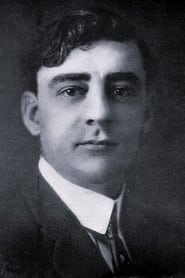
A Window on Washington Park
"A widower watches a stranger from his window over Washington Park."
Keys: Space play/pause · ←/→ 10s · F fullscreen · M mute · </> speed
About this film
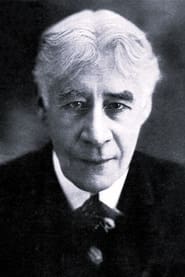
From his apartment, where he lives a cheerless widower's life, overlooking Washington Park, Alan Dale sees a refined, but poverty-stricken old gentleman on one of the park benches. Calling his butler, he instructs him to go down and tell the old man he would like to see him. When the butler approaches the elderly man the old fellow is somewhat skeptical, but finally consents to go with him. Alan receives his guest cordially and tells him why he has requested him to come and invites him to dinner. During the meal the old man tells his life's story: how he married a young woman, and after the bi…
Cast & crew
More films like this
More Drama films
View all →







More from Laurence Trimble
View all →
More about this film
About the production
Release dateMarch 1913
ProductionVitagraph Company of America
Filmed inBrooklyn, New York
This was one of many short dramatic films produced by Vitagraph during their peak years in the early 1910s. The film was likely shot on Vitagraph's Brooklyn studio lot with location work at Washington Park. Director Laurence Trimble was known for his ability to extract natural performances from actors, which was particularly important in the pre-feature film era when emotional storytelling had to be conveyed primarily through visual means.
Themes
Loneliness and isolationHuman connection across social classesMemory and lossCompassion and kindnessUrban alienation
Themes & topics
widowerpark benchpovertydinner invitationlife storydeath of loved onesclass differenceshuman kindnessNew York Cityearly 1900s
Historical background
A Window on Washington Park (1913) survives in catalogs and archives as a record of the silent era.
Why this film matters
Scholars and collectors reference A Window on Washington Park when discussing how the silent era filmmakers addressed popular themes.
Making of
The production of 'A Window on Washington Park' took place during a pivotal year in American cinema. 1913 saw the industry transitioning from one-reel shorts to longer, more complex narratives. Director Laurence Trimble, working for Vitagraph Studios in Brooklyn, would have had to work quickly and efficiently, as studios of this era often produced multiple films per week. The Washington Park setting was chosen for its accessibility to the Brooklyn studio and its ability to convey the contrast between wealth and poverty through simple visual means. The indoor scenes would have been shot on Vitagraph's indoor sets, which were becoming increasingly sophisticated by 1913. The film's emotional content required careful direction of actors who were still developing the techniques of screen acting, transitioning from theatrical styles to the more subtle approach required by the camera.
What critics said
Where contemporary reviews survive, A Window on Washington Park is read against the tastes of 1913; revival screenings keep it in circulation.
Did you know?
- Director Laurence Trimble was also famous for his work with dogs in films, particularly the canine star Jean, the Vitagraph Dog
- Vitagraph Company of America was especially prolific film studios of the early 1910s, producing hundreds of short films annually
- Washington Park in Brooklyn was a popular filming location for early New York-based film companies due to its accessibility and scenic value
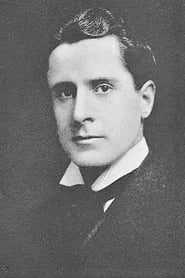
- Charles Kent, who plays Alan Dale, was one of Vitagraph's leading actors and also directed many films for the studio
- This film represents the transition period when cinema was moving from simple chase comedies to more sophisticated dramatic storytelling
- The film's theme of class differences and human connection was relatively progressive for its time
- 1913 was the year before the feature film revolution began with films like 'The Birth of a Nation'
- Vitagraph was one of the few early studios that maintained its own production facilities rather than renting space
- The film likely used intertitles (text cards) to convey dialogue and narrative exposition, as was standard for silent films
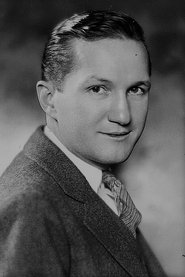
- Tom Powers, who appears in the cast, would go on to have a long career in Hollywood, appearing in films through the 1930s
Visual style
The cinematography of 'A Window on Washington Park' would have employed the techniques standard for Vitagraph productions in 1913. The film likely used static camera positions with occasional panning shots, particularly for the Washington Park scenes. Interior shots would have been lit with artificial lighting, a technique Vitagraph had pioneered. The contrast between the wealthy apartment and the park bench would have been emphasized through careful composition and lighting to visually represent the class differences central to the story. The film stock would have been orthochromatic, rendering colors in limited tones but providing good contrast for the black and white images. Close-ups might have been used sparingly but effectively to highlight emotional moments, as this technique was becoming more accepted by 1913.
Innovations
While 'A Window on Washington Park' was not groundbreaking technically, it represents the solid craftsmanship of Vitagraph Studios in 1913. The film would have utilized the improved film stock quality available by this time, offering better image clarity than earlier productions. The lighting techniques, particularly for interior scenes, demonstrated the growing sophistication of studio cinematography. The film's use of location shooting at Washington Park showed the industry's increasing mobility beyond studio confines. The editing would have employed continuity cutting techniques that were becoming standard by 1913, helping to maintain narrative flow and emotional engagement. The film's production quality reflects the professionalization of the American film industry during this crucial transitional period.
Music
As a silent film, 'A Window on Washington Park' would have been accompanied by live musical performance during theatrical exhibition. The score would typically have been provided by a pianist or small theater orchestra, using pre-existing classical pieces or popular songs matched to the mood of each scene. For emotional moments like the dinner scene, romantic or melancholic compositions would have been selected. The music would have helped guide audience emotional responses and underscore the film's themes of loneliness and human connection. The exact musical selections would have varied by theater and performer, as standardized film scoring would not become common until later in the decade.
Memorable scenes
- The opening scene where Alan Dale observes the elderly gentleman from his apartment window, establishing the film's theme of urban isolation and observation
- The dinner scene where the old man recounts his life story, serving as the emotional core of the narrative
- The butler's approach to the elderly gentleman on the park bench, highlighting the initial skepticism and eventual acceptance that bridges the class divide
What audiences thought
Audiences in 1913 would have received 'A Window on Washington Park' as a familiar type of dramatic short that was becoming increasingly popular. The film's themes of loneliness, compassion, and human connection would have resonated with moviegoers of the era, who were experiencing rapid social changes in urban America. The clear narrative progression and emotional payoff would have satisfied audiences who were still adapting to cinematic storytelling conventions. As a Vitagraph production, it would have benefited from the studio's established reputation for quality entertainment. The film's relatively short length (likely one or two reels) made it suitable for the mixed programs typical of movie theaters during this period, where it would have been shown alongside comedies, newsreels, and other short subjects.
Film connections
Influenced by
- Contemporary stage melodramas
- Social reform literature of the Progressive Era
- Earlier Vitagraph dramatic shorts
- The sentimental tradition in American popular culture
Film restoration
The preservation status of 'A Window on Washington Park' is uncertain, but like many Vitagraph shorts from this period, it is likely lost or incomplete. The survival rate for American silent films from 1913 is estimated at less than 20%, with shorts being particularly vulnerable to loss. If any elements survive, they would most likely be held in film archives such as the Library of Congress, the Museum of Modern Art, or the British Film Institute, which have collections of Vitagraph films. The film's value as a document of early American cinema and New York City history makes its preservation particularly desirable, though the practical challenges of preserving nitrate film from this era have resulted in significant losses.
Where to watch
- Due to its likely lost status, 'A Window on Washington Park' is not currently available for viewing. If any elements survive, they might be accessible through specialized film archives or museum collections with prior arrangement. Film historians and researchers interested in this production should contact major film archives that hold Vitagraph materials, such as the Library of Congress Motion Picture Division or the Museum of Modern Art Film Department. Occasionally, fragments of lost films from this era surface in archival collections or private discoveries, so continued monitoring of film archive catalogs and silent film restoration projects may eventually yield viewing opportunities.